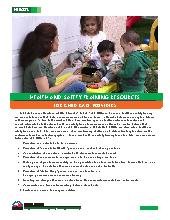
Este programa de formación en línea autodirigido proporciona a las personas los conocimientos y las habilidades fundamentales para sobresalir como asistentes de aula Montessori.
Comprender el desarrollo infantil es crucial para apoyar el crecimiento de cada niño. Este curso proporciona a los proveedores de cuidado infantil conocimientos sobre las teorías del desarrollo infantil y sobre cómo crear un entorno Montessori.
Los participantes aprenderán la filosofía Montessori, cómo preparar un aula que fomente la independencia y estrategias de comunicación efectivas para trabajar con niños, familias y colegas.
El curso también aborda procedimientos de seguridad, prácticas de salud y competencia cultural para garantizar un entorno de aprendizaje positivo e inclusivo para todos los niños.
By the end of this training, the learner will be able to:
- Demostrar conocimiento del proceso apropiado para reportar el abuso infantil
- Identificar estrategias para una comunicación efectiva con las familias.
- Identificar y reflexionar sobre los sesgos y explorar enfoques contra los sesgos que apoyen el trabajo con niños y familias.
- Identify factors that may influence learning for a child in the infant/toddler environment.
- Identify factors that may influence learning for a child in the preschool environment.
- Identificar prácticas apropiadas para actividades dirigidas por el docente y por los niños.
- Demonstrate knowledge of how setting up the environment can impact accessibility for all children.
- Enumere ejemplos de formas de incorporar la inclusión y la equidad en el aula
- Identify the difference between teacher-/child-directed activities.
- Demostrar comprensión de cómo realizar observaciones objetivas y precisas.
- Identificar los componentes de las habilidades de escucha activa.
- Demostrar comprensión sobre cómo abordar a los padres como socios iguales en el aprendizaje.
- Demonstrate an understanding of how to provide an environment that offers choices.
- Demostrar comprensión de la manera más eficaz de escuchar a un niño.
- Explique las consecuencias para los niños que experimentan interacciones negativas y tonos de voz en el aula.
- Describa estrategias de disciplina positiva para usar en el aula.
- Identificar prácticas para el manejo de enfermedades, dolencias, alergias y la administración de medicamentos en el cuidado infantil.
- Identify important safety procedures when transporting children
- Identificar prácticas seguras en la prevención y la respuesta ante alergias alimentarias y otras en el entorno de cuidado infantil.
- Describe the use of safe sleep practices.
- Defina la cultura y la competencia cultural
- Defina los dominios del desarrollo.
- Reconocer la importancia de una actitud positiva y respetuosa al trabajar con todos los niños y sus familias.
- Enumere qué profesiones están obligadas a denunciar.
- Identificar formas de interactuar de manera respetuosa y apropiada en una variedad de contextos culturales
- Identificar la teoría y el teórico en relación con el desarrollo infantil.
- Identifique las diferencias en las principales teorías.
- Identificar similitudes entre las principales teorías.
- Defina el término "inclusión" y cómo se relaciona con el entorno y la práctica del cuidado infantil para todas las edades.
- Identificar las etapas y los hitos del desarrollo desde el nacimiento hasta los 2 años.
- Demonstrate an understanding of teacher vs. child directed activities.
- Identificar los distintos tipos de barreras para grupos de edades mixtas con discapacidades y las formas de adaptar el plan de estudios para ajustarlo a sus necesidades.
- Demostrar comprensión de cómo la orientación positiva promueve un desarrollo social y emocional saludable.
- Demonstrate how to develop policies and procedures that promote good hygiene
- Identificar estrategias para escuchar sin emitir juicios sobre lo nuevo o lo desconocido
- Explique la importancia de la comunicación bidireccional.
- Identificar estrategias para garantizar una supervisión adecuada de bebés y niños pequeños.
- Identificar las etapas y los hitos del desarrollo de 1 a 5 años
- Demonstrate an understanding of the Montessori philosophy and Maria Montessori's contributions to education.
- Demonstrate an understanding of the historical context of the Montessori method
- Identify the 5 Core Principles of the Montessori Method
- Identify the 5 Core Components of Montessori Education
- Describe the five key learning areas of the Montessori classroom and explain the purpose of each.
- Demonstrate an understanding of Montessori materials and how they are used in the classroom.
- Describe observational techniques and their purpose in the Montessori classroom.
- Describe the functions and features of the Prepared Environment in relation to Montessori Education
- Describe the Planes of Development in regards to Montessori Education
- Demonstrate an understanding of the specific role and responsibilities of a Montessori Assistant.
- Describe the Montessori Assistant's approach to communication with children.
- Identify the importance of child nutrition and nutrition training for staff in childcare.
- Recognize the importance of observing and gathering information related to children and youth's development.
- Defina el término multiculturalismo y cómo se relaciona con el entorno del niño.
- Reconocer la importancia de mantener la confidencialidad y la privacidad en la comunicación con las familias.
- Define Building and Physical Premises Safety.
- Distinguir las preocupaciones de seguridad apropiadas en interiores
- Distinguir las preocupaciones apropiadas sobre la seguridad al aire libre
- Demostrar una comprensión de diversas perspectivas y navegar la ambigüedad y la complejidad que ello conlleva.
- Describa la importancia de responder con sensibilidad a las diferencias en los estilos de comunicación individuales.
- Demostrar comprensión del valor y la importancia de las características complejas de las familias y comunidades de los niños.
- Demostrar habilidades de comunicación que faciliten la comunicación intercultural, incluidas habilidades efectivas de escucha
- Enumere los pasos para completar un informe sobre abuso y negligencia.
- Demonstrate an understanding of proper food storage and preparation.
- Identify the benefits of observation and assessment.
- Demostrar comprensión de técnicas de observación que den como resultado observaciones precisas y objetivas
- Demonstrate understanding of the research done on mixed-age group instruction.
- Give examples of activities considered appropriate for mixed-age groups.
- Criteria to earn CEUs:
- Certificates are awarded when the following criteria have been met by the learner:
- Class has been paid in full
- All material has been reviewed
- All review questions and final test have been completed with a passing score of 80% or higher.
- Learning Assessment Method:
- Learners will be assessed through questions after every section is completed. Learners will not be
allowed to proceed to the next section of the training until all questions have been answered correctly.
Learners will be presented with a final test composed of true/false and multiple choice questions.
Upon successful completion of the training, learners will receive their certificate by email.
- Learning Methodology:
- Online material will be presented in the form of slides,
accompanied with speech. Videos will be used to demonstrate ideas and concepts. Charts and tables
will be used for illustration.
- Logistics/Required Technology:
- A stable internet connection is required for the completion of this course. Users are highly encouraged to take their online course on Google Chrome on either a laptop or desktop computer. Speakers and/or headphones are also required to hear speech.
- Payment Policy:
- Payments need to be made in full. No refunds will be issued after starting the class.
- Proprietary or conflict of interest disclosure:
- Unless otherwise stated in the course description none of H & H subject matter experts and editor has any conflict or proprietary interests related to the material they prepared in this course.
- Support Services:
- Please visit our contact us page
You are purchasing a session of an online training that includes online assessments. Your certificate will be emailed to you once you pass the final exam with a passing grade of 80%.
Your certificate will bear the name you provided to us when you signed up. For support and questions regarding the material presented in this class please contact us at info@childcareed.com. Please consult our frequently asked questions page for other questions or feel free to contact us.
No prerequisites are required for the completion of this course.