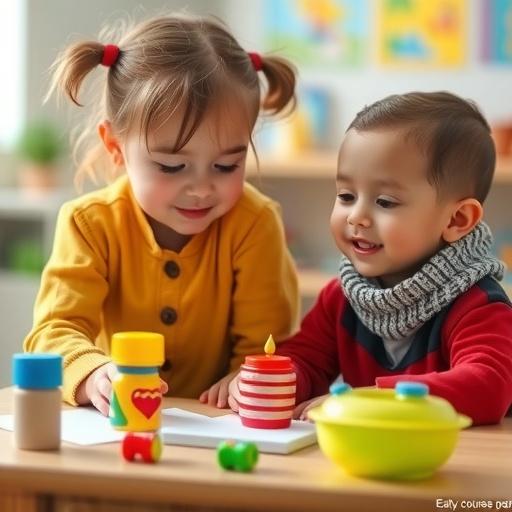
Los proveedores de cuidado infantil necesitan una base sólida en comunicación, observación, currículo y prácticas de orientación para apoyar eficazmente el #development de los niños y crear entornos de aprendizaje de alta calidad. Early Childhood Education ofrece 30 horas de formación integral que cubren la orientación e interacción con los niños, la colaboración con familias y comunidades, el diseño de entornos de aprendizaje, la implementación del currículo y la realización de observaciones, evaluaciones y documentación precisas.
A través de este curso, los participantes aprenden a construir relaciones afectuosas, a traducir las observaciones en objetivos significativos, a usar materiales #developmentally-appropriate y a colaborar con las familias, colegas y socios comunitarios. Al dominar estas habilidades esenciales, los proveedores mejorarán la calidad del #classroom, fortalecerán las asociaciones con las familias y brindarán un mejor apoyo a las necesidades individuales y al éxito de los niños pequeños.
By the end of this training, the learner will be able to:
- Identificar estrategias para una comunicación efectiva con las familias.
- Demostrar comprensión de cómo traducir la información de evaluación y de observación en el desarrollo de objetivos a corto y largo plazo
- Identify materials and equipment for childcare programs that meet the needs of specific age groups in both shared or permanent space and align with the programs curriculum
- Demuestra comprensión de la importancia de la disposición y el ambiente del aula.
- Demostrar los elementos de relaciones positivas y respetuosas que incluyan interacciones cálidas y de cuidado con los niños.
- Demostrar comprensión de cómo realizar observaciones objetivas y precisas.
- Demonstrate understanding of how teacher expectations/behaviors can contribute to student achievement.
- Identify materials and equipment for center childcare programs that meet the needs of specific age groups in both shared or permanent space and align with the programs curriculum
- Demostrar comprensión de cómo redactar objetivos SMART efectivos.
- Identificar y utilizar estrategias para la comunicación eficaz con la comunidad y los colegas.
- Demostrar comprensión de la importancia de establecer expectativas realistas para el comportamiento.
- Demostrar comprensión sobre cómo abordar a los padres como socios iguales en el aprendizaje.
- Demostrar comprensión del uso de los recursos comunitarios para realizar derivaciones.
- Identify and use community resources to support learning.
- Demonstrate an understanding of how to provide an environment that offers choices.
- Identify and discuss of the importance of using a variety of assessment methods.
- Identifique las diferencias entre el tamizaje del desarrollo y las evaluaciones del desarrollo.
- Define classroom community.
- Identify guidance and discipline strategies to use with various behavior problems.
- Describa estrategias de disciplina positiva para usar en el aula.
- Demostrar comprensión sobre cómo facilitar recursos y actividades para las familias.
- Demonstrate understanding of the importance of collaboration with other professionals.
- Da ejemplos de maneras de mostrar respeto por las diferencias familiares.
- Identify materials and activities to promote learning in the outdoor classroom.
- Reconocer la importancia de una actitud positiva y respetuosa al trabajar con todos los niños y sus familias.
- Describe the benefits of an outdoor classroom.
- Describe the importance of learning centers in the early childhood education environment.
- Identificar formas de examinar el comportamiento infantil para prepararse para la orientación.
- Demostrar comprensión de cómo las modificaciones del entorno y del equipo apoyan las necesidades individuales.
- Demostrar respuestas apropiadas del cuidador ante los diferentes temperamentos de bebés/niños pequeños.
- Demostrar comprensión de los componentes de un plan de estudios.
- Demonstrate an understanding of individual planning.
- Demostrar comprensión de cómo implementar un Plan de Educación Individual.
- Demostrar comprensión de la interacción adecuada con bebés y niños pequeños.
- Demostrar comprensión de cómo la orientación positiva promueve un desarrollo social y emocional saludable.
- Demostrar comprensión de alternativas positivas a los tiempos fuera y de ciertas técnicas disciplinarias basadas en las mejores prácticas.
- Recognize the needs of individualized learning in preschool.
- Demostrar comprensión sobre cómo implementar un Plan Individual de Apoyo Familiar.
- Demostrar comprensión sobre cómo desarrollar estrategias para involucrar a los padres en el entorno de cuidado infantil.
- Demostrar comprensión del currículo emergente.
- Demostrar comprensión de la dinámica y de la importancia de la relación entre un padre y un profesional (0,5 h).
- Demostrar comprensión de la importancia de la relación entre padres y cuidadores
- Identify characteristics of project based learning in the classroom environment and curriculum
- Identificar herramientas de evaluación.
- Reconocer la importancia y los componentes de un cuestionario eficaz para padres.
- Identify and demonstrate positive guidance techniques that promote social competency and pro-social behavior.
- Describa maneras en que los profesionales del cuidado infantil pueden demostrar liderazgo con las familias y la comunidad.
- Demostrar comprensión sobre cómo desarrollar relaciones positivas con las familias de cuidado infantil
- Dé ejemplos de herramientas que registran y comunican información crítica a otros miembros del personal y a las familias.
- Reconocer la importancia de mantener la confidencialidad y la privacidad en la comunicación con las familias.
- Recognize the importance of accurate and efficient documentation of observations and assessments.
- Identificar estrategias comunes de interacción para ayudar a promover un ambiente de aula positivo para niños pequeños.
- Identificar los componentes de las relaciones positivas con los niños, los compañeros de trabajo y las familias.
- Demostrar comprensión del valor y la importancia de las características complejas de las familias y comunidades de los niños.
- Identify methods of assessments for mixed ages.
- Reconocer la importancia de la resolución de problemas y de las estrategias para la resolución de conflictos con los miembros de la comunidad y las familias
- Demostrar comprensión de cómo la comunidad en la que vive un niño influye en su desarrollo
- Demonstrates understanding of community organizations that support early childhood programs.
- Demonstrate appropriate/effective responses as they relate to a variety of typical child care scenarios.
- Criteria to earn CEUs:
- Certificates are awarded when the following criteria have been met by the learner:
- Class has been paid in full
- All material has been reviewed
- All review questions and final test have been completed with a passing score of 80% or higher.
- Learning Assessment Method:
- Learners will be assessed through questions after every section is completed. Learners will not be
allowed to proceed to the next section of the training until all questions have been answered correctly.
Learners will be presented with a final test composed of true/false and multiple choice questions.
Upon successful completion of the training, learners will receive their certificate by email.
- Learning Methodology:
- Online material will be presented in the form of slides,
accompanied with speech. Videos will be used to demonstrate ideas and concepts. Charts and tables
will be used for illustration.
- Logistics/Required Technology:
- A stable internet connection is required for the completion of this course. Users are highly encouraged to take their online course on Google Chrome on either a laptop or desktop computer. Speakers and/or headphones are also required to hear speech.
- Payment Policy:
- Payments need to be made in full. No refunds will be issued after starting the class.
- Proprietary or conflict of interest disclosure:
- Unless otherwise stated in the course description none of H & H subject matter experts and editor has any conflict or proprietary interests related to the material they prepared in this course.
- Support Services:
- Please visit our contact us page
You are purchasing a session of an online training that includes online assessments. Your certificate will be emailed to you once you pass the final exam with a passing grade of 80%.
Your certificate will bear the name you provided to us when you signed up. For support and questions regarding the material presented in this class please contact us at info@childcareed.com. Please consult our frequently asked questions page for other questions or feel free to contact us.
No prerequisites are required for the completion of this course.