Circle time can be a calm, fun place where your preschool class connects, learns, and practices social skills. In this article you will find simple steps, activity ideas, and ways to include every child. Read this as a supportive colleague: try one idea, notice what works, and keep what helps your team and children succeed.
Why it matters:
What should my circle time routine look like?
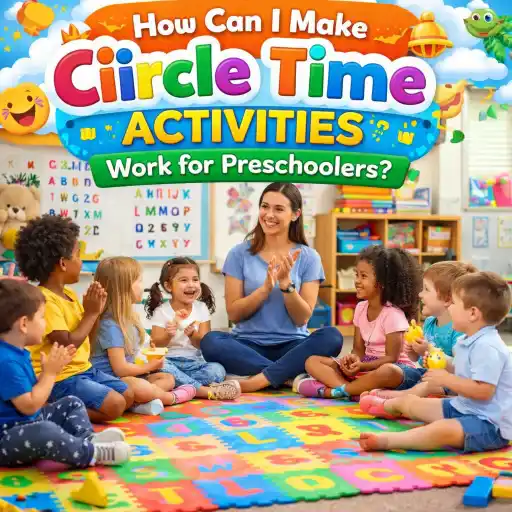
Make a short, predictable routine so children know what to expect. Use a 3-part plan and a clear attention cue. This helps your #routines and lowers behavior problems.
- 🔔 Start: 1-minute welcome (song, bell, or puppet). See opening ideas at Circle Time Ideas That Keep Young Children Engaged.
- 🎯 Main: 5–10 minutes of 1–2 short activities (song + story with a prop).
- 🏁 End: 1-minute goodbye (short song or helper job).
Timing tips:
- Preschoolers: aim for about 10–15 minutes. See timing guidance at Preschool Circle Time Ideas for Learning and Connection.
- Toddlers: keep it 5–10 minutes or use very active, short bits as explained in Circle Time for Toddlers.
Use a simple visual schedule at child eye level so non-readers follow along. For quick how-tos, see How can visual schedules help preschool classrooms run more smoothly? and printable ideas at Free Printable Visual Schedule For Preschool.
What activities keep preschoolers #engaged and learning?
- 📚 Read with props: use puppets, felt boards, or a mystery bag to make stories come alive. See ideas at Circle Time Ideas That Keep Young Children Engaged and read-aloud tips in How can circle time stay fun and keep children engaged?.
- 🎶 Action songs & fingerplays: short songs with movements help language and motor skills. Try lists and ideas from Circle Time Songs, Games, and Questions and music ideas at Sing Play Create.
- 🔎 Mystery Bag or Pass-and-Show: children touch an item or hold a prop, give clues, and classmates guess. Great for vocabulary and turn-taking; see ChildCareEd activity ideas.
- 🕺 Movement breaks: add a 1–2 minute wiggle reset (Hokey Pokey, Freeze Dance) when attention dips. Guidance on movement and resets is in How can circle time stay fun.
Tip: repeat favorites across several days. Repetition builds memory and confidence. For simple, classroom-tested strategies to boost preschoolers' confidence through supportive words and activities, see Confidence boosters for preschoolers.
How do I include every learner and handle behavior or transitions?
Plan for different needs with simple adaptations. Inclusion helps everyone take part and feel safe. For full inclusion strategies, see How to Make Your Circle Time More Inclusive for All Learners.
- 🖼️ Visual supports: picture schedules, emotion cards, and gesture cues help many learners. See Visual Schedules and CSEFEL tips on routines (What Works Brief #3).
- 🪑 Seating & tools: offer cushions, chairs with backs, or a quiet spot. Provide fidgets or shakers for sensory needs as suggested in inclusive circle time.
- 🤝 Multiple ways to answer: speaking, pointing, sign, or holding a prop. This lowers pressure for shy children. See practical roles and helpers in Preschool Circle Time Ideas.
- ⏱️ Transitions: teach cues (2-minute, 30-second), practice them, and use the same signal daily. CSEFEL research supports teaching routines to reduce behavior problems (What Works Brief #3).
Common mistakes and fixes:
- 🚫 Too long? Cut to the top 2 activities and end on a success.
- 🚫 One way to answer? Offer 2–3 response options (say, point, hold a picture).
- 🚫 No prep or props? Prep a theme tub the night before so transitions are quick.
Remember: state requirements vary - check your state licensing agency.
How do I link circle time to learning goals and other classroom centers?
Use circle time as a launch point for center work and measurable learning goals. Keep it short and targeted.
- 📈 Pick one target: choose 1 vocabulary or math goal for the session (e.g., the word “float”). After circle, use that same idea in a center activity so children get hands-on practice. See linking strategies in Preschool Circle Time Ideas for Learning and Connection.
- 🔁 Move materials: after a book about apples, place apple-sorting materials in the math center for counting and graphing. Seasonal examples and center links are in Fall Circle Time Ideas.
- 🤝 Rotate helper jobs: prop holder, page-turner, or name caller build ownership and leadership skills. Research and practice show peer roles help engagement (What Works Brief #6).
- 📣 Quick family tip: send one short suggestion home after circle (a song or book) so families practice the same target.
Quick checks for success:
- 1–2 minute snapshot: can a child name the target word or do the quick action?
- Weekly note: one win and one tweak for next time.
Conclusion
1) Keep circle short, predictable, and playful. 2) Use props, movement, and repetition to boost #engagement. 3) Use visuals and choices to support #inclusion and independence. 4) Link circle targets to centers so children practice across the day. For many ready-made ideas, songs, and lesson packs, see ChildCareEd resources like #preschoolactivities and the circle time article collection at Circle Time Ideas That Keep Young Children Engaged.
Try one small change this week: a new welcome song, a 60-second movement break, or a helper job rotation. Notice the small wins. You’ve got this — your work matters to children and families.
1) A good circle builds a warm classroom community where children practice talking, listening, and taking turns. 2) Short, planned circle times help children learn language, self-control, and group routines. For practical tips on starting and planning, see Circle Time Ideas That Keep Young Children Engaged and Preschool Circle Time Ideas for Learning and Connection.Rotate short activities so children move, listen, and respond. Keep materials ready in a small tub for fast transitions.- 45 Hour Child Growth and Development
- 45 Hour Preschool Methods and Materials
- Bienvenido! Welcoming All Families
- From Tantrums to Triumphs: Equipping Preschoolers with Self-Regulation Skills
- Birth to Five CDA Credential with Portfolio Review
- CDA Bridge Bundle: Preschool
- Pediatric RSV First Aid & CPR/AED
- Working Together: Teachers & Preschoolers
- Texas Director Credential
- How can we better engage children in group activities?
- What fun literacy activities do Florida VPK classrooms need now?
- Can simple indoor movement games teach listening and cooperation to preschoolers in Oklahoma?
- How can rainy day indoor activities help preschoolers learn kindness and cooperation in Georgia?
- How can I teach colors, shapes & numbers through play in Michigan classrooms?
- Fall Circle Time Ideas for Preschool and Daycare
- Mexican-Themed Activities That Teach Culture and Creativity
- Canciones, juegos y preguntas de círculo para niños
- Cultural Activities for Toddlers: Music, Food, Art, and Stories
- How can we use team activities to help preschoolers learn and cooperate?
- Daycare Activity Ideas for Infants, Toddlers, and Preschoolers
- How can music and movement help New York preschoolers?
- How can I teach kids about different countries during the World Cup?
- What are age-appropriate Fourth of July activities for daycares?
- Preschool Team-Building Activities for Better Communication and Friendship
- Get to Know You Activities for Preschool: 12 Easy First-Week Ideas
- Is Your Preschool Day Too Sedentary—and How Can You Tell?
- How Long Should Circle Time Be for Preschoolers?
- How Do You Keep Preschoolers Engaged During Group Activities?
