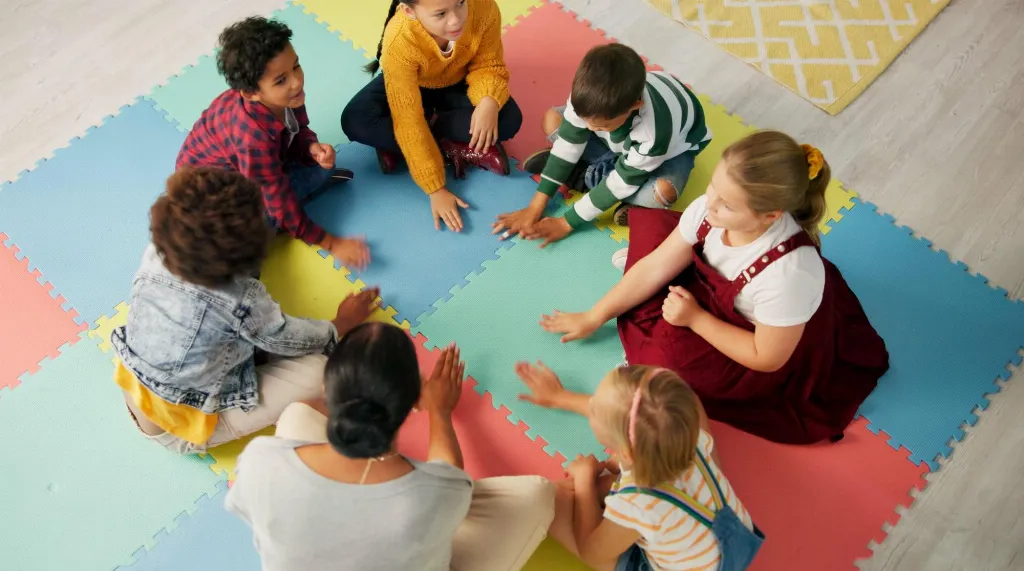
 Fall circle time can be cozy, short, and full of learning. Use these ideas to refresh your #preschool day with a calm gathering that builds skills, connection, and joy. Try to keep circle moments short (5–15 minutes) and change activities when children lose interest.
These tips will help you plan simple routines, quick songs, movement breaks, and sensory ideas that work in family child care or center settings. You can lean on seasonal items like leaves, small pumpkins, and apples to bring real-world learning inside. Check resources like ChildCareEd’s circle time ideas and fall activity roundups from ChildCareEd for quick inspiration.
1) How do I plan a short, meaningful fall circle time?
Why it matters: Circle time builds classroom community and gives children a regular place to practice listening, vocabulary, and turn-taking. Short, clear routines help kids feel safe and ready to learn. Use a consistent start (gathering song, bell, or puppet) and a short closing (goodbye song) so children know what to expect. For more on starting strong, see ChildCareEd’s tips.
Steps to plan (use numbered steps so staff can follow):
- Pick a 5–10 minute time slot for toddlers and up to 15 minutes for preschoolers.
- Choose 1 theme (leaves, apples, pumpkins) and 2 quick activities that match that theme.
- Decide the order: Greeting, song/movement, book or prop story, quick activity, goodbye.
- Gather 3 props (song props, felt pieces, or a mystery bag) in a small tote so transitions are fast.
For simple books and matching activities that pair well with a single theme, check the fall circle lessons from No Time For Flashcards — they give book-based lessons you can reuse all week.
2) What quick fall circle activities keep children engaged?
Use short, varied activities so children with different attention spans can join in. Here are easy options you can rotate:
- 📚 Read-aloud with props: Bring a stuffed animal, a hat, or a toy apple. Let children touch props while you read.
- 🍁 Leaf sorting and counting: Pass out laminated leaves to sort by color, then count groups. See matching center ideas at No Time For Flashcards.
- 🎶 Action songs and fingerplays: Use short chants like "Toss the Leaves" or a squirrel song for movement. Find seasonal songs at Sing Play Create.
- 🎲 Roll-and-cover or graphing quick game: Roll a die with candy corn or leaf counters and add to a class graph. See fall math ideas at No Time For Flashcards.
- 👜 Mystery bag: Children feel one item (acorn, small pumpkin) and guess what it is — great vocabulary practice.
Tips: Change voice, add a wiggle break when energy dips, and use music as a transition tool. For more movement and sensory ideas, see ChildCareEd’s fall activities. For ready sensory and cognition-focused activities that boost brain power and engage the senses, see Fun Time Activities for Brain Power and the Senses.
3) How do I include every child and stay safe during fall circle time?
Inclusion and safety matter. Make small adaptations so all learners can join in and so you follow rules. Remember: state requirements vary - check your state licensing agency.
Inclusive steps:
- 🔁 Offer choices: talk, point, or show a picture. Not every child needs to speak aloud.
- 🪑 Flexible seating: cushions, chairs, or a quiet spot for children who need less stimulation. See inclusion ideas at ChildCareEd on inclusive circle time.
- 🖼️ Use visuals and props: picture schedules, felt boards, or sign language help many learners follow along.
- ⚠️ Check small parts and food: avoid choking hazards and follow allergy rules; if you use food (apples, seeds), get parent permission and follow licensing rules. For concrete, supervised food-based sensory and STEM ideas—such as simple gelatin experiments and classroom-safe recipes—see Jello-O Day.
Common mistakes and how to avoid them:
- ❌ Mistake: Too many activities at once. Fix: Keep to 1–2 short items per circle time.
- ❌ Mistake: No routine. Fix: Repeat the same opening and closing so children know what comes next.
- ❌ Mistake: One-size-fits-all participation. Fix: Provide nonverbal jobs like handing props or placing a sticker.
4) How can I link circle time to learning goals and other centers?
Circle time should connect to classroom learning so children can practice skills across the day. Use these ideas to make circle time feed into centers:
- 📈 Math: After a circle sorting activity, move the same materials to a math center for counting and graphing. See fall math centers at No Time For Flashcards.
- ✍️ Literacy: If you read a fall book, set out related alphabet or letter matching cards in the literacy center. Try printable packs from Fantastic Fun & Learning.
- 🔬 Science/STEM: Do a quick sink-or-float test in circle, then send items to the science table for deeper exploration — ideas in ChildCareEd’s fall STEM ideas.
- 👐 Sensory: Bring a leaf or scented pumpkin prop to circle, then rotate it to a sensory bin for hands-on play (many sensory bin ideas at Fantastic Fun & Learning).
Quick FAQ (4 Qs):
- Q: How long should circle time be? A: 5–10 minutes for toddlers; up to 15 for preschoolers. See timing tips at TTS ideas.
- Q: What if kids get noisy? A: Use a quick brain break song or movement — try an action song from Sing Play Create.
- Q: Can I use real food? A: Yes, with family permission and licensing checks; always follow allergy and food rules.
- Q: How to include shy children? A: Give them jobs (prop holder, helper) and gentle invitations to join without pressure. For more low-pressure, reassuring activities and prompts you can use on arrival or during circle time to ease separation or first-day nerves, see our collection of ideas in First Day Jitters.
Conclusion
Start small. Try one new fall circle activity this week, notice what the children love, and repeat it. Use simple props, short songs, and a clear routine to make circle time a calm learning anchor for your day.
For more ready-made ideas and printables, check theme packs at Fantastic Fun & Learning and lesson lists at No Time For Flashcards. Enjoy the season and the small moments of connection. Your team and children will thank you!
- CDA Preschool Credential
- Supervision with Intent for Admin
- CDA Home Visitor Subject Area 3 Part 3 Birth to 5
- Balancing Physically Active Play in Child Care
- Birth to Five CDA Credential with Portfolio Review
- Positive Attention: Interactions & Supervision for Infants & Toddlers
- Wellness in Action: Teaching Healthy Habits to Children
- Balancing Active Play in Child Care
- IEPs and IFSPs in Family Child Care
- Sleeping Through the Confetti: How to Help Kids Catch Zzz’s
- How can rainy day indoor activities help preschoolers learn kindness and cooperation in Georgia?
- Before You Buy the Cute Daycare with the Tiny Chairs, Read This
- Team-Building Activities for Daycare: Helping Children Learn Together
- Learning Through Creative Daycare Activities
- How can North Dakota daycares help shy children come out of their shell?
- Fall Circle Time Ideas for Preschool and Daycare
- Canciones, juegos y preguntas de círculo para niños
- Preschool Circle Time Ideas for Learning and Connection
- Can a World Cup theme on the DC circle time rug teach teamwork, turn-taking, and big feelings?
- How Can I Make Circle Time Activities Work for Preschoolers?
- How can we plan fun, safe outdoor activities for school-age daycare programs?
- What are fun, practical school-age daycare activity ideas for teachers?
- How can I plan activities for school-age children in daycare?
- How do I build a fall routine that actually sticks in my classroom?
- How can childcare programs celebrate the harvest season in ways that are inclusive, safe, and sensory-rich?
- How Can You Prepare Your Classroom for Fall While Prioritizing Safety, Health, and Learning?
- Too Wiggly to Sit? Fall Movement Activities Toddlers Will Love
- Rainy Fall Day? 12 Indoor Activities Preschoolers Won’t Want to Stop
- Fall Detectives: 10 Questions Pre-K Kids Can Investigate This Season
