Music and movement are simple tools that make a big difference for young children. In this article, you will find easy ideas you can use in your #classroom tomorrow. We explain why it matters, give ready activities, show how to include every child, and share tips for staff training and schedules. Read as a supportive colleague: try one idea, notice what helps, and keep what works. Remember: state requirements vary - check your state licensing agency.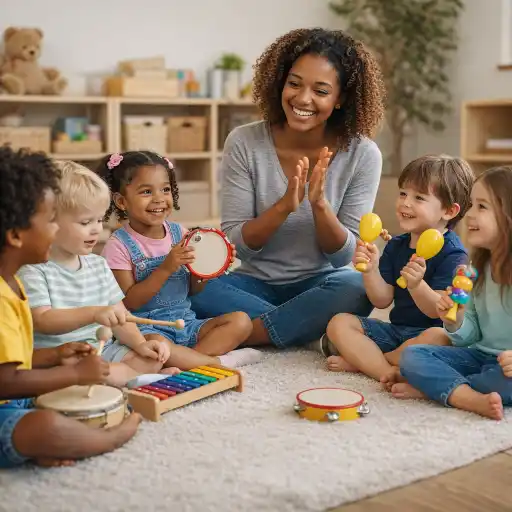
Why do music and movement matter for my #preschoolers and their #development?
1) Music helps language and social skills. Songs with rhyme and rhythm build vocabulary and listening. ChildCareEd explains how circle songs and action songs boost language—try ideas from Circle Time Songs, Games, and Questions for Kids.
2) Movement builds motor skills and focus. Short bursts of movement improve balance and readiness to learn. For practical games, see Gross Motor Games for Preschool and Kindergarten. To learn how to align activities with children’s natural readiness for motor development, see Understanding the Sensitive Period for Movement.
Why it matters: children who move and sing are calmer, more ready to learn, and practice important skills while having fun. These small daily moments add up to big gains in social, physical, and thinking skills.
What simple activities can we use right away in a New York #classroom?
- 🎵 Hello and goodbye songs — start and end the day with the same short song to build routine. See song ideas at ChildCareEd circle time.
- 🕺 Freeze Dance or Color Dance Parade — quick dance with stops. Try the lesson plan Color Dance Parade Buy Now $0.00 for a ready script and props.
- 🥁 Body percussion and instruments — use shakers, drums, or hands to tap beats and keep a steady pulse. ChildCareEd and local music groups have instrument ideas you can borrow.
- 🐾 Movement relays and obstacle courses — tape stepping stones, cushions, or cones to build balance and planning; see gross motor game ideas.
- 📚 Story with actions — add a few movement cues to a read-aloud so children act out parts and connect words to motion.
Tips: 1) Keep whole-group time under 10–15 minutes. 2) Repeat favorite songs several days in a row. 3) Use music for transitions (line up, wash hands, clean up). For ready resources and printables, see ChildCareEd resources.
- 🎵 Music in early childhood: For staff who want to deepen their understanding of how music supports language and social development, ChildCareEd's Mind's Medicine: Music in Early Childhood
 Buy Now $16.00 is a 2-hour online course covering how to use music intentionally to build vocabulary, listening, and rhythm skills — a direct match for the hello/goodbye songs, body percussion, and transition-music steps outlined in this guide.
How do we include every child and avoid common mistakes?
- 🔁 Offer choices: let children sing, point to a picture, use a sign, or play an instrument. This gives every child a way to join.
- 🪑 Provide seating options: cushions, chairs with backs, or standing spots so children who move more can still participate.
- 🔇 Adjust sound and space: lower volume or use soft instruments for children with sensory needs. Create a quiet corner nearby if needed.
- 🤝 Use helpers and buddies: rotate simple jobs so shy children join slowly (line leader, drum keeper, scarf holder).
- 🛡️ Follow safety and rules: clear space, demo activities, and supervise. Remember, state requirements vary - check your state licensing agency.
- 🤝 Supporting diverse learners: For staff who want practical tools to include every child in music and movement time, ChildCareEd's Recognize, Respond, Respect: Supporting Diverse Learners Buy Now $55.00 is a 6-hour online course covering how to identify individual needs and adapt activities — directly supporting the seating options, sound adjustment, and choice-based participation steps described in the inclusion section of this article.
Common mistakes and fixes:
- 🚫 Too-long sessions — Fix: break into shorter songs and movement bursts.
- 🚫 One-size activities — Fix: give 2–3 ways to respond (say, point, sign).
- 🚫 Loud or high-energy for all — Fix: add calm songs and quiet options after active play.
For more inclusion tools and lesson ideas that adapt to many needs, explore resources like Berklee ABLE materials and ChildCareEd’s inclusion guides as free resources.
How can staff add music and movement into schedules and build skills?
1) Start small. Add one 5–10 minute movement break each day. 2) Use music for transitions and circle time. 3) Plan three types of activities each week: calm songs, active dance, and instrument play.
- 📅 Sample day plan:
- Morning welcome song (2–3 minutes)
- Before circle: freeze dance (2 minutes)
- Outdoor free play with balls (15–20 minutes)
- Calm goodbye song (2 minutes)
- 👩🏫 Staff training ideas:
- Use short workshops and coaching rather than one long class. ChildCareEd offers short courses and checklists—see music & movement guide.
- Model lessons: pair a new teacher with a mentor for one music session.
- 🎒 Low-prep supplies: shakers, scarves, small drums, and a playlist of 8–10 favorite songs. Use printables from ChildCareEd's free resources.
FAQ (quick):
- Q: How long should movement breaks be? A: 1–15 minutes depending on the age and activity.
- Q: What if space is small? A: Use tape lines, balloon games, or seated marches.
- Q: How often should staff train? A: Short, regular coaching works best.
- Q: Where to find ready plans? A: Try the Color Dance Parade Buy Now $0.00 and ChildCareEd lesson packs.
You are doing important work. Try one new song or movement activity this week, watch how children respond, and celebrate small wins. Keep the focus on joy and learning through play.
- 45 Hour Child Growth and Development
- 45 Hour Preschool Methods and Materials
- Pediatric RSV First Aid & CPR/AED
- CDA Bridge Bundle: Preschool without Portfolio Review
- Texas Director Credential
- Wellness in Action: Teaching Healthy Habits to Children
- Mind's Medicine: Music in Early Childhood
- Every Moment Matters: Schedules and Transitions
- How Can Childcare Educators Thrive in the Big Apple?
- Best Songs for Circle Time
- CDA Certification en Español: Recursos y Consejos para Educadores Bilingües
- Cómo Trabajar en el Cuidado Infantil en Carolina del Norte: Requisitos y Pasos
- Can simple indoor movement games teach listening and cooperation to preschoolers in Oklahoma?
- What age-appropriate learning activities should we use for infants, toddlers & preschoolers in New York?
- How can New York childcare workers help children build a strong sense of identity in a big city?
- Celebrando la amistad en el cuidado infantil durante el Día de los Mejores Amigos
- Canciones, juegos y preguntas de círculo para niños
- What indoor activities help New York child care programs stay safe and happy during a heat wave?
- How Can I Bring the World Cup into a Multicultural Preschool Classroom in New York?
- How Can New York Providers Support Health, Family, and Learning Together?
- How Does Guided Play Build School-Ready Skills in New York Preschoolers?
- How do I write a screen-time policy for my New York child care program?
- How can music and movement help New York preschoolers?
- How can I start a small garden project with New York preschoolers?
- How can child care programs celebrate Latin rhythms and culture with young children?
- How can I host a safe, engaging freeze-dance party in my daycare?
- Can a Music‑Video‑Themed Movement Day Boost Learning and Inclusion in My Program?
- How Does Singing Together Build Community in the Classroom?
