Rainy days are perfect chances to teach children to be kind and to work together. This guide gives easy, ready-to-use indoor activities for child care providers and directors in Georgia. You will find simple steps, links to useful lesson plans, and ways to include every child. These ideas fit morning routines, circle time, centers, or indoor recess. Use them with your #preschoolers to build #kindness and #cooperation on any #rainyday in #Georgia.
Why it matters
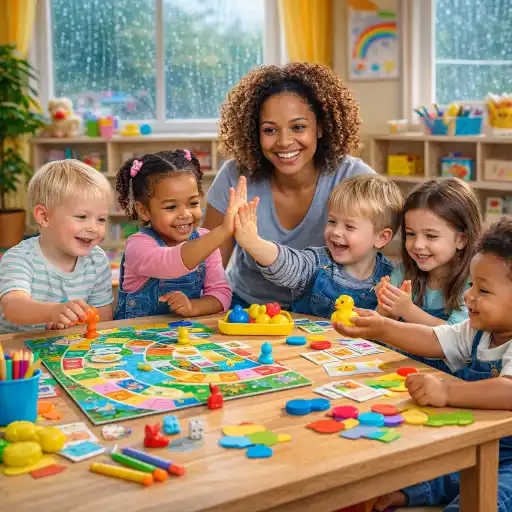
1) Kind, cooperative classrooms have fewer fights and more learning time. When kids practice caring and teamwork, they feel safer and more confident. 2) Teachers save energy: a calm, cooperative room is easier to manage and more joyful for staff and children. For practical lesson ideas, see the Social Skills Lesson Plan for Preschoolers Buy Now $0.00.
What indoor activities can I run on a rainy day to teach kindness and cooperation?
Try a set of short, repeated activities. Each one takes about 10–25 minutes and builds social skills over time.
- 😊 Cooperative Mural: Put a big paper on the wall and let small groups add pieces over several days. This is a long project that lets kids take turns and praise each other's ideas (see a cooperative mural idea from No Time for Flashcards). Use prompts like, "How can we help our friend finish this flower?"
- 🧩 Puzzle Piece Hunt: Hide puzzle pieces around the room. Children must find the pieces and assemble the puzzle together. This activity encourages communication and shared goals (inspired by the Puzzle Hunt).
- 🎭 Puppet Role-Play: Use puppets to act out common problems (taking turns, comfort after a fall). Ask kids to suggest kind responses. See friendship and role-play ideas at How can preschool teachers teach friendship skills?
- 🏃 Cooperative Obstacle Course: Set up a gentle course where children help a blindfolded partner through. This builds trust and clear communication; see a cooperative obstacle idea at Paper and Glue.
- 🎲 Cooperative Games: Use board or group games where everyone wins together (Hoot Owl Hoot or Stone Soup-style play). Cooperative games teach strategy and shared success; examples at Little Learning Corner.
- 🍽️ Snack Helpers: Rotate snack helper pairs to pass plates, pour water, and thank each helper. Routines like this teach service, gratitude, and teamwork. ChildCareEd shows many routine-based ideas in How Can We Teach Empathy, Kindness, and Cooperation Through Daily Routines?.
- 📚 Read-and-Reflect: Read a short book about sharing, pause, and ask: "How could the friend help?" Book lists that support sharing are in many resources (see ChildCareEd and external suggestions).
- 🧘 Calm-Down Circle: Teach a breath or squeeze routine before conflict work. Use printable Relaxation Strategies for Children Buy Now $0.00 to teach simple calming skills.
How do I fit these activities into daily routines and Georgia rules?
- 📆 Schedule: 1–3 short sessions a day (circle time, center time, and transition moments). Repetition helps skills stick.
- 🧰 Materials & Safety: Use safe, easy materials. For mixed-age groups, keep small part dangers in mind and follow safety guidance from Georgia resources. For training and licensing guidance, see Peach State Prep, and remember state requirements vary - check your state licensing agency.
- 🔁 Embed in Routines: Turn snack, cleanup, and line-up into kindness lessons (e.g., share a task, thank a helper). ChildCareEd's routine ideas are in How Can We Teach Empathy, Kindness, and Cooperation Through Daily Routines?.
- 🧑🏫 Staff Prep: Train staff on short scripts and prompting. Use ChildCareEd trainings and the Social Skills Lesson Plan (Social Skills Lesson Plan Buy Now $0.00) to coordinate lessons across staff.
- 🩺 Health & Safety: Maintain required CPR/First Aid and health orientation for staff. See Georgia training guidance at Peach State Prep.
How can I adapt activities for mixed ages and children who need extra support?
Mixed groups and children with different needs benefit when you plan small changes. Try these 1–5 steps:
- 🧩 Use choice and roles: Let older children be "helpers" or "teachers" (classroom directory ideas in Building Cooperative & Problem Solving Skills). Simple buddy jobs (pass plates, pick music) help younger kids join in.
- 🔁 Shorten turns and add visuals: Use timers and picture cards for turn-taking. Visuals make waiting easier for many learners (see sharing and turn-taking tips at How can preschoolers learn to share, take turns, and make friends?).
- 🤝 Peer buddies: Pair a child who needs support with a steady buddy. Peer coaching teaches leadership and kindness (see role-play and priming strategies at How can preschool teachers teach friendship skills).
- ♿ Adapt materials: Bigger puzzle pieces, quieter corners, or fewer choices reduce overwhelm. For mixed-age strategies, check the course Working With Mixed Age Groups
 Buy Now $24.00.
 - 🔁 Rehearse: Prime children before a moment ("Today at centers, you can ask: 'Can I play with you?'"). Practice scripts with puppets first to build confidence.
How do I teach, coach, and measure kindness and cooperation so it grows?
Make teaching short, consistent, and visible. Use these steps:
- 🎭 Teach scripts and role-play: Give kids 1–2 short phrases to use ("Can I play?" "Your turn next."). Role-play with puppets so they practice without pressure. ChildCareEd offers scripts and role-play tips in How can preschool teachers teach friendship skills.
- 👏 Notice and name: Praise specific acts (“You helped Sam pick up blocks—thank you!”). Specific praise makes behaviors repeat (see prompting and praise in sharing and turns article).
- 🔧 Repair steps: Teach short conflict scripts: 1) Stop, 2) Name the problem, 3) Offer choices, 4) Repair. Keep coaching brief and calm.
- 📊 Track progress: Keep a simple chart for a week—count kind acts, repairs, or shared wins. Share quick notes with families to continue practice at home.
- 🏅 Rituals: Use a Kindness Jar, a board of good deeds, or a weekly sharing circle to celebrate kindness. World Kindness Day ideas and monthly challenges can boost focus (see World Kindness Day). You can also organize simple, center-wide actions or one-day events around National Random Acts of Kindness Day to spotlight everyday kindness and involve families in classroom routines.
Common mistakes & how to avoid them
- Forcing sharing: Teach offers and trades instead of taking items away.
- Long lectures: Use short scripts and repeat practice moments.
- Ignoring small wins: Notice tiny acts so kindness grows.
Quick FAQ
- Q: How long until I see change? A: Small wins in weeks; steady change in months with daily practice.
- Q: What about safety and licensing? A: Keep training current and follow Georgia guidance—state requirements vary - check your state licensing agency and review Peach State Prep.
- Q: How do I include nonverbal children? A: Use gestures, choice boards, and peer buddies so they can join without words.
- Q: Where can I find lesson plans? A: Start with the Social Skills Lesson Plan Buy Now $0.00 and the routine articles on ChildCareEd.
Summary Checklist
- Model short scripts and practice with puppets.
- Plan 2–3 short cooperative activities each rainy day.
- Use visuals, timers, and peer buddies for support.
- Celebrate kindness with a jar or board and track small wins.
- Maintain staff training and safety records—state requirements vary - check your state licensing agency.
You are doing important work. These rainy day plans make kindness and cooperation part of everyday life. Small, joyful routines add up to a kinder classroom—one rainy day at a time.
Plan activities that match your schedule and licensing needs. Keep them short and repeatable so children practice often. Follow these steps:- 45 Hour Child Growth and Development
- CDA Home Visitor Subject Area 3 Part 3 Birth to 5
- 45 Hour Preschool Methods and Materials
- Bienvenido! Welcoming All Families
- Birth to Five CDA Credential with Portfolio Review
- Engaging Indoor Activities for Inclement Weather
- 45 Hour Infant and Toddler Methods and Materials
- 45 Hour School Age Methods and Materials
- Texas Director Credential
- CDA Certification en Español: Recursos y Consejos para Educadores Bilingües
- ¿Cuáles son las mejores actividades del Día de la Tierra para niños en casa o en el aula?
- Actividades de Motricidad Gruesa que Desarrollan el Equilibrio, la Coordinación y la Fuerza
- Proporciones de Cuidado Infantil y Tamaños de Grupo por Edad en Maryland (Guía Rápida para Centros y Hogares)
- Cómo Trabajar en el Cuidado Infantil en Carolina del Norte: Requisitos y Pasos
- Cómo Trabajar en el Cuidado Infantil en California: Requisitos y Pasos
- Las Mejores Ideas de Excursiones para Guarderías en Georgia
- How can Georgia preschool teachers use positive guidance to help preschoolers share during indoor play?
- How can rainy day indoor activities help preschoolers learn kindness and cooperation in Georgia?
- How can Washington forest and nature center field trips work well on a rainy day?
- How can child care programs boost physical activity for young children?
- Celebrando la amistad en el cuidado infantil durante el Día de los Mejores Amigos
- What indoor activities work best for school-age children in daycare?
- How can I keep Children Active Indoors On Cold Days?
- Rainy Fall Day? 12 Indoor Activities Preschoolers Won’t Want to Stop
- No Playground Today! Rainy Day Activities for Kids All Ages.
- How Can Child Care Providers Help Children Explore Weather Indoors and Outdoors?
- How Can Child Care Programs Protect Preschool Playtime When the Schedule Gets Crowded?
- How Can Child Care Providers Keep Indoor Play Manageable When Rain Lasts All Week?
- Screen-Free Activities for Short Gaps in the Preschool Day: What Works?
