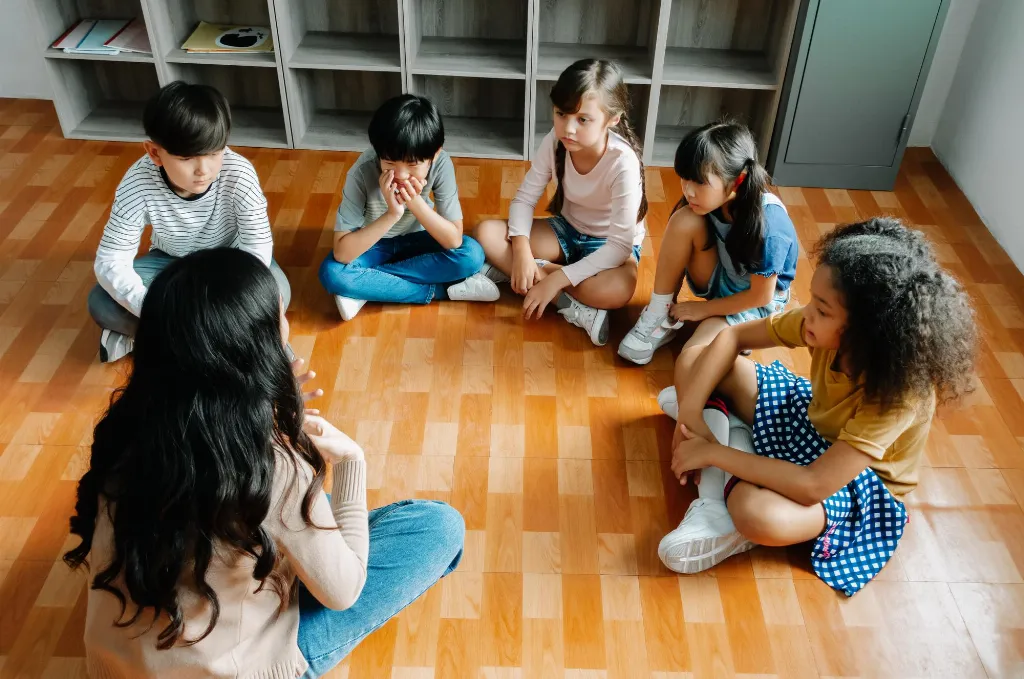
 Circle time is a short, special part of the day when children gather to sing, share, and learn together. A strong #circletime helps your #preschool class build a calm routine, strong friendships, and learning goals. This article gives clear, easy ideas you can use tomorrow to make circle time joyful, meaningful, and inclusive. Remember: state requirements vary - check your state licensing agency.
Why does circle time matter?
Circle time matters because it helps children practice talking, listening, and taking turns. It also:
- Builds social skills and #inclusion by letting children greet each other and share feelings.
- Boosts language and #engagement through songs, stories, and word play.
- Connects group routines to learning goals so children practice the same ideas in centers and play.
For practical tips on keeping circle time short and playful, see ideas from ChildCareEd and a full list of engaging activities at ChildCareEd.
1) How can I start circle time so children settle and feel connected?
Start with a predictable, short greeting so children know the routine. A clear start helps them move from play to focus quickly.
- 🔔 Gather in 3 simple steps:
- Give a 2-minute and then 30-second warning.
- Use a short attention cue (song, bell, or a call-and-response).
- Do a 1-minute greeting: name, high-five, or a quick weather check.
- 🎵 Use a short welcome song each day. This signals it’s time to come together and calms the room. ChildCareEd has example opening routines you can adapt: Circle Time Ideas That Keep Young Children Engaged.
- 🖼️ Show a tiny visual schedule or picture card so non-readers know the order (greeting → song → story → goodbye).
- ✅ Teach the start routine by practicing it for a few days until children respond to the cue automatically.
Why this works: short, repeated openings build safe predictability and reduce behavior problems. Use the ideas in Transition Trouble? to teach the routine.
2) What activities keep preschoolers learning and engaged during circle time?
Mix songs, movement, short stories, and props. Vary the activity every few minutes so children can move and refocus.
- 📚 Read with props: Use a puppet, felt pieces, or a mystery bag to make stories come alive. See read-aloud tips at ChildCareEd.
- 🎶 Action songs and fingerplays: Pick songs with clear movements (e.g., Head, Shoulders…). These help language and self-regulation.
- 🕺 Movement breaks: Add a 1–2 minute wiggle reset or gross motor game between sitting activities. For fun gross motor ideas, try The Gross (Motor) Truth.
- 🎲 Mystery bag or listening game: Let a child feel an object and describe it, or use a shaker to practice turn-taking and vocabulary.
- 🔁 Repeat favorites: Repetition helps memory — read the same short book multiple times across the week.
Tip: keep whole-group time to about 10–15 minutes for preschoolers. For extra seasonal ideas, see Fall Circle Time Ideas.
3) How do I include every learner and avoid behavior pitfalls?
Plan so every child can join. Use simple adaptations and clear expectations.
- 🖼️ Offer multiple ways to participate: speaking, pointing, holding a prop, or using a picture card. See inclusive tips at How to Make Your Circle Time More Inclusive for All Learners.
- 🪑 Provide flexible seating (mats, small chairs, a quiet spot) and sensory tools (fidgets, cushions) for children who need them.
- 🎯 Use Universal Design for Learning (UDL) ideas: give choices, add movement, and present information with pictures and words; learn more at the UDL overview in the research literature (see UDL in Preschool).
- 🛠️ Teach transitions and simple cues. Practice short attention signals often so they become automatic (see Transition Trouble?).
Common mistakes and fixes:
- 🚫 Mistake: Circle time too long. ✅ Fix: Cut to the top 2 activities and end on a success.
- 🚫 Mistake: Only one way to answer. ✅ Fix: Offer thumbs up/down, picture choices, or hand a prop.
- 🚫 Mistake: Vague directions. ✅ Fix: Give 1–3 clear steps (e.g., sit, hands in lap, look here).
4) How can circle time link to learning goals and other classroom centers?
Use circle time as a quick teaching moment that connects to small groups, centers, and family learning.
- 📈 Pick one target (vocabulary, number, letter, or emotion) and design 2 short activities around it. Example: teach the word “float” and then test objects at the water table.
- 🔁 Move materials from circle to centers: after a story about apples, put apple-sorting materials in the math center for hands-on practice. ChildCareEd shows how circle links to centers in their themed guides: Fall ideas.
- 🤝 Use circle helpers: rotate jobs (prop holder, page-turner, line leader) so children feel ownership and practice responsibility.
- 📣 Share quick family tips: send a 1-line idea home after circle (song or book to read) so families practice the same target. For literacy links, see ChildCareEd Florida VPK tips.
Measure success with short checks:
- 1–2 minute snapshot: can a child name the target word or do a quick action?
- Weekly note: one thing that worked and one tweak for next time.
Summary and FAQs
Start short, use clear routines, add movement and props, and plan small, meaningful links to centers. Use visuals and choices so every child can join. For research-based behavior and inclusion strategies see the CSEFEL resources (e.g., CSEFEL) and the UDL overview (UDL in Preschool).
FAQ (quick answers):
- Q: How long should circle time be? A: 5–10 minutes for toddlers; 10–15 for preschoolers. See timing tips at ChildCareEd.
- Q: What if one child won’t sit? A: Offer a helper job, a quiet spot near you, or a fidget tool. Praise small successes.
- Q: How do I include shy children? A: Give gentle invitations and low-pressure roles (prop holder, sticker pass).
- Q: Where can I get ready-made songs and scripts? A: See the ChildCareEd activity pages and song lists linked above.
You’re doing meaningful work. Try one change this week: a new welcome song, a short movement break, or one visual schedule. Watch the small wins—more smiles, more sharing, and more learning in your #routines and classroom community.
- Balancing Physically Active Play in Child Care
- Bienvenido! Welcoming All Families
- Birth to Five CDA Credential with Portfolio Review
- Pediatric RSV First Aid & CPR/AED
- CDA Bridge Bundle: Preschool without Portfolio Review
- Emergent Learning & Development
- Balancing Act: Record Keeping & Supervision
- Texas Director Credential
- Wellness in Action: Teaching Healthy Habits to Children
- Balancing Active Play in Child Care
- Learning Through Creative Daycare Activities
- How can I teach colors, shapes & numbers through play in Michigan classrooms?
- Fall Circle Time Ideas for Preschool and Daycare
- How Do I Plan a Strong Preschool Curriculum?
- Canciones, juegos y preguntas de círculo para niños
- Preschool Circle Time Ideas for Learning and Connection
- Can a World Cup theme on the DC circle time rug teach teamwork, turn-taking, and big feelings?
- How Can I Make Circle Time Activities Work for Preschoolers?
- How Can Oklahoma Providers Use Connection-Centered Care to Build Calm Classrooms and Stronger Relationships?
- How can childcare programs meaningfully explore Japanese culture with young children?
- Free Weekly Lesson Plan for Preschool Classrooms
- STEM for Preschoolers: Fun Activities That Encourage Curiosity
- Team-Building Games for Preschoolers That Teach Cooperation
- Get to Know You Activities for Preschool: 12 Easy First-Week Ideas
- Preschool Schedule That Works: When to Plan Centers, Circle Time, and Outdoor Play
- Kindergarten Songs for Circle Time: 15 Sing-and-Move Ideas That Sneak in Learning
- Circle Time Topics Beyond Weather, Days of the Week, and the Calendar
- How Can Child Care Providers Create a Preschool Schedule That Supports Learning and Well-Being?
- How Can Teachers Make Circle Time Work for Children with Short Attention Spans?
