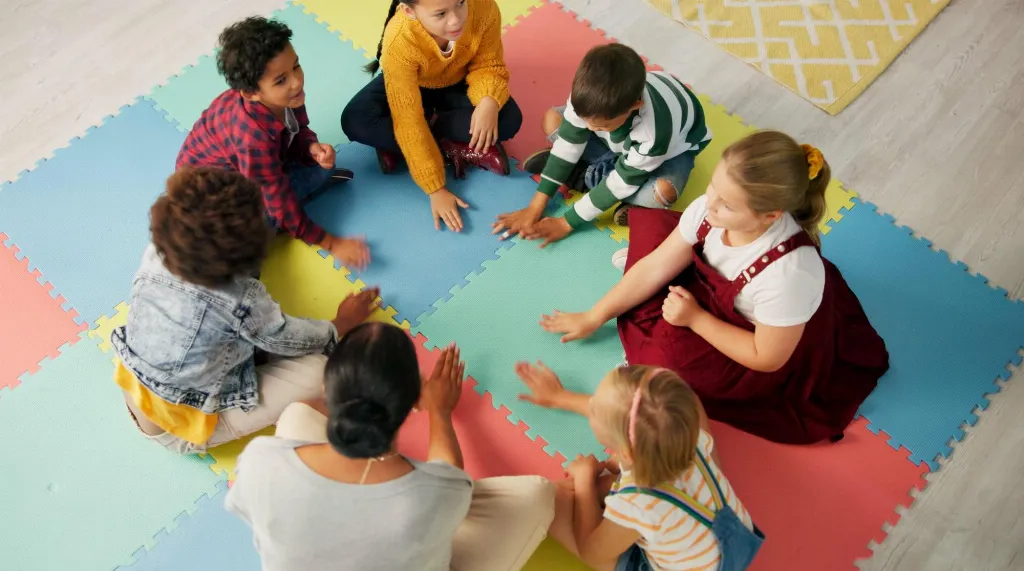
 Circle time can be a small moment that makes a big difference. In this article you will find simple songs, short games, and easy questions you can use tomorrow to build skills and friendships. Read this as a supportive colleague: try one idea, notice what works, and keep what helps your children feel safe and #happy in the #circle.
What songs should we use during circle time?
Music brings children together. Use short songs that invite movement and repeat the same song for several days so children learn the words and actions. Here are numbered ideas you can use.
- 🎵 Hello and welcome songs — start with a greeting song to get attention and make every child feel seen. Try a simple name greeting from ChildCareEd’s list of Best Songs for Circle Time.
- 🎵 Action songs — pick songs with motions like “Head, Shoulders, Knees and Toes” or “The Wheels on the Bus.” These help #songs become movement-based learning; see lists at Sing Play Create and printable packs at Fantastic Fun & Learning.
- 🎵 Calming songs — end with a soft song like “Twinkle, Twinkle” to help children settle for the next activity. Repeat the same goodbye song each day to build routine (see Circle Time Ideas That Keep Young Children Engaged).
- 🎵 Short song packs — keep a small folder of 5–8 favorite songs so staff rotate choices without overloading children. Printable song charts help children connect words to print (see Printable Preschool Songs).
Why music matters: music builds language, memory, and motor skills. Use songs to teach routines, transitions, and feelings. Keep songs short (5–20 seconds for very young children; longer for preschoolers) and repeat them so children practice and succeed.
What quick games and activities keep children engaged at circle time?
Short, active games help children pay attention and learn. Use props and give children small jobs. Below are easy games to try, with numbers so staff can follow steps.
- 🔎 Mystery Bag (3 steps): 1) Place a small object in a bag. 2) Let a child feel it and give 2 clues. 3) Class guesses. This builds vocabulary and listening; see ideas in Circle Time Ideas.
- 🪄 Pass-and-Show (3 steps): 1) Give each child a picture or prop. 2) Child names it or acts it out. 3) Next child repeats and adds. This supports turn-taking and memory; it’s a favorite in many preschool guides like TTS.
- 🕺 Movement breaks: use quick action songs (Hokey Pokey, Freeze Dance) to reset attention. Sing Play Create lists many good movement songs (Sing Play Create).
- 📚 Story with props: read a short book and let children touch 1–2 props during the story. Training like Setting the Stage: Story Time explains how props make read‑alouds stick.
- 🏷️ Helper jobs: rotate roles (prop holder, name caller, prop passer). Jobs create many peer interactions, a strategy supported by CSEFEL.
Tips: 1) Keep whole-group activities under 10–15 minutes for preschoolers. 2) Prepare materials in a small tub for fast transitions. 3) Change voice and add surprises to keep curiosity high (see How can circle time stay fun?).
What questions should I use to build community and language?
Questions at circle time teach social skills, language, and thinking. Use simple, repeatable prompts and mix fun questions with thoughtful ones. Numbered ideas below help you plan a week of questions.
- 👋 Short greetings: "Who is here today?" Use a name song and let each child say or show something quick. Greeting routines are in ChildCareEd’s circle time ideas.
- ❓Quick choice questions: "Do you like apples or bananas?" Use thumbs-up/down or picture choices so everyone can answer. This supports inclusion and quick talk.
- 💬 Feelings check (3 steps): 1) Ask one child, 2) Use emotion cards, 3) Let classmates mirror or name a calming strategy. Try the Name Your Emotions chart in a sample lesson plan at Social Skills Lesson Plan Buy Now $0.00.
- 🎲 Ice-breakers from a big list: use a short question each day from a large bank (e.g., "What made you smile yesterday?") — see many morning meeting questions ideas at AOL’s 180 Questions. Pick age-appropriate prompts.
- 🗣️ Language boosters: ask open prompts that create sentences: "Tell us one thing you did this morning." Pair with sign language or pictures for nonverbal responses (see Language Learning Games).
Why questions matter: they build vocabulary, confidence, and listening. Use visuals and alternate ways to answer so shy children join in. Invite families to share favorite home words to celebrate home languages — state requirements vary - check your state licensing agency. For practical confidence-building activities and supportive classroom language you can use at circle time, see Confidence boosters for preschoolers.
How can I include every learner and avoid common mistakes?
Inclusion and clear routines make circle time a win for everyone. Use these numbered strategies and common-pitfall fixes.
- ♿ Offer choices: let children answer by speaking, pointing to a picture, sign, or holding a prop. This supports different communication styles and is recommended in How to Make Your Circle Time More Inclusive.
- 🪑 Flexible seating: allow cushioned seats, chairs with backs, or standing spots for children who need movement. Toddlers may need shorter circle times — see Circle Time for Toddlers.
- 🤝 Peer roles and prompts: create helper jobs so children practice skills. The CSEFEL brief explains how jobs increase peer interactions and learning (CSEFEL).
- 🔊 Sensory supports: offer fidget tools, visual schedules, or a quiet spot nearby. Reduce loud noises or bright lights when a child is overwhelmed.
- 📋 Teach transitions: give 2-minute and 30-second warnings, use the same attention signal each day, and practice cues until they become routine (see How can circle time stay fun?).
Common mistakes and fixes:
- 🚫 Mistake 1: Too long or teacher-centered circle. ✅ Fix: Break into short parts and add movement every few minutes.
- 🚫 Mistake 2: No visual supports. ✅ Fix: Use pictures, props, and a simple visual schedule.
- 🚫 Mistake 3: One way to answer only. ✅ Fix: Offer 2–3 ways to respond (say, point, sign).
Quick FAQ:
- Q: How long should circle time be? A: Toddlers 5–10 minutes; preschoolers 10–20 minutes. Watch attention and end on a high note.
- Q: What if a child is very shy? A: Offer a nonverbal job and slowly increase turns. Pair them with a peer helper.
- Q: Can I use food props? A: Yes, with parent permission and allergy checks — state requirements vary - check your state licensing agency.
- Q: How often should I repeat a song or game? A: Repeat favorites daily for several days so children master words and actions.
Summary: Pick 1 song, 1 short game, and 1 question to try this week. Use visuals, rotate helper jobs, and keep things short and joyful. For more ready ideas and trainings, explore ChildCareEd resources like Circle Time Ideas That Keep Young Children Engaged and Best Songs for Circle Time. Small changes bring big gains — you’ve got this!
- Supervision with Intent for Admin
- Balancing Physically Active Play in Child Care
- Moving About the Classroom: Effective Transitions for Everyday
- Birth to Five CDA Credential with Portfolio Review
- Play Safe, Think Big: Literacy Through Play
- Every Moment Matters: Schedules and Transitions
- Supporting Families and Caregivers in Language and Literacy
- Moving About the Classroom: Effective Transitions for Everyday
- Can simple indoor movement games teach listening and cooperation to preschoolers in Oklahoma?
- Team-Building Activities for Daycare: Helping Children Learn Together
- Simple Multicultural Games for Child Care Programs
- How can circle time stay fun and keep children engaged?
- How can music and movement strengthen early childhood programs in North Dakota?
- What Were the Key Takeaways from Florida's 2026 Early Educators Conference on Behavior, Music, and Fine Motor Skills?
- Circle Time Songs, Games, and Questions for Kids
- Canciones, juegos y preguntas de círculo para niños
- Can a World Cup theme on the DC circle time rug teach teamwork, turn-taking, and big feelings?
- Teaching Sign Language Through Songs, Games, and Play
- School-Age Lesson Plans for After-School Child Care
- What creative activities work best for school-age daycare programs?
- How can Michigan preschool programs build strong fine and gross motor skills?
- How can music and movement help New York preschoolers?
- How can I teach kids about different countries during the World Cup?
- How can childcare programs meaningfully explore Japanese culture with young children?
- How can I create meaningful circle-time experiences that engage every child?
- Feelings Activities for Toddlers: Building Social and Emotional Skills
- Kindergarten Songs for Circle Time: 15 Sing-and-Move Ideas That Sneak in Learning
- Circle Time Topics Beyond Weather, Days of the Week, and the Calendar
