Teaching early reading can be joyful and simple. This short guide gives Florida VPK directors and providers quick, playful activities that help children move from #circletime to reading readiness. Use this with your daily schedule, small groups, and family partnerships. These ideas combine read-aloud best practices, play-based phonics, and group work that fits Florida standards. See the Florida Early Learning and Developmental Standards for alignment and remember: state requirements vary - check your state licensing agency. This article focuses on practical moves you can try tomorrow for your #VPK #preschoolers to build #literacy and #phonics skills during #circletime.
1) What quick circle time activities boost reading readiness?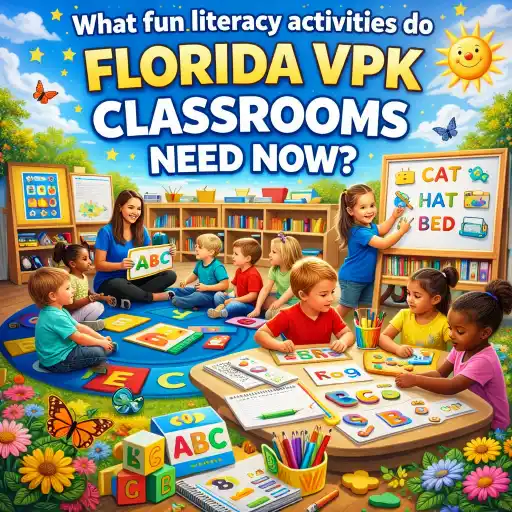
Circle time is perfect for short, focused literacy moves. Keep routines short and repeated. Research and practice show daily, interactive read-alouds help vocabulary, attention, and book knowledge — and you can do this in 10 minutes with preschoolers. For tips on interactive read-alouds, see Reading Aloud in Child Care.
- 📚 Start with a 1–2 minute warm-up song that names objects (colors, animals).
- 🎯 Do a short story with 2 teaching words. Pause twice and ask a simple question: “Who? What happened?”
- 🗣️ Use “serve and return” talk: repeat a child’s answer and add one new word.
- 🔁 Reread favorite books across the week to deepen understanding and memory.
- 🖐️ Add a movement step: children act out a verb (run, whisper, climb) to link words to actions.
Try these exact moves: pick one book, choose two target words, ask two questions, and add one movement. Repeat for a week. For more book choices and family ideas, check literacy resources like Scholastic phonics tips.
2) How can small groups and learning centers build early literacy?
Small groups let you teach letters, sounds, and early writing with more focus. Many providers use daily short small-group stations to differentiate learning and give children hands-on practice. Read practical small-group ideas at Small Group Games and Activities For Preschool & PreK.
- ✏️ Letter Journals — each child practices a letter page with stamps, stickers, or drawing (see PreK Letter Journals).
- 🔤 Phonics Play — rhyming blocks, sound sorting cards, or listening games to build phonemic awareness.
- 📖 Read & Retell — small group rereads with props (puppets, felt pieces) so kids can tell parts of the story.
- 🎨 Print-Rich Art — signs, name labels, and scribble-writing to connect marks to meaning.
Why small groups work: 1) closer teacher support, 2) easier behavior control, 3) faster skill growth. Add quick observations to your daily notes so you can track progress and plan next steps. Digital lesson planners and built-in assessments can help if your program uses tools like FunShine Express.
3) What play-based and family-engagement activities work for Florida VPK?
Play and family partnerships make learning stick. VPK classrooms benefit when families see literacy as fun and part of daily life. Share family reading ideas from Scholastic and host short family literacy events inspired by afterschool toolkits (Afterschool Training Toolkit).
- 📅 Invite families to a 30-minute “Share a Story” event: providers model a dialogic read-aloud and give families a 1-page takeaway with simple questions and a song. Consider timing it with World Story Telling Day and using the event to model multilingual storytelling and give families simple story prompts and activities to try at home.
- 🎒 Send home a tiny “reading kit": 2 board books, a simple prompt card, and one suggested game (rhyming or letter hunt).
- 🌍 Celebrate home languages: encourage families to read in their home language and bring those books to class. This supports bilingual learners and respects culture (see Florida resources and community supports at ChildCareEd Florida News).
Keep family outreach easy: short texts, a poster by sign-in, or a 1-minute demo at drop-off. These small steps build big gains: families become partners in emergent literacy, helping children practice vocabulary and storytelling at home.
4) What common mistakes should providers avoid and how do we measure success?
Avoid these common pitfalls and use simple checks to see growth. Early literacy research (the Science of Reading) highlights phonemic awareness, systematic phonics, fluency, vocabulary, and comprehension as the pillars of reading readiness — use these as guides (learn more at Science of Reading).
- ❌ Mistake: Long whole-group lessons with little interaction. Fix: Break content into short, interactive chunks and use small groups.
- ❌ Mistake: Too many passive read-alouds. Fix: Make read-alouds dialogic — ask questions, teach 2 words, and connect to play (see ChildCareEd read-aloud tips).
- ❌ Mistake: Skipping phonemic play. Fix: Add rhymes, sound games, and blending activities daily (see phonemic awareness resources like Phonemic Awareness).
Simple measures of success (quick and friendly):
- 🔎 Snapshot checks: 1–2 minute phonemic tasks with small groups (identify first sound, produce a rhyme).
- 📈 Running records: note if children retell a story in 1–2 sentences after repeated readings.
- 🗂️ Portfolios: save a letter journal page or drawing each month to show growth.
For more print and assessment tools, see Early Literacy print resources. Keep records brief and use observations to plan the next week.
Conclusion and FAQs
Quick recap: 1) Make circle time short and interactive; 2) Use small groups for letter and sound practice; 3) Invite families to join literacy at home; 4) Avoid long passive lessons and track growth with snapshots.
FAQ (quick answers):
- Q: How long should circle time be? A: 10–15 minutes for preschoolers; shorter for younger groups.
- Q: How often should I read aloud? A: Daily short read-alouds build the most language gains (ChildCareEd).
- Q: Can dual language learners join the same activities? A: Yes — invite them to respond in any language and include home-language books.
- Q: Where to find lesson plans? A: Try ready-made themes at Pre-K Printable Fun or FunShine Express.
Use these playful moves, share wins with families, and keep trying small changes. Your steady, warm, and repeatable routines will prepare children for kindergarten success. For program-level guidance in Florida, see the Florida standards and remember: state requirements vary - check your state licensing agency.
Try a simple rotation (3–4 groups, 10–12 minutes each):
- CDA Home Visitor Subject Area 3 Part 3 Birth to 5
- Reading Aloud and Storytelling
- 45 Hour Preschool Methods and Materials
- Unlocking Support for Florida Childcare
- Moving About the Classroom: Effective Transitions for Everyday
- 45 Hour Infant and Toddler Methods and Materials
- Texas Director Credential
- Wellness in Action: Teaching Healthy Habits to Children
- CDA: Stand With Respect and Professionalism
- Moving About the Classroom: Effective Transitions for Everyday
- How to Become a Preschool Teacher in Florida
- Navigating Early Childhood Credentialing in the Sunshine State of Florida
- 👧 ¿Cómo iniciar y abrir una guardería en Texas? Lo que necesitas saber
- Qué capacitación se requiere para ser director de cuidado infantil en Texas?
- Capacitación en Salud y Seguridad Preventiva en Línea para Proveedores de Cuidado Infantil
- Actividades de Fiesta para Niños de Preescolar y Primaria
- Lista para Abrir una Guardería en Casa en Virginia: Cómo Empezar
- Cómo Ser Maestra de Preescolar en Dakota del Norte
- Capacitación Previa al Servicio para Proveedores de Cuidado Infantil en Dakota del Norte
- What new child care news in Florida should providers know and how can ChildCareEd help?
- What fun literacy activities do Florida VPK classrooms need now?
- How Can Florida VPK Providers Stand Out Under the New 2026 Accountability System?
- How can Florida VPK teachers use FAST Star Early Literacy simply and well?
- What new child care news in Florida should providers know and how can training help?
- How do I become a teacher in Florida and turn my love for children into a career?
- How will Florida VPK change in 2026 with FAST, accountability, and curriculum quality?
- How can Florida providers connect early learning, health, and family support in 2026?
- How can Florida educators build strong foundations for infants, toddlers and K–3 readiness together?
- VPK Victory: Why Does Florida’s Push for Stronger Pre-K Funding Matter to Providers and Families?
- Preschool Teacher Requirements in Florida: Do You Need a CDA, FCCPC, or College Degree?
