Singing together is more than an enjoyable classroom activity—it is a practical strategy that teachers and directors can use to strengthen belonging, teach routines, support language development, and build positive relationships. This article offers evidence-informed ideas that educators can use right away, including short song-based routines, inclusive participation roles, simple staff-training steps, and ways to connect group singing with social-emotional and communication goals. ChildCareEd’s self-paced online course Mind’s Medicine: Music in Early Childhood  Buy Now $16.00 can help educators understand how music supports child development and plan developmentally appropriate musical activities for children from infancy through preschool. In classrooms that sing together, familiar songs can support calmer transitions, turn-taking, cooperation, and stronger peer connections. The article also includes practical, low-prep ideas inspired by resources such as How to Build Community in Your Classroom Through Daily Rituals and How Your Words and Songs Help Infants Learn, helping programs advance their goals for #singing, #community, #circletime, #music, and #children. State requirements vary, so always check with your state licensing agency.
How does group singing support social-emotional and developmental growth?
- Physiological regulation: group singing slows breathing and lowers stress hormones — studies and popular summaries show decreases in cortisol and increases in endorphins and oxytocin after group singing (science summary).
- Shared attention and synchrony: singing aligns breath and rhythm, which helps children feel connected and ready to cooperate; the same idea appears in reflective pieces on group singing as a social practice (group singing theory).
- Language and memory gains: songs slow language, repeat vocabulary, and support emergent literacy — see practical guidance in Simple Ways to Build Language Skills.
- Social-emotional skill practice: call-and-response songs and group chants offer safe turn-taking and emotion-coaching moments; use songs to teach feeling words and calming strategies (see daily rituals).
Why it matters: when singing is used intentionally, it becomes a routine that doubles as instruction — a brief, repeated lesson in listening, cooperation, and regulation.
What simple group songs and routines create belonging in the #circletime?
- 🎵 Hello and Welcome Song — a 20–90 second greeting that names children and signals the day has begun. See examples in Circle Time Songs, Games, and Questions for Kids and Best Songs for Circle Time.
- 🎶 Name-echo or call-and-response — one child says a line, the group echoes; great for voice turn-taking and confidence.
- 🕊️ Calming Goodbye Song — same song every day helps children leave with a shared, peaceful cue.
- 🥁 Pulse and Movement Song — body percussion or simple instrthe uments build rhythm and group focus; for staff training and ideas, see Mind's Medicine: Music in Early Childhood Buy Now $16.00 and its resource pack (resources).
- 🎤 Song-with-roles — rotate helper jobs (mic holder, shaker keeper, name-caller) to give every child a leadership role and strengthen belonging (see daily rituals).
Practical tip: choose 3 songs to repeat across a week — repetition builds mastery and reduces staff prep time. For quick song packs and printable charts, explore Circle Time Ideas That Keep Young Children Engaged.
How can we plan inclusive, developmentally appropriate singing activities?
- 🪑 Offer multiple ways to participate:
- Sing out loud, hum, sign, or play an instrument.
- Hold a visual card and point for children who prefer nonverbal responses.
- 🔉 Adjust sensory input: lower volume, use softer instruments, or provide a quiet corner for children with sensory needs (resource idea: Music & Movement guidance).
- 🤝 Honor culture and language: include songs from families’ home languages and invite family contributions — see multicultural planning in Fun Multicultural Activities for Preschoolers.
- 📘 Scaffold for age and skill: infants need short lullabies during hold times (infant singing tips); preschoolers enjoy action songs and role rotations (preschool circle time).
- 🎓 Train and coach staff: short modeling sessions and in-class mentoring increase fidelity — consider the Mind's Medicine Buy Now $16.00 course for practical pedagogy.
Common mistakes and how to avoid them:
- 🚫 Too-long, teacher-centered songs — ✅ Fix: break into 30–90-second segments with movement.
- 🚫 One way to answer only — ✅ Fix: offer 2–3 response options (speak, point, sign, instrument).
- 🚫 Ignoring family language — ✅ Fix: invite optional family-song shares and translate simple refrains.
How do songs improve transitions, routines, and classroom management?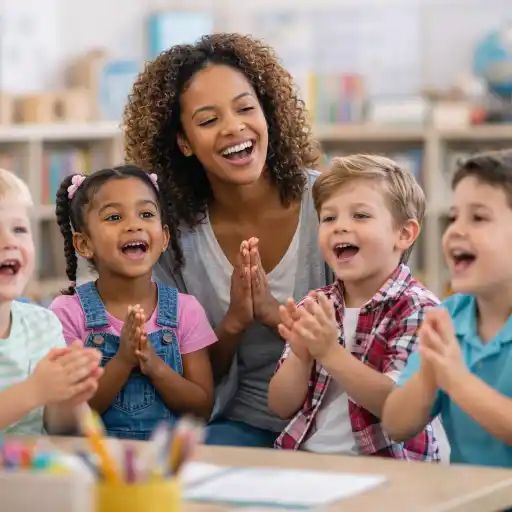
Singing is a high-yield tool for transitions — it signals, structures, and soothes. Use these evidence-based steps adapted from transition research and ChildCareEd practice guides.
- 🔔 Use a consistent attention signal: the same short song or jingle cues the group to stop and listen (see daily rituals).
- ⏱️ Give warnings with music: play a 2-minute and 30-second version of a tidy-up song so children know when to start finishing (research on transitions supports timed warnings — CSEFEL What Works Brief #4).
- 🎵 Sequence energy: follow active movement songs with a calming lull or sung countdown before table or quiet time (music & movement guidance).
- 🧭 Create role-based routines: rotate roles like Clean-up Captain or Song Leader to scaffold independence and reduce adult prompts (rituals).
- 📊 Track and adapt: note which songs support smooth transitions and keep those; remove songs that regularly lead to overstimulation.
Why it matters: planned musical cues shorten transition time, reduce behavior incidents, and give adults predictable scaffolds to support self-regulation and peer cooperation.
What concrete steps help staff sustain a singing culture and build teacher confidence?
Programs that make singing routine do three practical things: keep it simple, coach staff, and connect music to goals. Here’s a 6-step starter plan your team can adopt this week.
- 📅 Pick 3 anchor songs for the day: morning welcome, tidy-up, goodbye.
- 👩🏫 Model one session: a mentor leads a 10‑minute music circle while others observe.
- 🎧 Create a short playlist and a song chart with visuals for non-readers (use ChildCareEd printables in free resources).
- 🤝 Rotate simple staff coaching: 15-minute peer feedback after a session focused on inclusion and transitions.
- 📝 Measure small wins: weekly note on one improvement (shorter clean-up, more children answering, calmer exits).
- 🎓 Offer a course for interested staff: try Mind's Medicine: Music in Early Childhood Buy Now $16.00 for pedagogy and quick activities.
Staff tip: start with one 3-minute song routine per day and build. Small, consistent practice beats occasional big events.
Summary
Singing together is a low-prep, high-impact practice that builds belonging, supports language, and eases transitions when used with clear routines and inclusive choices. Your quick action plan this week:
- 🎵 Choose one hello and one tidy-up song to repeat daily.
- 🪑 Offer 2 participation options (sing or play an instrument) for every child.
- 👩🏫 Pair a new teacher with an experienced mentor for one music circle.
- 📌 Use visuals and timed musical warnings to shorten transitions (see CSEFEL and ChildCareEd rituals).
FAQ (quick):
- Q: How long should a group song be? A: 20–90 seconds for most routine songs; up to 5–10 minutes for a special music block for preschoolers.
- Q: What if a child is nonverbal? A: Offer instrument play, sign, or picture-pointing as ways to join.
- Q: Are music activities safe for all ages? A: Yes, with supervision and appropriate instruments; state requirements vary - check your state licensing agency.
- Q: How do I include home languages? A: Invite family-recorded refrains or teach simple greetings from families — optional and respectful contributions build belonging.
Use one new song this week, track one small win, and celebrate it with your staff. Consider planning a family-centered event or mini-concert tied to Make Music Day to invite families and the wider community to sing together. Building community with music is cumulative: short, joyful, routine songs create predictable spaces where children feel seen and safe.
Singing together supports core developmental targets in measurable ways. Consider these mechanisms and evidence-based benefits: Keep it short, repeated, and predictable. Below are ready ideas you can use in any classroom immediately; each links to deeper song lists and examples on ChildCareEd.Inclusion is non-negotiable. Plan with choices so every child can join in a way that fits their needs.
- Building Bridges for Dual Language Learners
- CDA Home Visitor Subject Area 3 Part 3 Birth to 5
- Building Bridges for Dual Language Learners: For Workforce Solutions
- 45 Hour Preschool Methods and Materials
- TEAM: Together Everyone Achieves More
- Positive Attention: Interactions & Supervision for Infants & Toddlers
- Connections That Count: Building Relationships in Child Care
- Every Moment Matters: Schedules and Transitions
- Families, Communities, and Classrooms: Working Together for Children
- Exploring the Cognitive Benefits of Movement in Early Childhood Classrooms
- 👶 ¿Cuáles son las proporciones y grupos requeridos en Dakota del Norte? 🏫
- Cómo Abrir Una Quardería En Casa Sin Dinero?
- Recursos en Español sobre el Sueño Seguro del Bebé
- Curso de Comunicación de 9 Horas de Maryland
- Apoyo en Español para Capacitaciones Grupales Presenciales y por Zoom en Cursos Selectos
- 10 Ejemplos de Cómo la Cultura Influye en el Desarrollo Infantil
- ¿Cómo solicito la licencia para una guardería en California?
- Normas de Licenciamiento de Cuidado Infantil en Virginia para Centros Diurnos Infantiles y Hogares Diurnos Familiares
- Proporciones de Cuidado Infantil y Tamaños de Grupo por Edad en Nueva Jersey (Guía Rápida para Centros y Hogares)
- Lista para Abrir una Guardería en Casa en Dakota del Norte: Cómo Empezar
- Retraso del Habla en la Guardería: Cómo Pueden Ayudar los Proveedores
- Cómo Trabajar en el Cuidado Infantil en Carolina del Norte: Requisitos y Pasos
- Cómo Ser Maestra de Preescolar en Illinois
- Cómo Ser Maestra de Preescolar en Virginia
- Juneteenth Activities for Kids: Crafts, Books, and Learning Ideas
- How Does Singing Together Build Community in the Classroom?
- What Does Ms. Rachel Get Right About Talking to Babies and Toddlers?
- Kindergarten Songs for Circle Time: 15 Sing-and-Move Ideas That Sneak in Learning
- Proporciones para guarderías en casa bajo el Título 22: Cómo la mezcla de edades cambia su capacidad en California
