Loose parts play is a simple, low-cost way to boost children's thinking, social skills, and #creativity. In this article, you will find easy ideas you can use in your #classroom today. We use steps and lists so your team can try things fast. Remember: state requirements vary - check your state licensing agency.
Five quick tags to remember: #LooseParts #play #creativity #classroom #children
What is loose parts play and why does it matter?
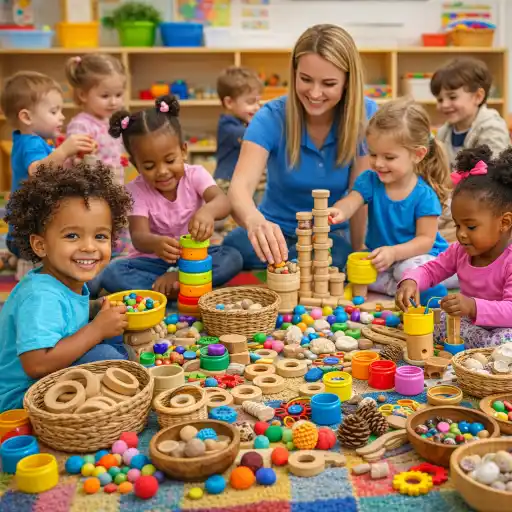
1. Loose parts are items children can move, combine, and use in many ways. They include boxes, shells, lids, scarves, ropes, stones, and recycled pieces.
2. Why it matters:
- It grows imagination. Children make stories and new uses for items instead of following one rule.
- It builds thinking. When a tower falls, kids test and try again — that is problem solving.
- It helps social skills. Kids must share, negotiate, and plan together.
- It supports motor skills. Picking up small things and stacking parts helps hands and fingers.
Research and practical guides support loose parts play. See ChildCareEd’s article Beyond ABCs: Why ‘Loose Parts’ Play Is the Secret Sauce in Early Childhood Education for ideas and reasons to use loose parts in your program. For evidence on social and cognitive outcomes, see a systematic review at PMC.
How do I set up loose parts safely and cheaply?
2. Safety checklist:
- Inspect items for sharp edges, splinters, or broken pieces.
- Remove choking hazards for infants/toddlers (anything that fits inside a toilet-paper tube).
- Label bins with pictures and words so children know where things go.
3. Low-cost sourcing:
- 🔁 Recycle: clean lids, boxes, jars.
- 🌿 Nature: sticks, pine cones, stones (gather safely and sustainably).
- 🎁 Donations: ask families or local businesses for safe materials.
4. Storage & rotation:
- Keep extras out of sight. Rotate weekly or biweekly to keep interest high.
- Dry and sanitize items before storing to avoid smells and wear.
ChildCareEd offers practical setup ideas in Why Open-Ended Play Is Essential. Also see tips on simplifying spaces in The “Less is More” Playroom.
What loose parts work best for different ages and centers?
1. Infant / Toddler (supervised, larger items):
- 🟠 Soft scarves, large wooden rings, big fabric squares.
- 🔵 Unbreakable mirrors, large textured balls, big spoons.
2. Preschool (open-ended, small parts OK if safe):
- 🟢 Bottle caps, corks, shells, blocks, cardboard tubes.
- 🟣 Ropes, pans, measuring cups for pretend or ramp play.
3. Outdoor and gross-motor:
- 🔆 Tires, planks, crates, fabric sheets, sticks for building forts.
- 💧 Water, sand, and funnels for STEM and sensory play.
4. Art, literacy and STEM uses:
- Use loose parts to tell stories, count, sort, and build simple machines. See simple STEM ideas at ChildCareEd STEM.
For many more item lists and seasonal ideas, check the ChildCareEd guide on classroom materials: What classroom materials best foster learning and creativity? and a long loose-parts resource list at Creative STAR.
How do teachers support play, document learning, and avoid common mistakes?
1. Teacher role (short and powerful):
- Observe first — notice how children use materials.
- Facilitate — offer a new loose part or a question, don’t direct the play.
- Extend — add a challenge ("Can you make it hold the toy car?").
2. Common mistakes and fixes:
- ❌ Overfilling shelves — keep fewer choices to reduce overwhelm. ✅ Rotate items.
- ❌ Too much adult direction — pause and ask open questions instead of giving steps.
- ❌ Ignoring safety — do a quick check and keep age-appropriate bins.
3. Documenting learning (easy steps):
- 📷 Take photos of play and add a child quote or caption.
- ✏️ Have kids draw what they made or dictate a story.
- 📊 Keep simple charts — color mixes, sink/float tallies, or building tests.
4. Quick FAQ:
- Q: How often rotate materials? A: Every 2–6 weeks or when interest drops.
- Q: Can families donate items? A: Yes — ask for safe, clean donations.
- Q: Are loose parts noisy or messy? A: Sometimes. Plan zones and cleanup steps.
- Q: Do loose parts need rules? A: Simple rules help — keep items on the shelf, return parts, and use inside/outside rules.
Educator voices show loose parts help creativity, confidence, and movement in outdoor play — read perceptions at AIMSpress. For research on cognitive links, see the literature review at PMC.
Conclusion
Loose parts play is easy to start. Use a few safe baskets, rotate items, and let children lead. Your role is to watch, support, and document. Small steps yield big gains in #creativity, problem solving, language, and teamwork. Keep materials safe and simple, and remind families that state requirements vary - check your state licensing agency. Try one new loose part this week and watch the ideas grow.
1. Start small. Put one or two baskets on a low shelf. Keep the rest stored until you rotate them in. Below are easy sets you can add to common classroom areas. Pick items that match the children’s ages and your learning goals.- 👶 ¿Cuáles son las proporciones y grupos requeridos en Dakota del Norte? 🏫
- Recursos en Español sobre el Sueño Seguro del Bebé
- How can I create engaging learning centers in my classroom?
- How Do Art Activities Support Cognitive Growth in North Dakota Preschoolers?
- How can Washington classrooms be more inclusive using nature, play, and community?
- Celebrando la amistad en el cuidado infantil durante el Día de los Mejores Amigos
- Cómo simplificar la capacitación para sus empleados de daycare
- What simple early literacy activities really work for preschoolers?
- How can outdoor learning help young children grow and learn?
- How can preschool programs build early literacy every day?
- Why Should Early Childhood Programs Prioritize Outdoor Play?
- Do Toys Come Alive: How Can Pretend Play Spark Creativity in Your Daycare?
- Why Does Old‑School Play (Blocks, Mud, Cardboard) Still Win?
- Why Can Fewer Toys Lead to Richer Play in the Minimalist Classroom?
- How can small playgrounds be transformed into engaging learning environments using natural materials?
- Why Do Open-Ended Toys Beat Battery-Powered Ones?
- How Can I Create Engaging Learning Centers for Preschoolers?
- Dump It, Stack It, Build It! Open-Ended Activities for Curious Toddlers
- How Can Loose Parts Play Turn Everyday Objects Into Powerful Learning Opportunities?
- How Should Providers Review Loose Parts Before They Enter a Toddler Play Area?
