Introduction
As child care providers, we want materials that help children learn and feel creative. The right mix of materials makes your #classroom a place where #children can explore, try ideas, and build confidence. Good materials are easy to reach, open to many uses, and safe. When you choose materials with care, you support play, language, thinking, and social skills. Why it matters: children who use open-ended materials practice problem solving and express emotions. This helps them in school and life.
Five important words to remember are #materials #creativity #learning #children #classroom. State requirements vary - check your state licensing agency.
For ideas and lesson support, see ChildCareEd resources like The Creative Classroom and courses on Curriculum Alignment & Materials  Buy Now $16.00.
How do open-ended materials support learning and creativity?
Open-ended materials are items that children can use in many ways. Examples include blocks, fabric, loose parts, recycled boxes, paint, clay, and natural objects. These items help children try ideas and solve problems. They do not have one right use. That lets kids decide what happens next.
- 🎨 Encourage exploration: Children choose how to use materials. This builds independence and decision making.
- 🧩 Promote problem solving: When a tower falls, children test new ways to make it stronger.
- 🔁 Support repetition: Using the same materials many times deepens learning.
- 📚 Link to many skills: Play with loose parts helps language, math, and fine motor skills.
Research and practice show that combining art, science, and play helps learning. See ideas in ChildCareEd articles like Open-Ended Art Activities and STEAM Activities Using Everyday Materials. You don’t need fancy supplies. Everyday items can become tools for big thinking. Start small and let children lead.
What sets of materials should I have in a purposeful classroom?
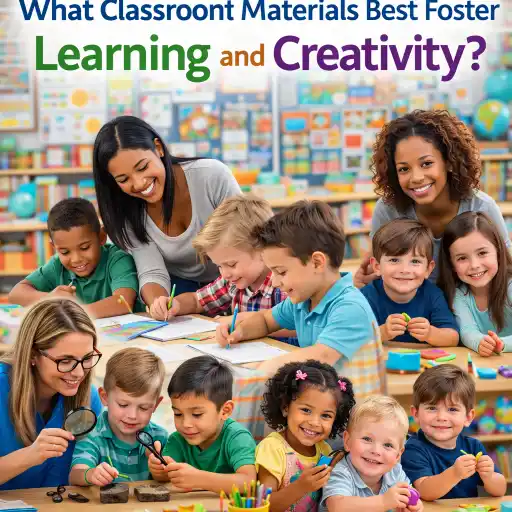
Create a few well-stocked stations so children can pick what they need. Aim for variety and durability. Here are five helpful categories and examples:
- 👣 Sensory bases: rice, sand, water beads, play dough. (See Sensory Bin Guide.)
- 🧱 Building & construction: wooden blocks, recycled boxes, tubes, loose parts like corks and lids.
- 🎨 Art & expression: paints, crayons, collage scraps, clay, and frames for loose-parts art (inspired by Junk Art).
- 🔬 STEAM tools: droppers, funnels, magnifiers, measuring cups, and simple science supplies linked to STEAM activities.
- 📖 Print & loose parts for literacy: books, name cards, buttons, shells for storytelling or counting.
Tips for buying and collecting materials:
- Start with what you already have. Recycle jars, boxes, and fabric.
- Choose unbranded, multiuse items to avoid one-way play.
- Rotate materials to keep interest high.
For program planning and alignment with learning goals, check ChildCareEd’s CDA: Curriculum Alignment & Materials Buy Now $16.00 course.
How can I set up and organize materials for independence and safety?
Children learn best when they can reach materials and return them on their own. Thoughtful layout and clear rules help them use materials safely and with confidence.
Follow these steps:
- 🪜 Accessibility: Low shelves and clear bins let children choose without waiting. Label containers with pictures and words.
- 🧯 Safety checks: Inspect loose parts for choking risks and broken pieces. Replace or remove small items for infants/toddlers.
- 🧽 Cleanup habits: Teach a simple routine—one bin at a time. Make clean-up part of playtime.
- 📏 Zones: Create areas for messy play (art/sensory), quiet work (reading/writing), and active play (blocks/building).
Common mistakes and how to avoid them:
- Not rotating materials — solve by planning monthly swaps.
- Overfilling shelves — keep fewer choices to reduce overwhelm.
- Placing everything behind a desk — use low, open shelving so children can be independent.
Remember: state requirements vary - check your state licensing agency for storage and safety rules. For design ideas and child-centered layouts, explore The Creative Classroom and the Montessori Buy Now $25.00 resources on environment.
What activities and prompts help materials become learning experiences?
Materials become powerful when paired with simple prompts and questions. Use open-ended invitations to guide play without taking it over. Here are 6 ideas you can try:
- 🔍 Sensory hunt: Put different textures in a bin and ask, 'Find something smooth and tell me how it feels.'
- 🏗️ Building challenge: 'Can you build a bridge to hold this toy car?'
- 🎭 Story sack: Use loose parts to create characters and tell a story together.
- 🖌️ Process art invitation: Offer paint and unusual tools and ask, 'What can these tools make?'
- 🧪 Simple experiment: Use cups, water, and droppers to mix colors—link to STEAM from ChildCareEd.
- 📊 Sorting and counting: Use buttons or shells for math games—ask children to group by size, color, or number.
When you speak to children, describe what you see and ask curiosity questions. Instead of saying 'Good job,' try 'I notice you used many blue pieces—what were you thinking?' This builds language and thinking. For more ideas, read ChildCareEd’s activities like Creativity & Logic Activities and their art resources.
Conclusion and quick FAQ
Materials that foster learning and creativity are open-ended, safe, and accessible. They support play, problem solving, language, and social skills. Start with a few stations, rotate often, and use simple invitations to spark thinking. Keep safety and licensing rules in mind—state requirements vary - check your state licensing agency.
Quick FAQ
- Q: How often should I rotate materials? A: Every 2–6 weeks, or when interest drops.
- Q: Are recycled items okay? A: Yes—recycled and natural items are great for #creativity and low cost.
- Q: What about allergies and hygiene? A: Wash sensory bases when needed and check for food allergies before using edible items.
- Q: How do I include families? A: Send home ideas and ask for safe donations of materials. Share photos of child work.
Need training or more ideas? ChildCareEd offers courses and articles on art, STEAM, sensory bins, and curriculum alignment: ChildCareEd. You are building a strong learning space—small changes make a big difference. Keep experimenting, celebrating children’s ideas, and tuning your environment to their needs.
- 45-Hour School Age Curriculum
- CDA Home Visitor Subject Area 3 Part 3 Birth to 5
- CDA Home Visitor Subject Area 2 Part 3 Birth to 5
- Bienvenido! Welcoming All Families
- 45 Hour School Age Methods and Materials
- Art from the Heart for Preschoolers: Open Ended Art Projects that Build Self-Esteem
- 45-Hour Preschool Curriculum
- 45-Hour Infant and Toddler Curriculum
- Creating Environments that Nurture Growth and Community
- CDA: Curriculum Alignment & Materials
- How Can Childcare Educators Thrive in the Big Apple?
- ChildCareEd’s Montessori Curriculum Training
- The Family Day Care Chronicles: Tales of Laughter, Learning, and Unexpected Adventures
- Tiny Hands, Big Dreams: Fostering Creativity in Preschoolers
- How motor skills shape child development and creative ways educators can foster them.
- Daycare Training 101: Building a Safe, Fun, and Educational Environment
- Actividades de Otoño Fáciles para Preescolares esta Temporada
- Celebrando la amistad en el cuidado infantil durante el Día de los Mejores Amigos
- Canciones, juegos y preguntas de círculo para niños
- Do Toys Come Alive: How Can Pretend Play Spark Creativity in Your Daycare?
- How Can Early Childhood Programs Support Creativity Through Process Art?
- Learning Through Choice: Why Do Classroom Choice Boards Work?
- How Can Recycled Materials Create Engaging Learning Centers?
- How Can Teachers Build Learning Centers on a Tight Budget?
- How Can You Set Up Learning Centers in a Preschool Classroom?
- ¿Faltan Materiales o Falta una Nueva Estrategia? Cómo Revisar los Rincones del Aula
