Introduction
Minnesota gives us four very different seasons. Each season is a chance to teach outside. Nature helps kids move, think, and feel calm. For child care leaders and directors, using the outdoors means better learning and happier kids. In your planning, bring simple tools, clear rules, and a sense of wonder. Try adding small steps tomorrow: a 15-minute outdoor block, a nature scavenger lis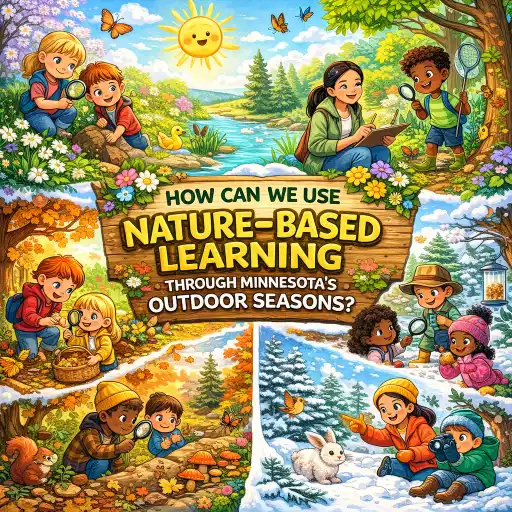 t, or a container garden.
This article shows how to use nature across spring, summer, fall, and winter. You will find activities, safety tips, and training links to help staff. Remember: state requirements vary - check your state licensing agency. Using nature supports #nature #outdoor #Minnesota #children #seasons learning, and helps children grow in many ways.
How can nature-based learning help children through Minnesota's changing seasons?
Why it matters:
- Outdoor time builds bodies and brains. Being outside improves movement, attention, and social play. See ideas from ChildCareEd on outdoor play.
- Nature lowers stress. Short time outside (10–20 minutes) can calm kids and boost mood — the MN Dept. of Health explains these benefits.
- Sensory learning is richer outside. Leaves, snow, wind, and water spark language, science, and art. ChildCareEd's article on fall sensory learning has many hands-on ideas: Nature’s Classroom.
Practical gains:
- Stronger gross motor skills from climbing and running.
- Better attention and creativity from unstructured play.
- Early science skills when children observe seasonal change.
Link to standards and safety: follow national health and safety guidance, like Caring for Our Children, when you set rules and routines.
What outdoor activities work in spring, summer, fall, and winter in Minnesota?
Use simple, repeatable activities that fit the season. Here are ready ideas you can use and adapt.
- Spring (clean-up and new growth)
- 🌱 Plant quick seeds (radish, lettuce) in pots and count leaves as they grow.
- 🔎 Nature scavenger hunt: buds, worms, soft mud. See spring suggestions at Outdoor Spring Play.
- Summer (water, shade, and bugs)
- 💧 Water play and measuring: pour, compare cups, and mark evaporation on a board.
- Plant a small herb pot and taste it with permission. Use shade and sunscreen (parent okay).
- Fall (sensory and math)
- 🍁 Leaf sorting by color and size; count seeds and graph findings. Fall sensory ideas: ChildCareEd fall.
- Collect acorns for pattern-making and simple addition games.
- Winter (science and cozy play)
- ❄️ Ice experiments: freeze small items in water and watch melting rates. Child-led winter ideas: Montessori in the Snow.
- Make nature journals indoors after short outdoor observations.
Keep materials simple: clipboards, magnifiers, buckets, and a few loose parts (sticks, rocks). For lesson ideas that link to curriculum goals, see How programs use outdoor learning.
How do we keep children safe and comfortable outside year-round?
Safety is simple when routines are clear. Use daily checks and a posted weather chart by exit doors. ChildCareEd's weather safety guide is a great resource: Weather Safety in Child Care.
- Before you go out: check temperature, wind, and air quality.
- Clothing routine: layers for cold, hats and light clothes for heat, rain gear when wet. Remind families to label extra clothes.
- Supervision: Divide the play area into zones and assign staff to each zone. For more detailed strategies on supervising summer play and keeping children safe during outdoor water and heat activities, see supervision during summer activities.
- Health checks: watch for signs of overheating, frostbite, or tiredness.
Common mistakes and how to avoid them:
- ❌ Mistake: No daily weather check. ✅ Fix: Make it a quick morning routine.
- ❌ Mistake: Treating outdoor time like a reward. ✅ Fix: Make outdoor learning a normal part of the schedule.
- ❌ Mistake: Overstuffing activities. ✅ Fix: Offer 2–3 clear choices and rotate.
For cold-weather tips specific to Minnesota, use the Minnesota DNR resources on teaching outside: How to teach outside and Nature Play.
How can programs and staff build nature-based learning into daily practice and meet training and rules?
Start small and use local training. Steps to success:
- Get staff training:
- 📘 Take free or low-cost courses like ChildCareEd's "Creating the Natural Outdoor Classroom": Create the Natural Outdoor Classroom.
- 📘 Curriculum and learning design: To build stronger seasonal lesson plans and outdoor learning routines, ChildCareEd's Creating Engaging and Meaningful Learning Experiences
 Buy Now $55.00 is a 6-hour online course that helps staff design intentional activities connected to child development goals — a practical complement to the nature-based ideas in this guide.
 - 🌿 Wellness and healthy habits: Outdoor time is also a natural opportunity to teach children about their bodies and health. ChildCareEd's Wellness in Action: Teaching Healthy Habits to Children Buy Now $55.00 is a 6-hour online course that gives staff tools to weave health and wellness into everyday routines — inside and outside the classroom, across all four seasons.
- 🌲 Join Minnesota DNR workshops and PLT training for outdoor curricula: DNR training and PLT Early Childhood.
- Work with families:
- Share photos and quick notes, so families see learning and know what to send (layers, boots).
- Make it routine:
- Start with one outdoor block per day and a small outdoor kit (clipboards, wipes, magnifier).
Common program supports include school-forest partnerships and community nature centers. See Minnesota field-trip and teacher supports at Field Trips in Minnesota and DNR teacher resources.
Conclusion
Nature-based learning in Minnesota is practical and powerful. Use simple steps: plan seasonal activities, keep safety routines, train staff, and involve families. Start with one small change tomorrow and build from there. For more ideas and trainings, prioritize resources from ChildCareEd, Minnesota DNR, and MN Dept. of Health. Enjoy watching your program grow outdoors—kids learn best when they can touch, move, and wonder in the real world.
Quick links: How to teach outside (MN DNR), Nature and Mental Health (MN Dept. of Health).
- Creating the Natural Outdoor Classroom
- 45 Hour Preschool Methods and Materials
- CDA Infants/Toddlers: Health and Safety
- Play Safe, Think Big: Literacy Through Play
- CDA: Creating the Outdoor Classroom
- Texas Director Credential
- CDA Infants/Toddlers: Stages of Development
- CDA Infants/Toddlers: Smart Nutrition & Feeding
- Shoo, Germs! Don't Bother Me!
- DIY Snow Globes: The Fine Motor Craft That’ll Keep Kids (and Adults) Busy for Hours
- Mental Health for Tiny Elves: Supporting Kids Through Winter Blues
- Actividades de Otoño Fáciles para Preescolares esta Temporada
- How can Washington forest and nature center field trips work well on a rainy day?
- How can Washington early childhood educators support outdoor play, safety, and learning in daycare?
- How can we use nature-based learning through Minnesota's outdoor seasons?
- Can Toddlers Do STEM in the Sandbox at Minnesota Daycares?
- How can we safely take toddlers on nature walks in Minnesota?
- How Do Minnesota Winters Affect Young Children's Mental Health?
- What Do Minnesota's Native American Communities Need From Childcare Providers?
- Why is outdoor education essential for children growing up in North Dakota?
- How can Minnesota child care programs keep kids learning and engaged over the summer?
- How can you turn summer days into learning moments at your Minnesota program?
- How can we build a Minnesota summer program that keeps school-agers engaged?
- How can outdoor learning help young children grow and learn?
- How can I build a nature-based curriculum for my New York program?
- How can seasonal activities (spring, summer, fall, winter) combine fun with clear educational goals?
- Can forest preschool activities be integrated into traditional programs?
- How can I bring a Forest Preschool (nature-based learning) to my program?
- Daycare Outdoor Weather Safety: Temperature, Heat Index, and Playtime
