As a fellow child care provider, you know that well-planned learning centers help children choose, explore, and grow. This article gives simple, practical steps to plan, set up, and run centers that spark curiosity and meet learning goals. You’ll find checklists, tips on materials, how to support play, and quick fixes for common problems. Use these ideas with infants through preschoolers and remember: state requirements vary - check your state licensing agency.
Key words to watch in this article: #learning #centers #play #children #classroom — you’ll see practical examples and links to helpful resources from ChildCareEd and other trusted sites.
1) What should I plan before I set up centers?
- What skills do I want to support? (literacy, math, social, motor)
- Who will use the center? (ages, group size, needs)
- How will this center connect to curriculum and daily routines?
Use a simple map: draw your room, mark walking paths, and give each center a shelf or shelf space. A good overview of how room design supports learning is in Tips for designing your early childhood classroom space.
Plan materials with these rules:
- Choose open-ended items that invite many uses. See ideas in How to Design Centers That Promote Both Play and Learning.
- Pick age-appropriate and safe items — remove choking hazards for little ones.
- Limit number of items on a shelf to reduce overwhelm.
Make a rotation plan: list 6–8 small collections you can swap weekly. Keep extras stored out of sight and rotate to renew interest. For inspiration about open-ended and loose parts, check Loose Parts Play.
2) How do I set up centers so children can explore and adults can support?
- Define 5–7 centers for a preschool room: 1) Art, 2) Blocks/Building, 3) Sensory, 4) Dramatic Play, 5) Literacy, 6) Math/STEAM, 7) Quiet/Calm.
- Use low shelves and clear labels (pictures + words) so children find things themselves. Child-level access is a Montessori tip — see Montessori Classroom Ideas. For guidance on adapting Montessori principles specifically for toddlers to foster independence and everyday learning, see Montessori for Toddlers: Fostering Independence and Learning.
- Arrange traffic so kids can move around without bumping into each other. Keep large active centers apart from quiet areas. The room layout ideas from Tips for designing your early childhood classroom space are helpful.
Set simple rules for each center (1–2 short rules). For example, in Sensory: "Keep materials on the tray"; in Blocks: "Share and build together." Model how to use materials with guided demonstrations and then step back.
Staffing & schedules:
- 🔸 Rotate who greets and supports each center so staff learn to observe and extend play.
- 🔹 Use 15–30 minute center blocks for preschool; shorter for toddlers and infants. See practical management ideas in a teacher’s account at How to Organize and Manage Play Centers.
3) How do I make centers both playful and learning-focused?
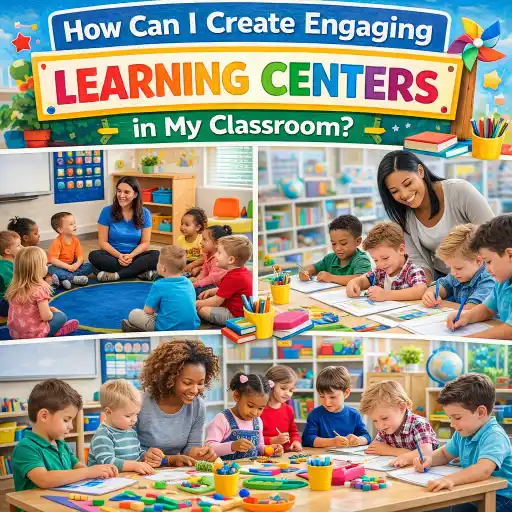
Blend play with learning objectives so play drives skill growth. Try these steps:
- Attach 1 goal to each center (e.g., Art → fine motor and expression; Math table → counting & patterns).
- Offer provocations — short invitations like "What can you build that floats?" — to spark thinking. ChildCareEd’s center ideas and resources are full of ready-made provocations: Spicing Up the Classroom: Learning Centers resources.
- Include documentation: take photos, note quotes, and save children’s work to show learning over time.
Use these teacher moves:
- 🟠 Observe first — note interests and choices.
- 🔵 Ask one simple open question — "How did you do that?" — then listen.
- 🟢 Add a small challenge — "Can you make three towers of different heights?"
Bring in materials that invite discovery: light table pieces, loose parts, sensory materials, and real tools (safe versions for kids). For ideas on sensory and light table materials see Light Table Activities and sensory lists at Sensory Center.
4) Why does this matter and how do I avoid common mistakes?
Why it matters:
1) Centers let children choose, repeat, and deepen learning — that repetition builds strong skills. 2) Play-based centers support social skills, self-regulation, and early academics — learn more in The Power of Play.
Common mistakes and fixes:
- ❌ Overcrowded shelves → ✅ Fix: rotate and simplify. Keep 4–8 items per shelf.
- ❌ Too much adult direction → ✅ Fix: model, then ask open questions and step back.
- ❌ Unsafe or inappropriate materials → ✅ Fix: check items against age and licensing rules — state requirements vary - check your state licensing agency.
- ❌ Centers never change → ✅ Fix: add a small provocation or seasonal loose parts every 1–3 weeks.
Quick FAQ for busy staff:
- Q: How many children at a center? A: 2–4 for preschool; fewer for toddlers. Smaller groups help leadership and turn-taking.
- Q: How often rotate? A: Every 1–3 weeks or when interest drops.
- Q: Can families donate materials? A: Yes — request clean, safe items only.
- Q: How do I document learning quickly? A: Photos + one caption or child quote work well.
Summary
1) Plan with clear goals, age-appropriate materials, and a rotation system. 2) Arrange centers for independence, clear flow, and calm transitions. 3) Use playful provocations to reach learning targets and document progress. 4) Avoid overcrowding and over-direction — let play lead. For more detailed templates and downloadable resources, visit ChildCareEd’s center resources like How to Design Centers That Promote Both Play and Learning and Spicing Up the Classroom. Try one new provocation this week and notice what children choose — small changes make big learning gains.
Start with clear goals. Ask 3 planning questions:Design for independence and flow. Follow these steps:- How motor skills shape child development and creative ways educators can foster them.
- 👶 ¿Cuáles son las proporciones y grupos requeridos en Dakota del Norte? 🏫
- Proporciones de Cuidado Infantil y Tamaños de Grupo por Edad en Maryland (Guía Rápida para Centros y Hogares)
- Proporciones de Cuidado Infantil y Tamaños de Grupo por Edad en Nueva Jersey (Guía Rápida para Centros y Hogares)
- How can I organize an effective preschool classroom?
- Celebrando la amistad en el cuidado infantil durante el Día de los Mejores Amigos
- Canciones, juegos y preguntas de círculo para niños
- Cómo simplificar la capacitación para sus empleados de daycare
- How can my program find its niche as 2‑K and 3‑K grow in New York?
- How can I create a daily schedule that meets Michigan's active learning expectations?
- How can I make the case for play-based learning in my Michigan program?
- How can I host a safe, engaging freeze-dance party in my daycare?
- How can I create engaging learning centers for preschoolers?
- How does room arrangement shape behavior, engagement, supervision, and learning?
- How Can I Create Engaging Learning Centers for Preschoolers?
- How Can Recycled Materials Create Engaging Learning Centers?
- ¿Faltan Materiales o Falta una Nueva Estrategia? Cómo Revisar los Rincones del Aula
