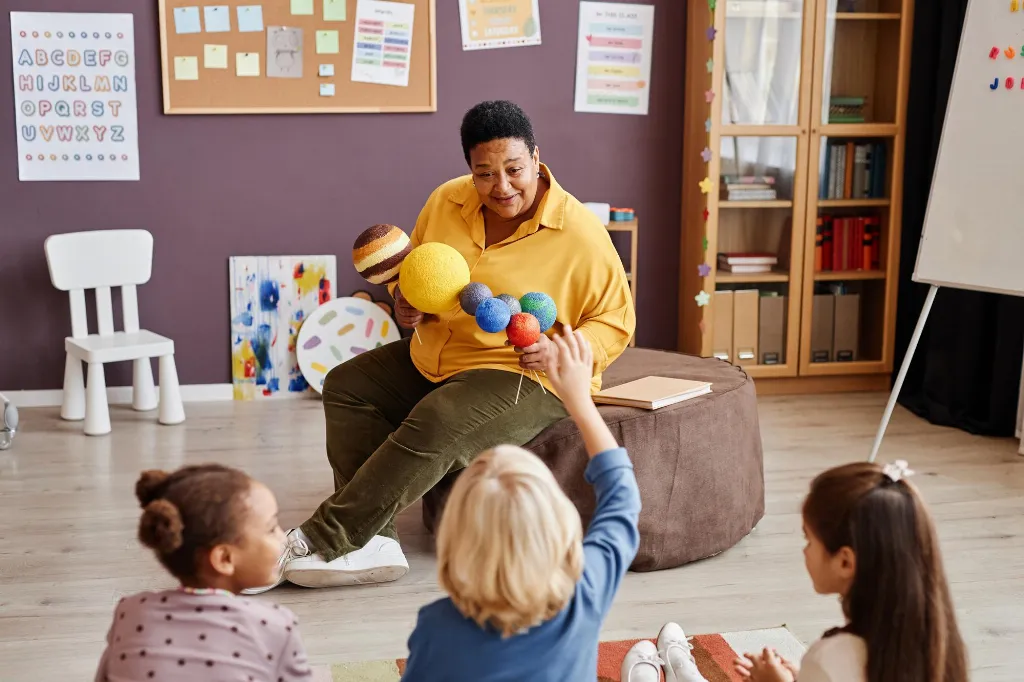
 Young children love to touch, test, and ask questions. Adding simple #STEM into your #preschoolers day boosts curiosity, language, and #handsOn thinking. This short guide gives you quick ideas, set-up tips, teaching moves, and ways to avoid common pitfalls. Use one idea tomorrow and grow from there. For more activity ideas and printables, check ChildCareEd resources like the 10 STEM Ideas for Preschoolers and the Water Drop STEM Activity Buy Now $0.00.
What low-prep STEM activities can I try right away?
Here are 10 easy activities you can set up with everyday materials. Each one supports science, engineering, early math, or observation.
- 🧪 Color mixing with droppers: clear cups, water, and food coloring. Let children predict and mix colors. See the Color-Mixing Magic idea.
- ⚖️ Sink or float: tub of water and small objects. Ask children to sort results and explain.
- 🚗 Ramp races: cardboard ramps and toy cars. Change height and surface to compare speeds (Ramp races).
- ❄️ Frozen toy rescue: freeze toys in ice and free them with warm water, salt, or droppers.
- 🧲 Magnetic exploration: magnets plus mixed classroom objects to test what sticks.
- ✈️ Paper airplane trials: fold, test, change one thing, and compare distances.
- 🌈 Walking water: cups, food coloring, and paper towels make colors move between cups.
- 🧰 Building challenges: recycled boxes, tape, and blocks for bridges and towers (see Beautiful Junk).
- 🍃 Nature sorting: collect leaves, rocks, and sticks and sort by texture, size, or color.
- 🫧 Bubble shape testing: shaped wands and trays to see how bubble shapes form.
These ideas come from practical preschool resources on ChildCareEd—see Preschool STEM Activities for Hands‑On Learning for more.
How do I set up a safe, low-prep STEM area that children can use?
Make a space that invites play, keeps things tidy, and makes clean-up easy. Follow these steps:
- 📦 Prepare materials in labeled bins so children can choose themselves.
- 🪣 Use trays or washable tablecloths for messy experiments to reduce stress at cleanup time.
- 👀 Position the table so you can supervise and join when invited. Active supervision matters—state requirements vary - check your state licensing agency.
- 🔁 Rotate a small supply of loose parts (cups, droppers, magnets, blocks, recycled bits) weekly to keep interest high.
- ✅ Post simple rules: materials stay on table, no tasting, adult pours hot/unsafe liquids, wash hands when finished.
For ideas on discovery tables and safety, review ChildCareEd suggestions in 10 STEM Ideas for Preschoolers and the hands-on learning article Preschool STEM Activities for Hands‑On Learning.
How can I guide learning without taking over?
Your role is to support thinking, not solve the problem for them. Try these simple teaching moves during #handsOn investigations:
- 👂 Observe first. Watch what children try before asking questions.
- ❓Ask open questions: “What do you notice?” “What do you think will happen?”
- 🧪 Encourage testing: let children try their idea, then ask them to explain results.
- ✏️ Invite simple documentation: drawings, tallies, or photos. Use quick notes to capture children’s words (see Observation, Documentation, and Reflection Buy Now $0.00).
- 🔁 Repeat and change one thing at a time to help kids make comparisons.
Why it matters: these moves build vocabulary, reasoning, and persistence. Hands-on STEM helps children learn to ask questions and test ideas — the core of scientific thinking. For teacher prompts and deeper tips, see Preschool STEM Activities for Hands‑On Learning.
How do I include outdoor play, recycled materials, and early technology in STEM?
STEM fits inside and outside, and with low-tech or simple tech tools. Use these practical ideas: For extended outdoor investigations and guidance on running longer nature studies that encourage repeated observation over days or weeks, see Science is All Around You.
- 🌳 Outdoor science: take walking-water, sink/float, or nature sorting outdoors. Fresh air gives space for bigger trials and messy experiments (Forest School ideas).
- 📦 Recycled engineering: use boxes, tubes, and bottle caps for bridges and towers. ChildCareEd’s Beautiful Junk course shows easy ways to reuse materials.
- 💻 Early tech steps: coding for preschool is about sequencing and cause-effect. Try unplugged coding games or simple robot toys later—see ideas in general coding guides like the Scholastic overview of kid coding tools (Tools That Teach Kids to Code).
Common mistakes and how to avoid them:
- ❗Too much adult instruction — avoid by asking one open question and then stepping back.
- ⚖️ Focus only on right answers — celebrate the process and what children tried.
- 🧩 Too many materials — keep choices small so children can focus.
For more outdoor STEM prompts, check the outdoor activity collections and simple experiments like STEM in the Kitchen and other ChildCareEd activity pages.
FAQ
- Q: How long should an activity run? A: 10–20 minutes for focused invitations; longer for projects that stretch over days.
- Q: Do I need special kits? A: No — everyday items work great. See STEAM Activities with Everyday Materials.
- Q: How do I document learning quickly? A: Take a photo, jot one quote, and add to a simple chart or notebook (Observation Buy Now $0.00).
- Q: What if a child loses interest? A: Offer a new question, reduce materials, or invite a partner to re-engage.
- Q: Where can I learn more? A: ChildCareEd courses like Enhancing STEM Education for Infants and Toddlers
 Buy Now $16.00 and Building Early Science Foundations Buy Now $16.00 are helpful.
Quick next steps: 1) Pick one activity from the list. 2) Gather simple materials in a tray. 3) Ask one open question and let children test. 4) Take a photo and one sentence note. Over time, repeat and add small changes so kids can compare results. Keep it playful — children learn best through #playful #exploration.
- CDA Home Visitor Subject Area 3 Part 3 Birth to 5
- CDA Home Visitor Subject Area 2 Part 3 Birth to 5
- Easy Steps to Resume and Interview Success
- From Tantrums to Triumphs: Equipping Preschoolers with Self-Regulation Skills
- Birth to Five CDA Credential with Portfolio Review
- Setting the Stage: Story Time
- Working Together: Teachers & Preschoolers
- CDA Bridge Bundle: Preschool without Portfolio Review
- CDA Infants/Toddlers: Lesson Planning Made Easy
- Enhancing STEM Education for Infants and Toddlers
- Pencil and Paper Activiites
- ❄️ ¿Qué actividades al aire libre funcionan bien para los niños de Illinois en cada estación? 🌷🍂
- Cómo Ser Maestra de Preescolar en Maryland
- Easy Ways to Add STEM to Your Preschool Classroom
- Learning Through Creative Daycare Activities
- How can I use STEM activities in my Preschool and Pre-K classroom?
- How Do Art Activities Support Cognitive Growth in North Dakota Preschoolers?
- What are easy STEM activities I can do with preschoolers?
- Calabazas, hojas y manzanas: actividades de otoño para preescolares
- How can child care providers use simple STEM activities with early learners?
- How can we help children reach new heights—from the Space Needle to the preschool classroom?
- How can preschool teachers use simple STEM activities to spark big learning?
- Summer Preschool Activities for Art, Science, and Sensory Play
- How can school-age daycare use outdoor activities to teach, play, and stay safe?
- How can we encourage scientific thinking through hands-on exploration?
- How can I use simple STEM activities to spark curiosity in preschoolers?
- How can blocks, water play, cooking, and outdoor exploration introduce STEM to young children?
- Can forest preschool activities be integrated into traditional programs?
- How Can Recycled Materials Create Engaging Learning Centers?
