Young children’s brains grow fast. In the first years, the brain makes many connections and learns from play, talk, food, and safe care. This short guide helps child care providers and directors understand what happens in the brain and what you can do every day to help. You will see easy steps, simple lists, and helpful links to trusted resources like ChildCareEd’s play article and the Brain Building  Buy Now $16.00 course.
Why it matters: Every caring moment shapes a child’s #brain. Good early experiences support learning, health, and behavior. Bad experiences, like long stress without support, can slow growth. Knowing the basics helps your team plan routines, talk more with children, and choose healthy meals. State requirements vary - check your state licensing agency.
What happens in a child’s brain during early childhood?
The baby and toddler brain is busy. Here is what happens in simple steps:
- 🧠 Brain cells make many new connections (synapses). These build the basic wiring.
- 🔁 “Use it or lose it": connections used a lot get stronger; unused ones get pruned.
- ⚡ Myelination wraps some wires so signals move faster — this helps thinking and movement.
- ⏰ Sensitive periods: some skills (like language and vision) are easier to learn at certain ages.
These ideas come from child development research and practical resources for caregivers. For easy-to-read explanations and teacher tools see CDA Infants/Toddlers: Brain Development Buy Now $16.00 and the ChildCareEd article What’s Going On in a Child’s Brain When They Play?. For deep science about early risk and brain change, look at the review on early adverse experiences and the developing brain.
How do play, talk, and food help the brain grow?
Three big helpers for healthy growth are play, language, and nutrition. Each one builds different brain skills.
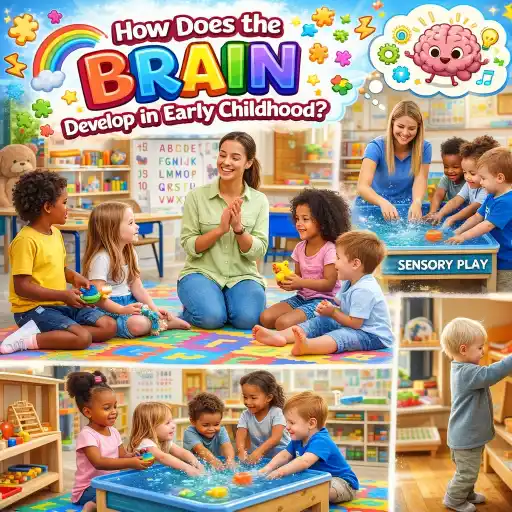
- 🎲 Play strengthens thinking, self-control, and social skills.
- Pretend play builds #language and imagination.
- Sensory play helps babies map touch, sight, and sound. See How Play Supports Brain Development.
- 🗣️ Talk and conversation speed up vocabulary and processing.
- Child-directed talk matters more than overheard speech. Programs like Talk With Me Baby and studies on child-directed speech show big gains in language.
- 🍎 Nutrition gives the materials the brain needs.
- Key nutrients: protein, iron, DHA (omega-3), vitamins, and whole foods. See CDC: Good Nutrition Starts Early and ChildCareEd's nutrition guide.
Short actions you can use now:
- 👂 Narrate care routines (name objects, feelings, and steps).
- 🧩 Offer open-ended play materials like blocks, scarves, and safe loose parts.
- 🥣 Serve balanced meals and simple, repeated tastes of vegetables and fruit.
What can caregivers and directors do each day to support brain growth?
Practical routines and small changes make big differences. Here are clear steps your program can try.
- 🕒 Protect long, unbroken play time (30–60 minutes when possible). Children need time to try ideas and finish play.
- 👩🏫 Train staff in simple strategies: serve-and-return, narrating, open questions, and guided play. See ChildCareEd courses like Brain Building Buy Now $16.00 and CDA Infant/Toddler Buy Now $16.00. For caregivers addressing trauma, the ChildCareEd course Become a super hero for young children reviews Adverse Childhood Experiences and practical, trauma-informed strategies staff can use.
- 🏷️ Set up the room: low shelves, clear labels, and a mix of sensory, block, and reading areas.
- 💬 Work with families: send brief notes about words and play ideas to use at home.
- 📋 Follow safety and policy: state requirements vary - check your state licensing agency.
Common mistakes and how to avoid them:
- ❌ Rushing play: Fix by scheduling longer play blocks.
- ❌ Over-directing play: Fix by following the child’s lead and adding small language or problem prompts.
- ❌ Relying on screens for quiet time: Fix by offering books, songs, or calm sensory bins instead.
What harms early brain development and how can we reduce risks?
Toxic stress, neglect, and heavy screen use can hurt brain growth. But caregivers can reduce harm and help children recover.
- 🛑 Toxic stress: prolonged stress from abuse, neglect, or extreme hardship changes stress systems in the brain. Read the RWJF summary on toxic stress and development and the CSHL overview Toxic Stress.
- 📵 Too much screen time: research links heavy screen use with slower language and weaker white matter in some studies (see NYT summary).
- 🔁 Early adversity: serious neglect or maltreatment can change brain circuits, but early intervention helps. See the review on early adverse experiences.
How to reduce risk—simple steps:
- 🤝 Build trusting relationships. Calm, responsive caregivers buffer stress.
- 🏥 Connect families to supports: food, medical care, and mental health resources.
- 📚 Use language interventions and quality preschool to boost skills—research shows these help IQ and language growth (see the APS report on diet, preschool, and reading interventions: APS summary).
FAQ (quick answers):
- Q: How much talk do babies need? A: Lots of back-and-forth talk; narrate routines and respond to sounds. See studies like Talking Directly to Toddlers.
- Q: Are screens always bad? A: Not always, but limit time and choose interactive, co-viewing moments instead of passive TV.
- Q: Can a child recover from early stress? A: Yes. Early stable care and interventions can improve brain outcomes.
- Q: What should I train my staff in first? A: Serve-and-return, guided play, and basic nutrition safety.
Conclusion
Early childhood is a powerful time for building the #brain. Your program’s daily routines, play spaces, talk, and meals are the tools you use every day to build strong foundations. Use simple actions: protect play time, narrate and respond, offer healthy food, and create calm relationships. For practical courses and tools, visit ChildCareEd pages like How Play Supports Brain Development and Brain Building Buy Now $16.00. Thank you for the caring work you do—every small choice helps shape a child’s future.
- 45 Hour Child Growth and Development
- Pediatric RSV First Aid & CPR/AED
- CDA Bridge Bundle: Family Child Care without Portfolio Review
- CDA Bridge Bundle: Infant/Toddler without Portfolio Review
- CDA Bridge Bundle: Preschool without Portfolio Review
- Brain Building
- Texas Director Credential
- CDA Infants/Toddlers: Brain Development and Gene Expression
- Brain Injury Awareness in Young Children
- The Foundation of Future Success: Why Early Childhood Education Matters
- The Vital Role of Early Childhood Education Teachers
- The Critical Importance of Early Childhood Education
- The Brain Gym: Why Early Learning Is Like Preparing for the Baby Olympics
- The Benefits of Early Childhood Education: Why Starting Early Matters
- Why Trauma-Informed Care Should Be a Universal Approach in Early Childhood Settings
- How to Promote Healthy Eating Habits in Young Children
- Your Impact as an Early Educator and Online Resources
- The Brain Architects: How Early Educators Shape Tomorrow’s Innovators🧠
- Cómo Abrir Una Quardería En Casa Sin Dinero?
- How does the brain develop in early childhood?
- Why Do the First Five Years Matter for Michigan Children?
- How Does the Brain Develop During the First Five Years?
- How do relationships shape early brain development?
- How and Why Does Music Boost Brain Development in the First Five Years?
- What Does the Science of Peekaboo Reveal About Infant Learning?
- How Can Child Care Providers Support Healthy Brain Development in Young Children?
