Outdoor learning in Texas is a big chance to help young learners grow. When children are outside, they move, ask questions, and use all their senses. This article gives clear ideas, safety tips, and easy lessons for child care teams who want to bring wildlife and outdoor discovery into daily play and learning. Remember: state requirements vary - check your state licensing agency.
Why it matters: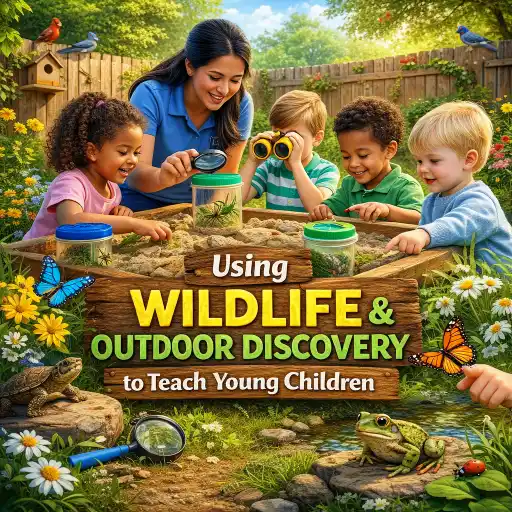
1. Outdoor time helps kids develop physically, socially, and emotionally. Research and training like The Great Texan Outdoor Classroom show how the outdoor area becomes a powerful learning space.
2. Local places and simple activities make learning real and memorable. Use resources such as Field Trip Ideas in Texas and Creating the Natural Outdoor Classroom  Buy Now $16.00 for step-by-step help.
How do we start simple outdoor wildlife and discovery activities at our program?
Start small. You do not need a big yard or fancy tools. Try these easy steps and activities that fit daily schedules and different ages.
- Plan one short block: 15–30 minutes for toddlers, 30–60 for preschoolers.
- Gather a simple kit: clipboards, markers, magnifying glass, small containers, hand wipes, and a camera or phone for photos.
- Pick 3 repeatable activities teachers can lead:
- 🌿 Activity 1: Nature walk and scavenger list. Make picture lists for younger children and word lists for older ones. (See Outdoor Spring Play.) For ready-to-use, age-adapted scavenger hunt ideas that support color recognition, observation, and early literacy skills, see Scavenger Hunt January.
- 🪲 Activity 2: Bug hunt with magnifiers. Count legs, color, and talk about where the insect lives.
- 🌱 Activity 3: Tiny garden or planter pot. Plant seeds, water, and measure growth over weeks. Use photos and simple charts.
Tips for success:
- Practice routines: line up spot, counting songs, and a quick rules review (hands gentle, eyes look).
- Rotate materials so children always find something new.
- Document learning with a photo, one quote, and a quick note. This shows families progress and links the play to goals.
Citations: For guided lessons and course ideas, see CDA: Creating the Outdoor Classroom Buy Now $16.00 and the free course Creating the Natural Outdoor Classroom Buy Now $16.00.
What field trips and local Texas places work best for wildlife learning?
Field trips give real-life experiences. Use local nature centers, farms, and small parks to keep trips short and meaningful. See a Texas-specific list at Best Daycare Field Trip Ideas in Texas.
1. Choose places near you so travel time is short. Good options include:
- 🌳 Nature centers, arboretums, and city parks for scavenger hunts and guided walks.
- 🐓 Farms or small urban ranches to meet animals and try farm tasks (collect eggs, plant seeds).
- 🦆 Small ponds or wetlands for pond dipping and watching water birds.
2. Keep trips short and planned:
- 🚌 Before: send clear permission slips and a one-sentence learning goal to families. (See Field Trip Ideas in Texas.)
- 👥 During: use small groups, buddies, and a chaperone list. Keep a first-aid kit and phone handy.
- ✍️ After: children draw or tell one thing they noticed. Post photos and a short note for families.
3. Low-cost local ideas that teach big lessons:
- Visit a neighborhood garden for pollinator lessons.
- Meet a park ranger or farmer to learn about community roles.
- Use the library for a nature storytime and follow-up walk.
State note: state requirements vary - check your state licensing agency before planning off-site visits.
We extend our condolences to communities affected by recent tragedies in Texas and offer a message of support at Our Hearts Are With You Texas.
Use ChildCareEd’s Field Trip Planning resources and sample checklists to create safe, joyful experiences: Field Trip Ideas in Texas.
How do we keep children safe and meet training or licensing needs for outdoor and wildlife activities?
Safety is simple when it is planned. Follow these clear steps so outdoor wildlife activities are safe and fun.
- Prepare paperwork and people:
- 📝 1) Get signed permission, allergy and medical info, and emergency contacts from families.
- 👩🏫 2) Assign staff roles and maintain ratios. Use extra adults for mixed-age groups.
- 🚍 3) Follow transportation rules and complete training (see Transportation Safety (Texas approved) Buy Now $16.00).
Additional safety tips:
- Check weather and air quality. Bring shade, water, or shelter as needed.
- Follow CDC tips about animals in child settings and avoid higher-risk species. For guidance see local health pages and ChildCareEd safety content.
- Keep a portable safety kit with first aid, medications, sunscreen (with written parent permission), and insect repellent rules.
- Practice active supervision: sight lines, frequent head counts, and simple transition songs help maintain attention.
Staff training: Offer short team trainings and use ChildCareEd courses like CDA: Creating the Outdoor Classroom Buy Now $16.00 to build confidence and meet continuing education needs.
Why documentation matters:
- Helps meet licensing and accreditation checks.
- Shows families how outdoor time links to learning goals.
- Records incidents and improvements to reduce risk over time.
How do we turn outdoor discovery into learning goals and avoid common mistakes?
Outdoor play can teach science, math, literacy, and social skills. Follow a few simple steps to make play purposeful without over-planning.
- Set one clear learning goal per activity (example: count seeds, name three animals, describe a leaf).
- Use loose parts and open-ended materials to encourage creativity and thinking.
- Document: take a photo, write one child quote, and note a small next step.
Common mistakes and how to avoid them:
- ❌ Mistake: Too many choices at once. ✅ Fix: Offer 2–3 stations and rotate groups.
- ❌ Mistake: Not checking weather or allergies. ✅ Fix: Keep an indoor backup and review health forms.
- ❌ Mistake: Skipping family communication. ✅ Fix: Send a simple preview and follow-up (photo + one learning note).
- ❌ Mistake: No staff training. ✅ Fix: Use short online courses like Creating the Natural Outdoor Classroom Buy Now $16.00.
FAQ (quick):
- Q: How long is good for a nature block? A: 15–30 minutes for infants and toddlers; 30–60 for preschoolers.
- Q: Can we let children touch animals? A: Supervise closely and follow CDC guidance on animals in child care settings.
- Q: What if staff are unsure about outdoor lessons? A: Start with one activity and train with short courses from ChildCareEd.
- Q: How do we include children with special needs? A: Add an extra adult, adapt materials, and communicate with families ahead of time.
Use local resources like the Meadows Center, community gardens, and farm programs (for example One Acre Farm) to expand activities and learning.
Five key words to remember: in your #Texas program, bring children to the #outdoors with thoughtful plans for #children by helpful #educators who value #nature.
Conclusion
Outdoor wildlife and discovery are simple, powerful tools for early learning. Start small, plan for safety, connect trips and activities to one clear learning goal, and use trusted resources and training. Your team can make the #outdoors a classroom that sparks curiosity, growth, and strong memories for young learners.
- Creating the Natural Outdoor Classroom
- CDA Home Visitor Subject Area 3 Part 3 Birth to 5
- 1,2,3, Eyes on Me: Classroom Safety
- 24 Hour Texas Pre-Service
- CDA Bridge Bundle: Family Child Care without Portfolio Review
- CDA Bridge Bundle: Infant/Toddler without Portfolio Review
- CDA Bridge Bundle: Preschool without Portfolio Review
- Texas Director Credential
- Family Child Care: Building, Premises, and Outdoor Safety
- CDA Certification en Español: Recursos y Consejos para Educadores Bilingües
- 🔍 ¿Qué ves cuando observas a un niño aprender?
- ¿Qué Se Necesita para Comenzar una Guardería en Casa en Texas?
- Capacitación en Salud y Seguridad Preventiva en Línea para Proveedores de Cuidado Infantil
- Cómo Solicitar una Licencia de Guardería en Texas
- Normas de Licenciamiento de Cuidado Infantil en Virginia para Centros Diurnos Infantiles y Hogares Diurnos Familiares
- Proporciones de Cuidado Infantil y Tamaños de Grupo por Edad en Maryland (Guía Rápida para Centros y Hogares)
- Proporciones de Cuidado Infantil y Tamaños de Grupo por Edad en Nueva Jersey (Guía Rápida para Centros y Hogares)
- Proporciones de Cuidado Infantil y Tamaños de Grupo por Edad en Virginia (Guía Rápida para Centros y Hogares)
- Lista para Guardería en Casa en Texas: Cómo Iniciar una Guardería en el Hogar
- Consejos de Supervisión Activa para Salones de Preescolar y el Juego al Aire Libre
- Cómo Trabajar en el Cuidado Infantil en Carolina del Norte: Requisitos y Pasos
- Capacitación Previa al Servicio para Proveedores de Cuidado Infantil en Virginia
- Las Mejores Ideas de Excursiones para Guarderías en Texas
- How can we use prairie animals and nature activities with young children in Oklahoma?
- How can Texas childcare providers use wildlife and outdoor discovery to teach young children?
- Which Georgia Parks and Nature Centers Are Best for Preschool Field Trip Adventures?
- Celebrando la amistad en el cuidado infantil durante el Día de los Mejores Amigos
- Canciones, juegos y preguntas de círculo para niños
- Cómo simplificar la capacitación para sus empleados de daycare
