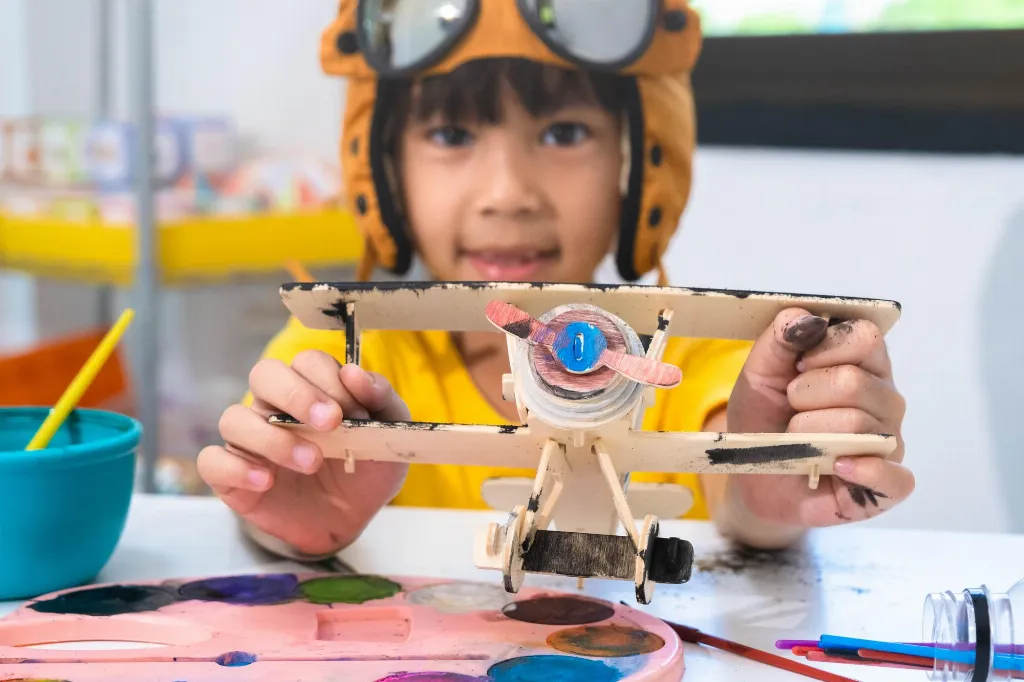
 Creative activities are easy, low-cost ways to help young learners grow. This article gives practical ideas you can use in your #preschool or daycare. If you work with two-year-olds, see Terrible Two's Can Be Terribly Fun! for playful, age-appropriate activities and caregiver strategies. You will find quick activity ideas, why they matter, ways to set up the room, safety reminders, and tips for sharing learning with families and staff. For real-world ideas, see Creative Daycare Activities to Help Children Learn and Grow from ChildCareEd.
Why does creative play matter for my program?
- Children learn many skills while they #play: language, counting, motor skills, and self-control.
- Creative time can help children calm down and focus, which makes learning easier later.
- It supports real school readiness: strong early skills predict better outcomes later on (OECD).
For activity ideas and how they support learning, check ChildCareEd’s STEAM and play resources like Fun Preschool STEM Activities and Spark Young Minds.
What simple creative activities can we use every day?
- 🎨 Open-ended art station
- Put out paper, washable paint, sponges, and loose parts. Let children pick tools and colors.
- Why: builds fine motor skills and vocabulary. See materials that foster creativity.
- 🔬 STEAM tray
- Use cardboard, cups, droppers, and recycled bottles for simple experiments.
- Why: supports asking questions and testing ideas. See preschool STEM.
- 🫧 Sensory bin rotation
- Rotate rice, water, ice excavation, or scented play dough. Keep big scoops for safety.
- Why: helps self-regulation and early math (counting, measuring). See ChildCareEd’s sensory ideas in Creative Daycare Activities.
- 🏃 Gross motor games
- Try indoor hopscotch, balloon keep-up, or obstacle courses.
- Why: supports large muscle development and focus. Pair with outdoor play tips from the CDC.
- 📚 Story + props
- Read a short book, add puppets or props, and invite children to act out parts.
- Why: boosts language and social skills. See ChildCareEd’s ideas on dramatic and project play in Play, Explore, Grow.
Tip: keep choices small—1–2 tools per bin helps children focus and reduces overwhelm. For more center design ideas, see How to Design Centers.
How do these activities support learning and development?
When you plan activities with clear goals, playful time becomes learning time. Below are numbered ways creative activities help children grow.
- Language & communication
Children learn new words during art, stories, and pretend play. Ask open questions: “Tell me about this,” or “What will happen next?” Document new words to share with families. For more techniques and example prompts staff and families can use, see the seminar Learn to Use Open Ended Questions to Find Out About Your Child's Day.
- Math & early reasoning
Sensory bins and block play teach counting, sorting, and patterns. Guided questions like “How many red blocks?” make math real.
- Fine & gross motor skills
Play dough, tweezers, painting, and obstacle courses build muscles for writing, self-care, and safe movement. See fine motor lists at ChildCareEd and ideas like 25 Easy Fine Motor Activities.
- Social-emotional skills
Pretend play teaches turn-taking, empathy, and problem solving. Research and practice show that play supports executive function and long-term learning (Power of Play, OECD).
- Curiosity & science habits
STEM trays and simple experiments encourage prediction, testing, and reflection. Use photos and charts to show changes over time and spark questions for the next day.
How do we set up the room, schedule, and safety so activities run smoothly?
Good routines and clear layouts help staff run centers with less stress. Below are practical, numbered steps you can use today.
- Set up clear centers
1) Art, 2) Blocks/Construction, 3) Sensory, 4) Dramatic Play, 5) Reading. Use low shelves and labeled bins so children reach materials independently. See center examples at ChildCareEd: Design Centers.
- Create a simple daily schedule
1) Morning circle (song, story). 2) Choice time (centers) with 2–3 options open. 3) Outdoor or gross motor time. 4) Teacher-led small group. 5) Calm down and snack. Short, repeated blocks keep children engaged.
- Staff roles and checklists
Assign one adult per center. Rotate who leads small groups. Use a bin checklist so any staff can set up quickly. ChildCareEd training like 45-Hour Preschool Curriculum
 Buy Now
 $399.00$275.00 can help map roles and goals. - Safety first (state rules & health)
- 🔒 Supervision & materials
1) Supervise by sight and sound; infants may need within arm’s reach. 2) Choose safe materials; avoid small choking hazards for young children. 3) Clean and store kits; label and rotate. For outdoor safety and water play guidance see the CDC Outdoor Play and Safety and general safety recommendations at CDC Safety. State requirements vary - check your state licensing agency.
How can we document, share, and keep improving activities with families and staff?
Documentation and sharing make play visible and build trust with families. Use simple steps so staff can do this without extra work.
- 📷 Take photos & make a quick note
Take one photo per activity and write a 1–2 sentence note: what happened and one skill you saw (e.g., counting, new word, turn-taking). Pin photos to a learning board or send a short message to families.
- ✉️ Share one-home extension
Send families one simple extension they can try at home (for example: try the same color-mixing with cups and food coloring). Link to a ChildCareEd activity like Spark Young Minds for more ideas.
- 🎓 Build staff skills
Offer short team learning: watch one short video or read one article together and try a small change next week. ChildCareEd courses such as Early Childhood Education
Buy Now $99.00$84.00, Teacher & Me Playtime Buy Now $24.00$19.00, and the 45-Hour Preschool Curriculum Buy Now $399.00$275.00 are useful for teams.
FAQ
- Q: How often should we offer creative play? A: Short daily sessions are best—2–4 short center blocks plus one longer block when possible.
- Q: Can we use food in activities? A: Only if families and policies allow. Always follow allergy plans and center rules.
- Q: How do we track learning quickly? A: One photo and one short note per child per week is powerful.
- Q: Where to get safety guidance? A: See CDC guidance on outdoor play and safety (CDC) and check state licensing rules.
Conclusion
Creative activities help children practice many skills at once. Try these simple next steps this week:
- ✅ Pick one center to refresh (art, sensory, or STEAM).
- ✅ Set one learning goal for that center and a one-question prompt for staff to ask.
- ✅ Take one photo and one quick note per child about what you saw.
Small, intentional changes—more child choice, clear goals, and safe routines—make a big difference. For more ideas and training, visit ChildCareEd and explore courses and articles linked above. You are doing important work—keep supporting curious #children with playful, purposeful #learning and #creativity through #play every day.
- CDA Home Visitor Subject Area 3 Part 3 Birth to 5
- CDA Home Visitor Subject Area 2 Part 3 Birth to 5
- CDA Home Visitor Subject Area 2 Part 2 Birth to 5
- CDA Home Visitor Subject Area 2 Part 1 Birth to 5
- Balancing Physically Active Play in Child Care
- CDA Infants/Toddlers: Lesson Planning Made Easy
- The Best Promotion is Play
- 45-Hour Infant and Toddler Curriculum
- Balancing Active Play in Child Care
- Montessori Cultural Activities: Exploring the World Through Play and Learning
- The Family Day Care Chronicles: Tales of Laughter, Learning, and Unexpected Adventures
- Tiny Tinkerers: How Messy Play Today Could Lead to Tomorrow’s Top Inventors
- Increasing Fine Motor Skills in the Early Childhood Education Classroom
- Daycare Training 101: Building a Safe, Fun, and Educational Environment
- Cómo Abrir Una Quardería En Casa Sin Dinero?
- ¿Cómo puedo usar escenarios de juego de roles de primeros auxilios en mi aula?
- Actividades de Otoño Fáciles para Preescolares esta Temporada
- Creative Daycare Activities to Help Children Learn and Grow
- Learning Through Creative Daycare Activities
- Can Toddlers Do STEM in the Sandbox at Minnesota Daycares?
- What indoor activities work best for school-age children in daycare?
- What School-Age Activities Best Keep Kids Engaged?
- What creative activities work best for school-age daycare programs?
- What are fun, practical school-age activities for my daycare program?
- How can we plan fun, safe outdoor activities for school-age daycare programs?
- What school-age group activities work best in daycare centers?
- How can I plan activities for school-age children in daycare?
- Do Toys Come Alive: How Can Pretend Play Spark Creativity in Your Daycare?
- What are safe, engaging non-candy Halloween ideas for daycares?
- What Makes a Great Home Daycare? 10 Things Parents Notice First
