Bring joyful science into your #preschool day with easy, low-prep ideas that build thinking, language, and confidence. In this article you will find simple experiments, setup tips, and teaching moves you can use tomorrow. We focus on playful, safe activities that work in a busy #classroom and keep learning #handsOn. Try one activity, watch curiosity grow, and repeat!
Why it matters:
1. Young children learn best by doing and asking questions — that is real #STEM in action.
2. Hands-on experiments support early math, vocabulary, and problem-solving skills, and they build persistence and teamwork. For practical activity ideas see Spark Young Minds and Preschool STEM Activities for Hands-On Learning.
Note: state requirements vary - check your state licensing agency.
What quick experiments can I do tomorrow that children will love?
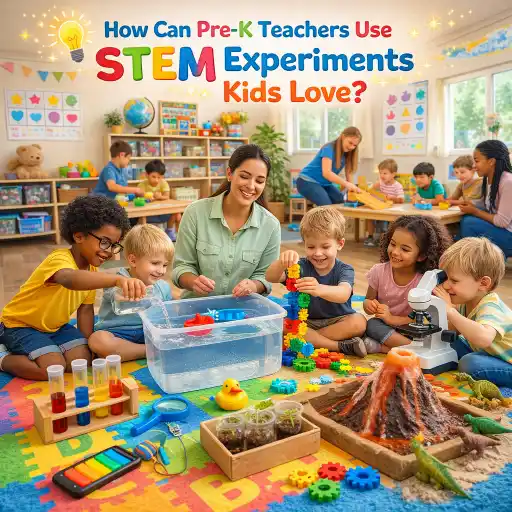
Try these 1–2 step experiments. Each is safe, easy, and invites prediction and talking. Most use common materials from your kitchen or classroom.
- 🧪 Color-mixing water
- Materials: clear cups, water, food coloring, droppers.
- What to do: Let children drop, mix, and name new colors. For a guided printable activity see Water Drop STEM Activity Buy Now $0.00.
- 🌊 Sink or float
- Materials: tub of water, small safe objects (cork, rock, plastic toy).
- What to do: Ask “sink or float?” then test and sort results. This builds predicting and sorting skills (STEM for preschoolers).
- 📦 Ramp races
- Materials: cardboard, blocks, toy cars.
- What to do: Change ramp height or surface and compare which car is fastest. Great for talking about forces and testing one change at a time.
- 🌱 Seed germination
- Materials: clear cups, paper towel, seeds, water.
- What to do: Plant seeds in clear cups and observe roots and shoots. Children can draw daily changes and measure growth.
For more simple ideas, visit Spark Young Minds and STEAM Activities for Preschoolers Using Everyday Materials.
How do I set up a safe, inviting STEM area in a busy Pre-K program?
Steps to set up:
- 🧰 Choose a small table or tray space and rotate materials weekly.
- 🔍 Include: magnifiers, droppers, clear cups, loose parts, measuring spoons, and recording sheets or crayons.
- 📋 Label rules: materials stay on the table, no tasting, adult pours where needed.
- 🧼 Prep for mess: trays, smocks, and easy-clean wipes so you don’t skip great activities.
Safety and supervision:
1. Use age-appropriate materials — avoid small choking hazards.
2. Practice active supervision—see the ChildCareEd safety guidance on staying present during hands-on play (STEM for preschoolers) and consult program safety checklists like the NIOSH/CDC resources if needed (Safety Checklist Program for Schools).
Set materials in reachable bins, keep a loose-parts container, and display children’s photos and charts so they can revisit discoveries (Preschool STEM Activities).
How can teachers guide STEM experiments without taking over?
Try these teacher moves (simple and powerful):
- 🙂 Ask open questions: “What do you notice?” “What do you think will happen?”
- 🔁 Let children test first, then ask them to explain their results.
- 📝 Encourage recording: drawings, tallies, or photo charts help children see change over time.
- 🔬 Extend thinking: “What would change if we did X instead of Y?”
Common mistakes and how to avoid them:
- ❌ Too much adult instruction — fix: pause, ask a question, and wait for a response.
- ❌ Expecting a single correct answer — fix: value the process and children’s ideas.
- ❌ Using too many materials at once — fix: simplify to one variable per test.
For ideas on scaffolding and planning, see Building Early Science Foundations  Buy Now $16.00 and the Basic Science course (Basic Science in Early Childhood Buy Now $25.00).
How do I document and extend children’s STEM learning so it lasts?
Documenting makes learning visible and helps you plan next steps. Use simple tools and share with families and staff.
Steps to document and extend:
- 📷 Take photos during activity and add captions with children’s words.
- ✏️ Keep a science journal where children draw daily changes (seed growth, water color changes).
- 📊 Make simple charts: sink vs float tallies, color-mix result charts, or drop-count tables (see the Water Drop STEM Activity Buy Now $0.00 printable).
- 🔁 Revisit experiments with one small twist: change ramp height, surface, or amount of water so children compare results.
- 👪 Share at pickup: send a photo and one sentence families can ask their child about later.
Extending learning across the week builds deeper thinking. For longer projects and curriculum ideas, explore Seeds of STEM (Seeds of STEM) and project approaches described in early years STEM resources (STEM in the Early Years).
Summary
1. Start small: try one short experiment and let children explore.
2. Use simple teaching moves: ask, wait, record, and extend.
3. Make the space safe and predictable — plan for mess and supervision. For more quick activity ideas, see ChildCareEd’s collections like Spark Young Minds and related STEAM articles (STEAM Activities for Preschoolers).
You are doing important work when you bring playful #STEM into your #preschool classroom. Keep it playful, keep it safe, and celebrate the questions. Happy experimenting!
Keep setup small, predictable, and well-supervised. A good STEM area invites exploration without overwhelming children.The teacher’s role is to scaffold—ask good questions, listen, and help children record ideas. Use short prompts and let children lead testing.- 45 Hour Child Growth and Development
- 45 Hour Preschool Methods and Materials
- 45 Hour School Age Methods and Materials
- Art from the Heart for Preschoolers: Open Ended Art Projects that Build Self-Esteem
- Potty Training Made Simple
- Texas Director Credential
- Wellness in Action: Teaching Healthy Habits to Children
- Moving About the Classroom: Effective Transitions for Everyday
- Easy Ways to Add STEM to Your Preschool Classroom
- Sweet National Ice Cream Day Activities Kids Will Love
- How can I use STEM activities in my Preschool and Pre-K classroom?
- How can Michigan classrooms teach children about the Great Lakes with hands-on science activities?
- Pumpkin, Leaves, and Apples: Fall Activities for Preschoolers
- How can child care providers use simple STEM activities with early learners?
- Celebrando la amistad en el cuidado infantil durante el Día de los Mejores Amigos
- Diversión fresca de verano: actividades del Día Nacional del Helado para niños
- How can you turn summer days into learning moments at your Minnesota program?
- How can we build a Minnesota summer program that keeps school-agers engaged?
- Summer Preschool Activities for Art, Science, and Sensory Play
- How can Florida child care providers celebrate National Ice Cream Day safely and with learning fun?
- How can school-age daycare use outdoor activities to teach, play, and stay safe?
- How can I plan activities for school-age children in daycare?
- How can we teach preschoolers to ask better questions and make predictions?
- How Can Preschool Teachers Help Children Build Problem-Solving Skills?
- How can we create screen-free activities that truly engage older children?
- How can childcare programs create high-quality outdoor classrooms and nature-based care?
- How can simple science experiments transform my preschool classroom?
