Organizing an effective preschool classroom helps children learn, play, and feel safe. This short guide gives easy steps you can use today. You will find ideas about room layout, daily #routines, engaging #centers, clear #visuals, and how to welcome every child with #inclusion. Links point to helpful articles and trainings on ChildCareEd when you want more detail.
How do I set up a preschool room that supports learning?
Follow these steps:
- Define 6–8 clear interest areas (for example: book, block, art, sensory, dramatic play, math) so children know what happens where.
- Keep wide pathways so children and adults can move without bumping into each other. This improves supervision and lowers conflict.
- Use low shelves and labeled bins so children can reach and put away materials themselves. Labels can be pictures or words.
- Make one cozy quiet corner for reading and calm-down time. Soft lighting and cushions help.
- Place group areas (circle time) away from busy centers so children can hear and focus.
Why this matters: a well-organized #classroom means fewer behavior problems and more time for learning. If you want a deeper dive into room arrangement best practices, check Identify best practices in room arrangement.
What daily routines and management help children feel safe and independent?
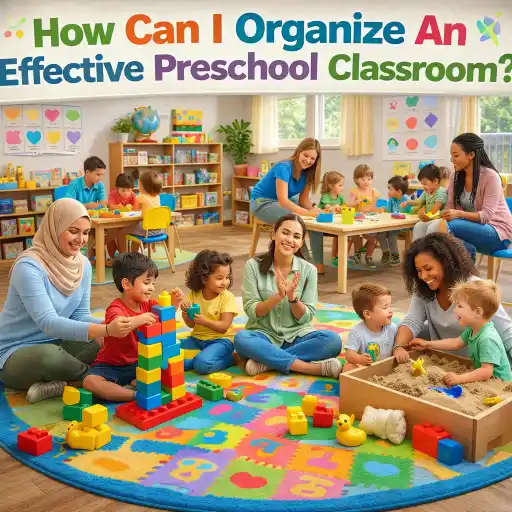
Children do best with predictable routines. Routines help them know what comes next and give them control. A visual schedule is one of the easiest tools to use. For how to create visual schedules, visit How to Create and Implement a Visual Schedule.
Try a simple routine plan:
- Morning arrival: greet each child, hang coats, and let them choose a calm activity.
- Circle time: use the same song and focus wall so children know the routine.
- Center time: give clear time limits and use timers or songs for transitions.
- Snack, outdoor play, rest: keep order and predictability each day.
Use these tools to manage the room:
- 🔔 Visual schedule with pictures for non-readers.
- 🎵 Transition songs or a bell to warn children 2–5 minutes before a change.
- 🧰 Job charts so children help with cleanup and feel proud.
Positive behavior guidance works better than punishment. Teach and practice expected skills like lining up, handwashing, and clean-up. For classroom-tested management ideas, see Effective Classroom Management Strategies and Classroom-tested strategies.
Reminder: state requirements vary - check your state licensing agency. Simple, consistent routines make children feel safe and help teachers focus on teaching.
How do I design and rotate learning centers to encourage play and growth?
Design tips (use numbers to plan):
- Decide on center goals: what skill will children practice? (e.g., math, language, fine motor).
- Pick open-ended materials: blocks, loose parts, fabrics, simple kitchen props — these become many things.
- Label shelves with photos so children can find and return items themselves.
- Rotate materials weekly or biweekly. Keep a few favorite items always out and swap smaller provocations.
- Plan adult roles: observe, ask open questions, or join to extend play.
Examples to try:
- 🧩 Math center: counting trays, measuring cups, simple scales.
- 🍽️ Dramatic play: menus, play money, culturally diverse props (see Dramatic Play and Sensory Play Activities).
- 🌾 Sensory table: rotate safe materials and add vocabulary prompts.
Consider Montessori ideas for choice and accessibility: low shelves, small trays, and child-sized tools help independence. See The Prepared Environment: Montessori Class Design  Buy Now $16.00. For an overview of how Montessori methods foster independence, confidence, and a love of learning in young children, see The Montessori Advantage in Early Childhood.
When centers are clear and inviting, children practice social skills, language, and problem solving naturally. Put labels, photos, and simple rules at each center to support independence.
How do I include all children and avoid common mistakes?
Inclusion means planning so every child can join. Build equity by offering materials that reflect families and by adapting activities for different needs. For practical inclusion strategies, see Building Equity: Inclusionary Practices in Preschool Buy Now $10.00.
Common mistakes and how to avoid them:
- 🔴 Mistake: Overcrowded centers. Fix: limit how many children play in one space and stagger rotations.
- 🔴 Mistake: Too many transitions. Fix: combine steps and use visual cues so children know what comes next (helpful transition strategies).
- 🔴 Mistake: Materials too advanced or too simple. Fix: offer multiple levels of challenge in each center.
- 🔴 Mistake: Ignoring cultural needs. Fix: include diverse books, dolls, and props; invite families to share.
Practical inclusion steps:
- ⭐ Use individual visuals or schedules for children who need them.
- ⭐ Arrange furniture so wheelchairs and walkers can move easily; consult ADA and your state rules (see resources at Resources - Classroom Setup).
- ⭐ Collaborate with families and specialists to set supports.
Why it matters: inclusive classrooms let all children learn together. Small planning changes make a big difference in participation and joy.
Summary
Here is a quick checklist to get started this week:
- 🗂️ Define and label 6–8 centers.
- 🕒 Create a simple visual schedule and practice it daily.
- 📚 Use low shelves and labeled bins for child access.
- 🔁 Rotate materials and plan adult roles for observation and scaffolding.
- 🤝 Add at least one inclusion change (diverse books, accessibility, or individual visuals).
For more training and free resources, visit ChildCareEd courses and resources like classroom design tips, management courses, and activity guides. You are not alone—small, steady changes will make your classroom calm, joyful, and full of learning. You can also follow ChildCareEd on Pinterest for quick visual inspiration, curated room-layout boards, activity ideas, and book lists that support early childhood classrooms.
FAQ
- How many centers should I have? Aim for 6–8 centers depending on room size and group size. Fewer centers work well for small spaces.
- How long should center time be? 20–40 minutes is typical for preschool, but shorter works for younger groups.
- What if I have mixed ages? Offer materials at different levels in each center and let older children help younger ones (see mixed-age activity ideas at Classroom Strengths Community Directory Activity Buy Now $0.00).
- Where can I learn more? ChildCareEd has many relevant courses and free resources linked throughout this article.
- Do I need special permission for changes? Check licensing rules. State requirements vary - check your state licensing agency.
- CDA Preschool Credential with Portfolio Review
- Building Equity: Inclusionary Practices in Preschool
- Bienvenido! Welcoming All Families
- CDA Bridge Bundle: Preschool
- Pediatric RSV First Aid & CPR/AED
- Classroom Setup for Child Care
- Texas Director Credential Renewal
- Texas Director Credential
- Every Moment Matters: Schedules and Transitions
- “The CDA Chronicles: Adventures of a CDA in Training
- CDA Certification en Español: Recursos y Consejos para Educadores Bilingües
- How can I organize an effective preschool classroom?
- How can DC early childhood educators use simple classroom management tips in busy preschool rooms?
- Cómo simplificar la capacitación para sus empleados de daycare
- Organized Classrooms: Why Layout, Design, and Space Matter
- Online CDA Classes: A Flexible Path Toward Your CDA Credential
- CDA Practice Test by Competency Area: What Should You Study?
- Preschool CDA Practice Test: What Should You Study to Feel Ready?
- Child Care Administration Course: Are You Ready to Manage Adults, Not Just Classrooms?
- Preschool Teacher Qualifications: What’s Required to Get Hired—and What Helps You Move Up?
- Labor Day Crafts for School-Age Kids That Go Beyond Coloring Pages
- Training for Preschool Teachers: What Should You Take After You Meet the Minimum Requirements?
- What Are the Best Print-and-Play Activities for Substitute Teachers?
- What Printables Should Every Preschool Classroom Have on Hand?
- Which Printable Activities Belong in Every Preschool Classroom?
- What Are Effective Ways to Teach Children to Care for Classroom Materials?
