Young children love to touch, build, and ask “why?” This article helps child care providers and directors add simple, joyful #STEM play that fits busy mornings and nap schedules. You will find easy activities, setup tips, teacher moves, and ways to document learning. These ideas are practical, low-cost, and backed by early-childhood practice. You don’t need fancy kits—everyday items work great and build confidence for both children and staff. This matters because early #preschoolers who explore and talk about what they see grow stronger language, problem-solving, and #handsOn thinking.
Why it matters:
1. Early #exploration sets the groundwork for future learning. When children test ideas and explain what they saw, they practice scientific thinking and math in small, meaningful steps.
2. Hands-on activities help children build vocabulary, social skills, and persistence. Small experiments make big learning feel fun.
What simple STEM activities can I try tomorrow?
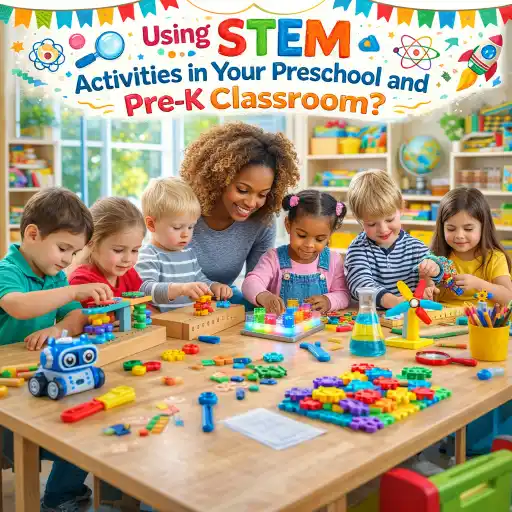
Try 1–2 short invitations during free play. Here are easy ideas you can set up with common materials. Many come from ChildCareEd resources—see more examples at 10 STEM Ideas for Preschoolers and Spark Young Minds: Playful Scientists.
- 🧪 Color mixing with water: clear cups, droppers, and food coloring. Ask: “What new color will we make?” (ChildCareEd color-mixing idea)
- ⚖️ Sink or float: tub of water and small objects. Have children predict, test, and sort results (simple experiments).
- 🚗 Ramp races: cardboard ramp + toy cars. Change ramp height and surface to compare distance and speed.
- ❄️ Frozen toy rescue: freeze small toys in ice and use warm water or salt to free them—great for fine motor and #engineering talk.
- 🧲 Magnetic hunt: magnets and mixed objects to sort what sticks and what doesn’t.
- 🌱 Seed planting in clear cups: watch roots and sprouts over days and draw changes (plant science).
- ✈️ Paper airplane tests: fold different styles and measure which flies farthest.
- 🫧 Bubble shape testing: shaped wands to explore if bubbles change with frame shapes.
- 🌈 Walking water: cups and paper towels move colored water—excellent for observation and prediction.
- 📦 Building with recycled boxes: towers, bridges, and design plans (see Boxitechs activity).
Pick one, gather materials in a tray, ask one question, and let children lead. For more quick ideas and printable activities, see ChildCareEd’s Water Drop STEM Activity Buy Now $0.00.
How do I set up a safe and inviting STEM area?
A welcoming space encourages curiosity and reduces stress for staff. Keep it simple and visible. Follow these steps:
- 📦 Prepare materials in labeled bins so children can choose safely.
- 🪣 Use trays or washable tablecloths for messy work; it makes cleanup fast.
- 👀 Position the table where adults can see and join—active supervision helps learning and safety; state requirements vary - check your state licensing agency.
- 🔁 Rotate a small set of loose parts weekly (cups, droppers, blocks, bottle caps).
- ✅ Post simple rules: materials on table, no tasting, adults pour hot liquids, wash hands after activities.
Safety and planning tips from ChildCareEd stress short, repeatable invitations and clear rules; see Easy Ways to Add STEM and safety reminders in STEM for preschoolers: simple experiments. Keep materials age-appropriate (no small choking hazards). If you plan outdoors, use bigger trays and sun-safe spots so children can test bigger ideas. Remember: a few well-chosen materials and a clear question invite deeper play more than a cluttered table.
How can I guide learning so children think more (without taking over)?
Your role is to nudge thinking, not to give answers. Simple teacher moves help children notice, predict, and test ideas. These approaches come from effective early-science practice shared at ChildCareEd—see Preschool STEM Activities for Hands-On Learning.
- 👂 Observe first: watch what children try before asking questions.
- ❓Ask open questions: “What do you notice?” “What do you think will happen?”
- 🧪 Encourage testing: let children try their idea, then ask them to explain results.
- ✏️ Document simply: photo, a short quote, or a child drawing their result.
- 🔁 Repeat and change one thing at a time so children compare results and learn cause-effect.
Common mistakes and how to avoid them:
- ❗Too much adult instruction — step back after one open prompt.
- ⚖️ Focusing only on right answers — celebrate attempts and thinking.
- 🧩 Overcomplicating materials — fewer items help focus testing.
- 🧼 Avoiding mess completely — plan smocks and trays instead of skipping hands-on fun.
These simple teacher moves build vocabulary, reasoning, and persistence. For prompts and planning, see ChildCareEd’s activity lists and courses like Building Early Science Foundations  Buy Now $16.00.
How do I document learning and extend STEM over time?
Documentation helps you see growth and plan next steps. Use quick, repeatable steps so teachers can keep it up.
- 📸 Take a photo of the child’s setup or final result.
- 📝 Write one short sentence or the child’s words about what happened.
- 📚 Add the photo and note to a class STEM notebook or wall chart so children can revisit ideas.
- 🔁 Repeat the activity later and compare results—this supports deeper understanding.
Assessment ideas: performance-based and observation notes help you see how children use science skills; researchers encourage tools that capture inquiry and talk—see Assessment for Preschool Science Learning for background.
FAQ (quick answers for busy providers):
- Q: How long should invitations run? A: 10–20 minutes for a short invite; longer for projects across days.
- Q: Do I need special kits? A: No—everyday items work wonderfully (see STEAM with everyday materials).
- Q: How do I include dual-language learners? A: Use gestures, label materials, and accept descriptions in the child’s language.
- Q: What if staff worry about time? A: Start with one short tray and one photo note—small steps add up.
Conclusion
Start small: pick one activity, prepare a tray, ask one open question, and record one photo or sentence. Repeat and tweak the activity so children can compare results. Over time, these short invitations grow children’s #engineering thinking, vocabulary, and curiosity. For more ideas and ready resources, explore ChildCareEd’s activity posts and courses like Enhancing STEM Education for Infants and Toddlers Buy Now $16.00 and What Are Fun and Easy STEM Activities. If you teach in Georgia, consider the Georgia's Newest Scientists training, which offers infant- and toddler-focused science strategies and professional development. You’re already doing great work—these small invitations help children become confident little scientists.
- 45 Hour Child Growth and Development
- 45 Hour Preschool Methods and Materials
- Moving About the Classroom: Effective Transitions for Everyday
- Texas Director Credential Renewal
- Texas Director Credential
- Wellness in Action: Teaching Healthy Habits to Children
- CDA Infants/Toddlers: Lesson Planning Made Easy
- Enhancing STEM Education for Infants and Toddlers
- Moving About the Classroom: Effective Transitions for Everyday
- 🎉STEM-sational Fun: How Can You Spark Preschoolers’ Curiosity with Engaging STEM Activities? 🔬🧪🔢
- 👶 ¿Cuáles son las proporciones y grupos requeridos en Dakota del Norte? 🏫
- Recursos en Español sobre el Sueño Seguro del Bebé
- Proporciones de Cuidado Infantil y Tamaños de Grupo por Edad en Maryland (Guía Rápida para Centros y Hogares)
- Proporciones de Cuidado Infantil y Tamaños de Grupo por Edad en Virginia (Guía Rápida para Centros y Hogares)
- Actividades de Otoño Fáciles para Preescolares esta Temporada
- Easy Ways to Add STEM to Your Preschool Classroom
- What are easy STEM activities I can do with preschoolers?
- Calabazas, hojas y manzanas: actividades de otoño para preescolares
- Celebrando la amistad en el cuidado infantil durante el Día de los Mejores Amigos
- How can we help children reach new heights—from the Space Needle to the preschool classroom?
- How can preschool teachers use simple STEM activities to spark big learning?
- Cómo simplificar la capacitación para sus empleados de daycare
- How do I build an effective emergency preparedness plan for my Kansas child care program?
- How can I use simple STEM activities to spark curiosity in preschoolers?
- How can we create classrooms where every child feels represented?
- STEM for Preschoolers: Fun Activities That Encourage Curiosity
- Can You Build a Leaf Bridge? Fall STEM Challenges for Pre-K
- How Can STEM Activities Turn Everyday Preschool Play Into Powerful Learning?
