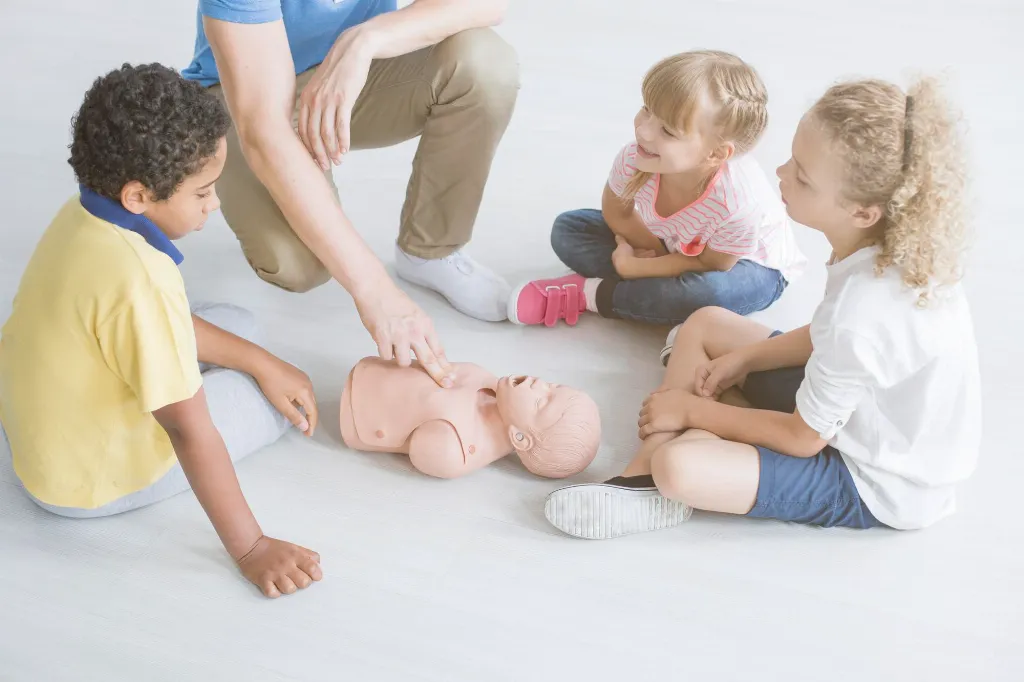
 Teaching young children simple first aid is powerful. This short guide helps child care providers and directors use fun, safe activities to teach life-saving skills. You will find easy games, role-play ideas, and ways to check learning.
Why does teaching first aid through activities matter?
Young children learn best through hands-on play, practice, and pretend experiences. That is why activity-based first aid lessons can be so effective. Simple games and role-play help children remember safety ideas in a way that feels natural and not scary.
- 🩹 Hands-on skills (bandages, 911 practice)
- 🎭 Social and emotional growth (empathy, calm)
- 📚 Better memory when lessons are playful
For ready-made classroom activities, check ChildCareEd's Fun Ways to Teach First Aid Buy Now $0.00 and their Disaster Preparedness Activity Book Buy Now $0.00. These resources help you plan short, repeatable lessons that meet learning goals and support #training for staff.
What activities work best to teach basic first aid to young children?
🎲 Role play: Set up a "doctor" corner with stuffed animals and a toy first aid kit. Use the Role Play (Doctor Doctor) idea to guide scenarios. Let each child be doctor and patient.
📞 911 practice: Play a game where children practice telling an adult their address and why they are calling. Use steps from KidsHealth's 911 guide or the Girl Scouts' Check, Call, Care poster activity.
🧭 Treasure hunt: Hide first aid items and have kids find and name them. Tie each item to one simple step (e.g., bandage = protect the wound).
🧸 Puppet or story time: Use a character who gets a scrape and needs help. Pause and ask kids what to do next. The Red Cross "Prepare with Pedro" resources offer good story-style examples (Prepare with Pedro).
🛠 First aid kit activity: Have children help pack a classroom kit while naming each item and its use. This is great for #training and readiness.
Keep activities short (10–20 minutes), repeat often, and celebrate effort. Use ChildCareEd's course listings for staff CPR and first aid certification if you need formal training links: In-Person CPR & First Aid Buy Now $95.00 and Blended CPR & First Aid Buy Now $85.00$80.00.
How do I teach skills safely and follow rules?
🔒 Check rules: state requirements vary - check your state licensing agency. Make sure mock drills and props are allowed in your program.
🧑⚕️ Staff training: Ensure at least some staff have pediatric first aid and CPR. ChildCareEd offers certification courses that meet many state rules (courses Buy Now $95.00).
🧴 Use safe props: Soft toys, plastic bandages, and clean, non-sharp supplies only. Never practice invasive procedures—focus on calling for help, comforting, and simple wound care like washing hands and covering scrapes.
📋 Consent and communication: Tell families what you will teach and get any needed permissions. Share simple tips they can practice at home.
📆 Practice drills: Schedule short, age-appropriate drills for fire, water safety, and basic first aid.
Document trainings, drills, and any injuries. Keep emergency contact forms current using templates like ChildCareEd's emergency form in their preparedness resources (Disaster Prep Book Buy Now $0.00).
How can I check learning, avoid mistakes, and help kids remember?
✅ Teach-back: Ask children to show or say steps back to you. The Teach-Back method works for any age and confirms understanding.
📝 Quick quizzes and songs: Use a short song about "Check, Call, Care" or a poster. Girl Scouts poster ideas are easy to adapt (Junior First Aid).
🎖 Reward practice: Give stickers, a "Mini Medic" badge, or classroom praise for effort. Positive reinforcement builds confidence and #playful learning.
🚫 Common mistakes to avoid:
- ❗ Skipping consent or not notifying families about drills.
- ❗ Using real sharp tools or adult-only techniques in child activities.
- ❗ Assuming kids remember after one lesson; repeat often.
📚 When to get medical help: Teach kids the signs to call 911 (serious bleed, trouble breathing, unconscious). Use age-appropriate language from KidsHealth (Teaching about 911).
FAQ
Q: At what age can children learn first aid? A: Preschoolers can learn simple steps like telling an adult. Elementary kids can practice bandaging and calling 911 in role play.
Q: Do activities need special supplies? A: No. Use stuffed animals, toy kits, paper bandages, and printed posters from ChildCareEd resources.
Q: How often should we practice? A: Short practice every 2–4 weeks helps memory. Include drills for fire and water safety seasonally.
Q: Who should teach these lessons? A: Trained staff or guest speakers. Make sure staff get formal CPR/First Aid training when required for licensing.
Conclusion
Teaching first aid through activities is practical, low-cost, and meaningful. Use role play, stories, short drills, and teach-back checks to build real skills. Link lessons to family communication and staff training so your program stays safe and confident. For ready-made activities and staff courses, visit ChildCareEd's resources and training pages (ChildCareEd). Keep practicing, be kind to learners, and celebrate small steps toward being ready. #firstaid #safety #play #children #training
- Adult/Child/Infant CPR AED and Adult First Aid Blended
- Adult Only CPR AED and Adult First Aid Blended
- Pediatric Blended First Aid & CPR/AED Adult, Child, Infant
- Pediatric RSV First Aid & CPR/AED
- Pediatric In-Person First Aid & CPR/AED Adult, Child, Infant
- Adult First Aid Only - Blended
- Texas Director Credential
- ☀️Sunny Side Up: Smart & Safe Summer Fun for Kids!
- ¿Cómo puedo usar escenarios de juego de roles de primeros auxilios en mi aula?
- ¿Cómo puedo enseñar habilidades de primeros auxilios con escenarios de juego de roles?
- How can I use beach and ocean-themed summer activities in my California early childhood classroom?
- How can Georgia farm field trips teach young children about animals and food?
- Teaching Preschoolers Simple First Aid Skills
- First Aid for Young Children: What Kids Can Learn
- How can child care providers in Michigan use simple de-escalation techniques?
- First Aid Lessons for Kids: Simple Skills They Can Learn
- Superhero Activities for Preschoolers: Play, Create, and Learn
- How can North Dakota fill the gap for school-age children before and after school?
- How can Florida child care providers celebrate National Ice Cream Day safely and with learning fun?
- How can Alabama child care providers celebrate National Ice Cream Day safely and with learning?
- How Can DC Providers Support Pre-K–8 Children Through Out-of-School Time Programs?
- How can we plan fun, safe outdoor activities for school-age daycare programs?
- Arizona Daycare Center Standards: What Providers Need to Know
- How Can Simple Cooking Activities Teach Skills in North Dakota Child Care Programs?
- Can Superhero Day Capes and Pretend Play Teach Children to Help Others?
- How can providers coach children through frustration, mistakes, and challenges using developmentally appropriate language?
- Online Babysitting Classes: Learn the Skills to Care for Children Safely
