This short guide helps #CLASS observers and #teachers in #Florida feel ready and calm before a CLASS #observation. Use these clear steps to plan what you will show, tidy your routines, and share strengths. Remember: state requirements vary - check your state licensing agency.
Why this matters: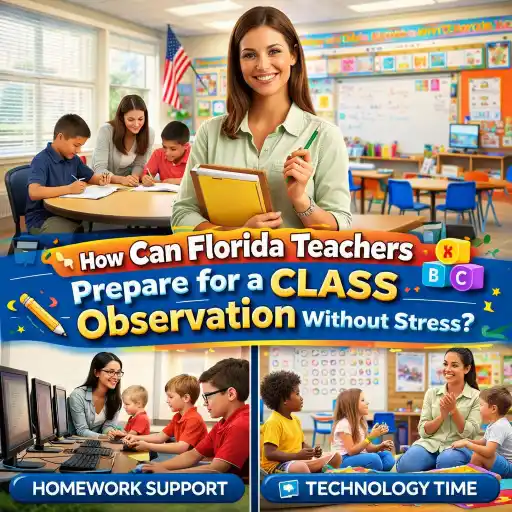
2) Calm, organized teachers help children stay calm. Small steps before an observation make the whole day run better for kids and staff. For tips to create a positive room, check the Creating a Positive Learning Environment Checklist Buy Now $0.00.
What does CLASS look for and why should Florida teachers care?
2) In Florida, align classroom moments to the Early Learning Standards so observers see #development goals in action. The Florida standards explain what children should do in areas like language and math; skim them at the Division of Early Learning site Early Learning and Developmental Standards.
3) Why care? Clear, simple interactions are what CLASS rates. When you plan, you can show real teaching: reading, asking open questions, giving feedback, and guiding play. See practical observation examples in Observations in Childcare.
What quick steps should I do the day before and the morning of an observation?
- 📋 Pack your folder with lesson plans, anecdotal notes, and any child work samples.
- 🧹 Straighten learning areas so children move smoothly between centers.
- 🖼 Place your visual schedule where kids can see it (helps transitions).
- 🔔 Pick two routines to highlight (circle time, snack, or small group). Observers like routines that show interactions.
2) Morning of the visit:
- 🙂 Greet children warmly and follow your usual plan—don’t try to be perfect.
- 🧾 Put your evidence folder where you can grab it to share with a director later (short notes are fine).
- 📱 If you use photos or short videos for your records, have parent permission ready. For forms and templates, check How do we observe with purpose.
3) Final tip: Run a 5-minute staff huddle so everyone knows the focus for the day (who covers toileting, who leads transitions). A quick team plan reduces surprises.
How can I show strong teacher-child interactions without changing who I am?
1) Use short, natural moves that CLASS likes:
- 💬 Describe what children are doing: “You stacked three blocks!”
- ❓Ask one open question: “What could we build next?”
- 👏 Give specific praise: “I like how you shared that toy.”
2) Instructional Support examples (simple):
- ✅ Model vocabulary during play and books—label and repeat words.
- ✅ Offer a quick extension: “You counted two—let’s count three.”
- ✅ Follow a child’s interest to deepen thinking—this shows concept development. Research on coaching plus curriculum (Project Approach) links to stronger CLASS scores; see A Learning Combination.
3) Use routines to show literacy and math naturally. The OECD reports that simple daily moments (reading, talking about numbers) are common, effective practices; read more at TALIS Starting Strong.
4) Stay yourself. Observers want genuine, development-focused interactions—not a scripted show.
How do I manage stress and avoid common mistakes before and during the observation?
Common mistakes and how to avoid them:
- ⚠️ Mistake: Over-preparing with fake activities. Fix: Use your normal plan and highlight two strong moments.
- ⚠️ Mistake: Talking too much during child play. Fix: Listen, then add one quick prompt or question.
- ⚠️ Mistake: Forgetting to document. Fix: Keep a 1-page anecdotal note form handy (see ChildCareEd checklist).
Stress-busters (short list):
- 🧘 Take three deep breaths before class starts.
- 🎵 Use a transition song you love—music calms you and kids.
- 🤝 Remind yourself: you know these children. Be kind to yourself.
If stress is high, ChildCareEd offers practical, mood-lifting tips in Laugh, Learn, and Lift Spirits. And remember: state requirements vary - check your state licensing agency.
Conclusion and quick FAQ
Summary: Small, honest steps help you shine. Pick routines to show, prepare one short folder of evidence, use natural language supports, and practice a brief team huddle. For ready-made forms, see ChildCareEd resources like Observations in Childcare and training options such as Assessing through Observation Buy Now $35.00.
FAQ:
- Q: How long should my evidence folder be? A: 1–2 pages with a short plan and a few dated notes or photos.
- Q: Should I change lessons just for the observer? A: No — use your normal routine and highlight authentic interactions.
- Q: Who should lead transitions during the visit? A: The teacher who knows the group best; a quick staff huddle helps decide.
- Q: What if I feel nervous on the day? A: Use breathing, a song, and remember: observers want to see real teaching, not perfection.
Need more help? Child care teams can use classroom videos and calibration tools like those from DESE to practice shared ratings.
1) CLASS observations look at teacher-child interactions. Good preparation helps children and shows your best work. See how focused observation works in practice in How do I run effective classroom observations (Checklist included)?1) Night before (easy checklist):1) CLASS focuses on three big areas: Emotional Support, Classroom Organization, and Instructional Support. These are about warm relationships, clear routines, and how you teach thinking and language. Research shows good interactions help children learn more (see coaching and CLASS links at A Learning Combination).
- 45 Hour Child Growth and Development
- Teacher-Child Interactions for Stronger CLASS® Outcomes
- 45 Hour Preschool Methods and Materials
- Easy Steps to Resume and Interview Success
- 45 Hour Infant and Toddler Methods and Materials
- Pediatric RSV First Aid & CPR/AED
- 45 Hour School Age Methods and Materials
- Texas Director Credential
- Stress Release for Florida Teachers
- Services at ChildCareEd
- Child Development Associate Certification: Unlocking Bright Futures
- CDA Certification en Español: Recursos y Consejos para Educadores Bilingües
- 🔍 ¿Qué ves cuando observas a un niño aprender?
- 💛🧩 ¿Cómo puedo hacer que mi enseñanza sea inclusiva para los niños con autismo?
- ⏰ Cómo puedo facilitar las transiciones y las rutinas diarias en mi aula?
- Cómo Abrir Una Quardería En Casa Sin Dinero?
- ¿Cómo empiezo mi certificación CDA en Florida en línea?
- ¿Cómo obtengo la certificación CDA en línea en Florida?
- Proporciones de Cuidado Infantil y Tamaños de Grupo por Edad en Nueva Jersey (Guía Rápida para Centros y Hogares)
- Proporciones de Cuidado Infantil y Tamaños de Grupo por Edad en Virginia (Guía Rápida para Centros y Hogares)
- ¿Cuál es la Diferencia Entre la Crianza Respetuosa y la Crianza Permisiva?
- Cómo Celebrar el Día Nacional del Kindergarten
- Cómo Ser Maestra de Preescolar en Maryland
- How can Florida teachers prepare for a CLASS observation without stress?
- Celebrando la amistad en el cuidado infantil durante el Día de los Mejores Amigos
- Canciones, juegos y preguntas de círculo para niños
- Cómo simplificar la capacitación para sus empleados de daycare
- How can Florida educators build strong foundations for infants, toddlers and K–3 readiness together?
