Good food and small habits help children grow strong. This article gives simple, real ideas for child care providers and directors. You will find easy routines, menu ideas, ways to help picky eaters, and ways to work with families and staff. We include helpful resources you can use right away. This article uses five key words you will see again: #nutrition #healthy #children #mealtimes #families.
Why do healthy eating habits matter for young children?
- Brain growth and learning — foods with vitamins and protein help children focus and play.
- Strong bodies — calcium and vitamin D build bones and teeth.
- Immunity — fruits and vegetables help kids fight colds.
Research and guides from public health groups show these benefits clearly. For example, the CDC explains that early eating shapes later habits. The WHO gives guidance for feeding from 6–23 months. Using these guides helps programs give the right foods at the right ages.
Why this matters to your program:
- Kids who eat well are calmer, learn more, and join activities.
- Good routines make mealtimes easier for staff and families.
- Strong nutrition lowers future health problems and supports group learning.
For practical tips on how to introduce healthy foods and encourage children, see ChildCareEd’s helpful post on How to Promote Healthy Eating Habits in Young Children.
What simple daily routines and menus work well in child care?
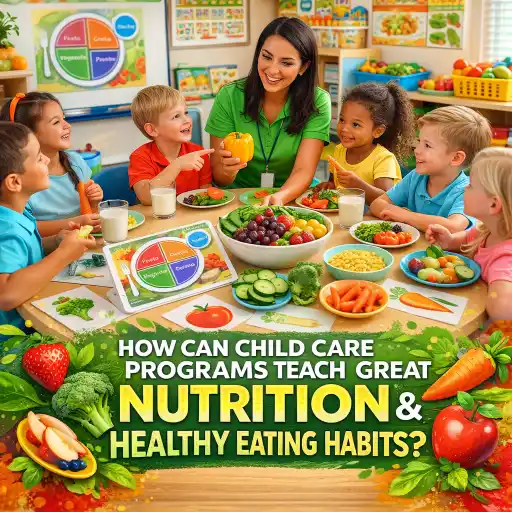
Routines make mealtimes calm and teach skills. Try these steps:
- Plan meals using a weekly menu. Use templates like the ChildCareEd weekly menu planner Buy Now $0.00 for infants and children.
- Serve fruits or vegetables at every meal. The CDC suggests a “rainbow” of colors and small pieces for safety.
- Offer water all day and limit sugary drinks. The CDC Healthy Weight tips recommend water and milk over juice and soda.
- Use whole grains and lean proteins (beans, eggs, chicken, fish). Rotate options so children try new tastes.
Practical mealtime ideas:
- 🍎 Family-style serving when possible so children practice pouring and choosing.
- 🥕 Short, calm meals with talking about food (where it comes from, what it does for the body).
- 🍌 Small taste-test cards or “rainbow day” activities to make trying new foods fun — see Nutrition Month Activities Buy Now $0.00.
For training and menu planning help, look at ChildCareEd’s courses like Nutrition Essentials for Child Care Providers  Buy Now $16.00 and resources such as the Infant and Toddler Weekly Menu Template Buy Now $0.00.
How do we handle picky eaters, allergies, and cultural food needs?
Common mistakes to avoid:
- Forcing a child to eat a food — this can make the child resist more.
- Serving the same small set of foods — it limits exposure and choice.
- Ignoring allergies or cultural needs — this can be unsafe or make families feel left out.
How to handle picky eaters and safety:
- 🙂 Offer small portions and let children say yes or no. Repeated exposure helps; kids may need to try a food many times before liking it, as the CDC notes.
- ⚠️ Always follow allergy plans: label foods, prevent cross-contact, and train staff. Share plans with families and post menus clearly.
- 🌍 Include cultural foods and invite families to share favorite recipes. This respects traditions and builds trust.
- 🧑🍳 Let children participate: washing fruit, stirring, or setting the table. Hands-on work reduces fear of new foods.
For picky-eater strategies and age tips, see ChildCareEd’s post How to Promote Healthy Eating Habits in Young Children and the CDC tips on Benefits of Healthy Eating for Children.
How can programs teach staff and involve families in healthy eating?
Teaching and teamwork help nutrition work beyond your walls. Use these steps:
- Train staff: Use courses like Nutrition Essentials Buy Now $16.00 and Wellness in Action Buy Now $55.00 to learn menu planning, food safety, and teaching ideas.
- Share menus and tips with families: send weekly menus (use the menu planner Buy Now $0.00) and short notes about what children tried that week.
- Host events: invite families to taste-test days, potlucks with cultural foods, or short workshops on easy, healthy meals.
- Make communication simple: 1) post menus, 2) label allergens, 3) ask families for food preferences and allergies, and 4) follow up with resources.
Remember to check rules: state requirements vary - check your state licensing agency. Many states use CDC-based standards like the High-Impact Obesity Prevention Standards to guide healthy meals and breastfeeding support. For practical, program-level strategies to prevent early childhood obesity through healthy eating, active play, and family engagement, see Let's Move Child Care.
Resources to share and use:
- Nutrition in Early Childhood (ChildCareEd overview)
- How Can We Help Children Develop Lifelong Healthy Eating Habits?
- CDC Early Child Nutrition
Conclusion
Good #nutrition and simple routines make mealtimes easier and help children thrive. Start with small steps:
- Plan menus with fruits and veggies daily.
- Train staff and share ideas with families.
- Use gentle methods for picky eaters and honor allergies and cultures.
Use the ChildCareEd resources and CDC guidance linked above to build a plan that fits your site. Your work matters — you help children build habits that last a lifetime.
Healthy eating makes a big difference for young learners. It helps with:These challenges are normal. Here are ways to avoid common mistakes and support every child.- Healthy Habits From the Start
- CDA Home Visitor Subject Area 3 Part 3 Birth to 5
- Professional Presence in Early Childhood
- CDA Bridge Bundle: Family Child Care without Portfolio Review
- Texas Director Credential
- Wellness in Action: Teaching Healthy Habits to Children
- On My Plate: Children's Nutrition
- Healthy Habits from the Start
- Professional Integrity in Child Care
- Healthy Cooking for Picky Kids
- National Eat Your Vegetables Day June 17
- Ohio Healthy Programs (OHP)
- National Nutrition Month #HealthConscious #LivingHealth
- Eat, Play, Grow: Essential Nutritional Tips for Growing Minds
- Snack Attack! The Best Brain Foods for Growing Minds
- Cocoa, Cookies, and Cognitive Development: The Holiday Nutrition Guide for Little Learners
- A Nutcracker’s Guide to Nutrition: Teaching Healthy Holiday Eating Habits
- CDA Certification en Español: Recursos y Consejos para Educadores Bilingües
- Menos Estrés a la Hora de Comer: Rutinas Simples Que Sí Funcionan
- How can child care programs teach great nutrition and healthy eating habits?
- How can preschool programs build healthy eating habits for young children?
- How can Michigan daycares teach healthy eating habits to toddlers?
- How can child care programs promote nutrition and healthy eating habits?
- How Can Early Childhood Programs Encourage Healthy Habits?
- How Can Simple Cooking Activities Teach Skills in North Dakota Child Care Programs?
- How can child care programs build healthy eating habits that last?
- How Do Fruits vs. Vegetables Sorting Mats Build Healthy Eating Habits?
- How Can Child Care Providers Build Healthy Habits for Young Children?
