Bring the #beach to your #California classroom this #summer with simple, safe, and joyful ocean-themed activities. This guide helps child care providers and directors pick ideas that fit your schedule, support learning goals, and meet safe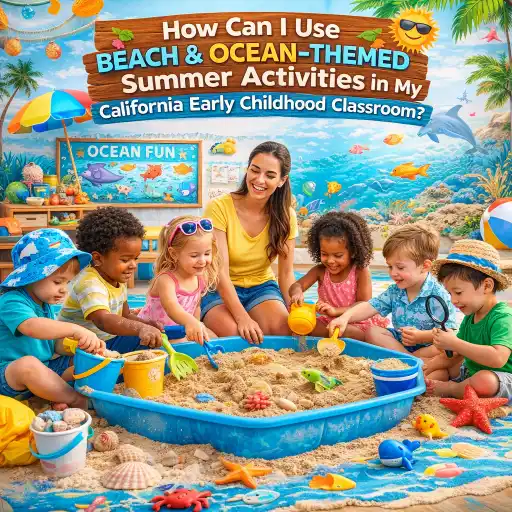 ty needs. You will find quick activity lists, safety checks, lesson links, and family ideas you can use right away. For more training and tools, see ChildCareEd resources like Sunny Side Up: Smart & Safe Summer Fun for Kids and Outdoor Learning in California.
What fun, easy beach and ocean activities can I set up this week?
Why it matters: Ocean themes spark curiosity, sensory play, and language. They are low-cost and children love them. Try a mix of art, movement, sensory, and story ideas so everyone joins in.
- Beach sensory bin — base: sand or dry rice, props: shells, scoops, small boats. Use prompts like: "Can you fill the bucket?" For many theme ideas, see What easy sensory bin themes.
- Ocean art collage — use paper, tissue, and recycled bits to make fish, seahorses, or octopus. See craft ideas inspired by community centers and teacher blogs like Ocean Theme.
- Water table play — boats, funnels, and blue food coloring for waves. Rotate small jobs: captain, tester, washer. Keep jackets and towels ready. ChildCareEd covers water play tips in Summer Smiles.
- Shell sorting & counting — great for math: sort by size or color; count shells into cups.
- Movement & song circle — "Swim like a fish" or simple ocean songs that use actions to build gross motor skills.
- Mini beach dramatic play — picnic blanket, sunglasses, pretend sunscreen, and simple safety talk about sun and water.
Quick set-up tips:
- Rotate one station at a time so materials feel new.
- Use labeled bins so staff can swap themes fast.
- Keep one clear learning goal for each activity (language, fine motor, or social skill).
How do I keep ocean activities safe and meet California rules?
Safety first. In California, you may see different weather and health rules by county. State requirements vary - check your state licensing agency. Use these checks to plan safely:
- Staff training and certifications
- ✅ Make sure staff have current First Aid & CPR. ChildCareEd explains why these are vital in First Aid and CPR Training.
- Water safety
- 👀 Always supervise water play. Keep life jackets for trips near open water and use Coast Guard rules on field trips. See beach basics at the EPA: Beach Basics. For practical strategies on supervision, staffing ratios, and active monitoring during summer programs, see Maximizing Summer Joy and Learning: The Role of Child Supervision in Dallas Metro Area. For practical guidance on supervision practices and staffing strategies during summer activities, see guidance on supervision practices and staffing strategies for summer programs.
- Health & illness prevention
- 🧴 Follow handwashing, diapering, and cleaning guidance from Caring for Our Children and local health pages like San Diego Public Health: Best Practices.
- Outdoor air, sun, and heat
- ☀️ Check UV and air quality before long outdoor blocks. Provide shade, frequent water breaks, hats, and sunscreen per family permission. See summer safety tips at ChildCareEd: Sunny Side Up.
- Field trip rules
- 🚌 Plan ratios, transit safety, and emergency plans. ChildCareEd field trip ideas and safety tips are helpful: Field Trip Ideas in California.
Common mistakes and how to avoid them:
- ❌ Too many small parts — use large shells and scoops for toddlers.
- ❌ Not checking allergies — always review family notes and swap edible fillers when needed.
- ❌ Weak supervision plans — assign adult zones, count often, and keep radios or phones for quick contact.
How do beach and ocean activities support learning and social skills?
Ocean themes are rich learning tools. They help with language, math, motor skills, self-regulation, and social play. Use one goal per activity and observe for progress. Here are clear ways they map to learning:
- Language and vocabulary
- 🎤 Use storybooks, shell names, and sea creature cards to boost new words. Add props after storytime to encourage pretend play and talking. ChildCareEd shows how story + props supports language in evergreen activities: Evergreen Learning Activities.
- Math and science
- 📏 Count shells, sort by size, measure cups of water, and watch seeds grow in a beach-themed mini garden to learn measurement and life cycles.
- Fine & gross motor skills
- 👐 Scooping, pouring, stringing beads for fish, and movement songs build hand strength and large motor control.
- Social-emotional skills
- 🤝 Use environmental strategies to boost peer play: reduce open centers for a while, add cooperative toys (wagons, big boats), and pair children with social peers, as shown by CSEFEL.
- Sensory regulation
- 🌊 Rice, sand, water, and textured shells help children calm and focus. See sensory bin ideas at ChildCareEd: Sensory Bin Themes.
Tip: Note one observation per child during play (skill they used, next step). Share a quick sentence with families: "Ari counted to five while sorting shells today!"
How can I involve families and the local community?
Family and community ties make ocean themes stronger. They help with supplies, real-world learning, and safety knowledge.
- Invite families to help collect safe shells or donate sunglasses, towels, and small beach toys.
- Plan a local field trip
- 🐚 Short trips to a nearby tide pool, aquarium, or nature center are powerful. Use ChildCareEd field trip guidance for planning and safety: Field Trip Ideas in California.
- Family activity sheets
- 📄 Send home a one-page idea: "Shell hunt at home" or "Make a mini ocean collage" to extend learning. Consider tying these take-home activities to World Oceans Day with simple ocean crafts and conservation facts families can try together.
- Community helpers
- 🚒 Invite a lifeguard, park ranger, or a local aquarium educator for a short visit or virtual talk about beaches, conservation, and safety.
- Share safety and learning goals
- 📣 Tell families about sun rules, water supervision, and what you will teach. Remind them: state requirements vary - check your state licensing agency.
Conclusion
Ocean and beach themes are fun, flexible, and full of learning. Use simple stations, short lessons tied to one learning goal, and clear safety steps. Keep materials labeled, rotate themes, and involve families for richer experiences. For training and deeper resources, start with ChildCareEd articles like Sunny Side Up, Sensory Bin Themes, and Outdoor Learning in California.
FAQ (quick)
- Q: Can I use edible fillers in sensory bins? A: Only with family permission and if no allergies; many centers avoid food-based fillers.
- Q: How often should I rotate an ocean station? A: Weekly or when interest fades—small changes keep play fresh.
- Q: What if air quality is poor? A: Move activities indoors and use ocean books, crafts, and songs until air improves.
- Q: Who must be trained for field trips? A: Staff supervising children should have first aid/CPR and clear emergency plans.
- 45 Hour Child Growth and Development
- 45 Hour Preschool Methods and Materials
- Nutrition Essentials for Child Care Providers
- 45 Hour Infant and Toddler Methods and Materials
- Pediatric RSV First Aid & CPR/AED
- 45 Hour School Age Methods and Materials
- Texas Director Credential
- Wellness in Action: Teaching Healthy Habits to Children
- CDA Certification en Español: Recursos y Consejos para Educadores Bilingües
- 👶 ¿Cuáles son las proporciones y grupos requeridos en Dakota del Norte? 🏫
- Recursos en Español sobre el Sueño Seguro del Bebé
- Que es Título 22 en California?
- Actividades de Motricidad Gruesa que Desarrollan el Equilibrio, la Coordinación y la Fuerza
- Proporciones de Cuidado Infantil y Tamaños de Grupo por Edad en Maryland (Guía Rápida para Centros y Hogares)
- Proporciones de Cuidado Infantil y Tamaños de Grupo por Edad en Virginia (Guía Rápida para Centros y Hogares)
- Retraso del Habla en la Guardería: Cómo Pueden Ayudar los Proveedores
- Cómo Trabajar en el Cuidado Infantil en Carolina del Norte: Requisitos y Pasos
- Cómo Trabajar en el Cuidado Infantil en California: Requisitos y Pasos
- Cómo Ser Maestra de Preescolar en California
- How can I use beach and ocean-themed summer activities in my California early childhood classroom?
- How do I plan a California beach and tide pool field trip for early childhood classrooms?
- Summer Field Trips for Daycares in California
- Celebrando la amistad en el cuidado infantil durante el Día de los Mejores Amigos
- Easy Pool Noodle Sea Creatures for Ocean Theme Activities
- Cómo simplificar la capacitación para sus empleados de daycare
- Summer Crafts and Activities for Preschool Classrooms
- How can ocean-themed sensory bins and water play boost learning while staying safe in preschool programs?
- ¿Todos los niños deben participar en el tiempo de círculo?
