Every child belongs in our early learning programs. This article helps directors and providers in Florida make sure children with exceptionalities join daily activities, learn, and build friendships. You will find simple steps, classroom ideas, and places to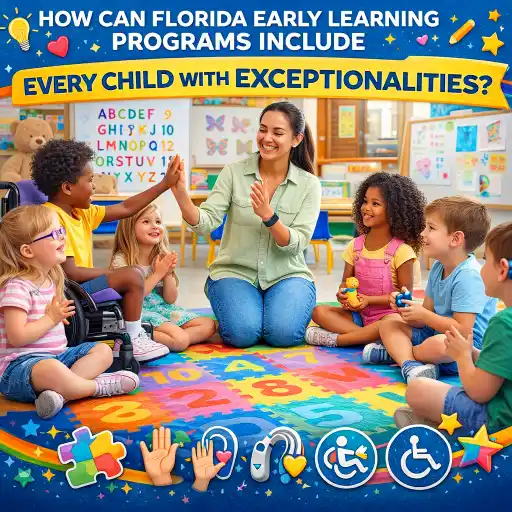 get help. Remember: state requirements vary - check your state licensing agency.
What does inclusion look like in Florida early learning programs?
1. Inclusion means every child is invited to join activities and feel safe. It is more than letting a child through the door. It means planning so children with different needs can play, learn, and belong. See the definition at the Florida Center for Inclusive Communities.
2. Why it matters:
- Children learn social skills and kindness when they play together. (#inclusion)
- Research shows inclusion improves learning for all children. See the OECD review on inclusive early childhood practice: OECD.
- Florida guidance and standards help programs plan high-quality classrooms: Division of Early Learning professional modules. (#Florida)
3. Quick link for practice ideas: ChildCareEd has clear posts on inclusive classrooms and planning: Every Child Belongs and Inclusive Practices. These are good places to start when your team asks, "What do we do tomorrow?"
How can classrooms be set up so every child can join?
1. Make the room predictable and simple. Young children feel safe when they know what happens next.
- 😊 Use a daily picture schedule. Place it where children can see and touch pictures.
- 🧸 Create a calm corner with soft light, cushions, and a few fidget toys for children who need quiet breaks.
- 🎨 Offer materials in more than one way: thick crayons, adapted scissors, large handles, or trays for stability.
- 📚 Display diverse books and family photos so children see themselves. ChildCareEd has ideas in How can I create an inclusive classroom. (#children #families)
2. Use Universal Design for Learning (UDL). Plan activities so children can join using hands, movement, pictures, or words. The ChildCareEd article on planning with purpose explains how to give many ways to learn: Planning with Purpose.
3. Set up behavior supports and teaching cues. Use visual first/then boards, timers, and clear steps. For group-wide behavior systems, learn about PBIS for Florida settings: Florida PBIS Project. These systems help teachers prevent many problems before they start.
How do we work with families, schools, and specialists?
1. Build trust. Families are experts about their child. Start with listening. Ask what helps at home and what the family wants for the child.
- 🤝 Invite the family to share routines, foods, words, and favorite songs. Share one quick success each day so families see progress.
- 📎 With permission, connect with therapists and the local school. ChildCareEd’s course Special Needs: From Referral to Inclusion
 Buy Now $24.00 explains referrals, IFSPs, and IEPs. For practical guidance on partnering with early intervention teams and strategies to support children with special needs in your program, see supporting children with special needs through early intervention.
 - 📑 Know the basics of IFSP/IEP transitions. Hands & Voices has a helpful guide about moving from early intervention to preschool services: Supporting Families in Transition. State requirements vary - check your state licensing agency.
2. Be a good observer and recorder. Keep short notes: when a behavior happens, what came before, and what happened after. These notes help teams plan next steps and support referrals for evaluations. ChildCareEd and the Florida Center for Inclusive Communities both stress the power of teacher observation.
3. Use local Florida resources. The Florida Disability Resource Hub lists local agencies, services, and contact info for families and providers.
What common mistakes should we avoid and how do we handle challenging behavior?
1. Common mistakes to avoid:
- ❌ Expecting one big change to fix a problem. Small steps, tracked over time, work best.
- ❌ Making kids change to fit the room. Instead, change the task or space so the child can join.
- ❌ Leaving families out of planning. Always include them in choices and goal setting. (#IEP)
2. Use positive behavior supports (PBS). PBS helps teams understand why a child acts out and teaches replacement skills. CSEFEL explains PBS steps and how teams can build plans: CSEFEL What Works Briefs. Florida PBIS resources also guide program-level plans: Florida PBIS.
3. A simple action plan (start today):
- 📋 Pick one behavior to watch for 3 days. Note triggers and results.
- 🛠️ Try two prevention steps (visual cue, timer, choice).
- 🏆 Teach one replacement skill and praise it when you see it.
- 🔁 Meet with staff and family weekly to adjust the steps.
4. If a child needs evaluation, help families find local supports and make referrals. ChildCareEd’s resources on behavior support and special needs can help staff prepare notes and share observations with families and specialists: Special Needs: Behavior Support Buy Now $0.00.
Conclusion and FAQs
Inclusion is a slow, steady process. Start with easy steps: a picture schedule, a calm corner, better family notes, and a short behavior plan. Use Florida and ChildCareEd resources to learn and grow with your team. Check local rules: state requirements vary - check your state licensing agency.
Quick FAQs
- Q: How do I start if staff feel unsure? A: Pick one small change for two weeks and practice together. Try a short ChildCareEd course for staff: Inclusive Practices.
- Q: Who pays for special tools? A: Look for local grants, district supports, or state inclusion funds. The Florida Disability Resource Hub lists options: Florida Disability Resource Hub.
- Q: Can we follow IEP goals at childcare? A: With family permission, yes. Coordinate with the school team as described in Understanding IDEA categories.
- Q: What if behavior keeps happening? A: Use PBS steps: observe, prevent, teach, and track. See CSEFEL and Florida PBIS for guidance.
Thank you for doing this important work. Your kindness, small steps, and teamwork help every child feel welcome and learn. For many practical handouts and short courses, visit ChildCareEd: ChildCareEd.
- 45 Hour Child Growth and Development
- Building Equity: Inclusionary Practices in Preschool
- Easy Steps to Resume and Interview Success
- Unlocking Support for Florida Childcare
- CDA Bridge Bundle: Family Child Care without Portfolio Review
- CDA Bridge Bundle: Infant/Toddler without Portfolio Review
- Equity in Action with Head Start
- Texas Director Credential
- Inclusive Montessori: Supporting Diverse Learners in the Classroom
- CDA Certification en Español: Recursos y Consejos para Educadores Bilingües
- Why Florida Loves CDA: The Value of Certification in a Growing Field
- Sunshine & Success: Growing Early Childhood Careers in Florida
- Cómo Abrir Una Quardería En Casa Sin Dinero?
- Recursos en Español sobre el Sueño Seguro del Bebé
- Normas de Licenciamiento de Cuidado Infantil en Virginia para Centros Diurnos Infantiles y Hogares Diurnos Familiares
- Proporciones de Cuidado Infantil y Tamaños de Grupo por Edad en Virginia (Guía Rápida para Centros y Hogares)
- How Can Florida VPK Providers Stand Out Under the New 2026 Accountability System?
- How can Florida early learning programs include every child with exceptionalities?
- What new child care news in Florida should providers know and how can training help?
- How can I support inclusion in Florida play and daily routines?
- How can grants and vouchers in Florida help child care providers?
- How Can Educators Prepare to Become a Child Care Director in Florida?
- Are We Ready? CPR and AED Preparedness for Florida Early Childhood Educators
- Celebrando la amistad en el cuidado infantil durante el Día de los Mejores Amigos
- How can Florida providers connect early learning, health, and family support in 2026?
- How can Florida educators build strong foundations for infants, toddlers and K–3 readiness together?
- Which Early Childhood Education Certificate Should You Get: CDA, State Credential, or College Certificate?
- Preschool Teacher Requirements in Florida: Do You Need a CDA, FCCPC, or College Degree?
