Young children light up when they meet animals, dig in soil, and learn how a farm fits into a community. A short, well-planned Oklahoma #farm visit can teach preschoolers about animal care, food, and local life while building social skills and curiosity. This article helps child care providers and directors pick farms, plan safe visits, and turn a trip into classroom learning. Remember: state requirements vary - check your state licensing agency.
Why does a farm field trip matter for preschoolers?
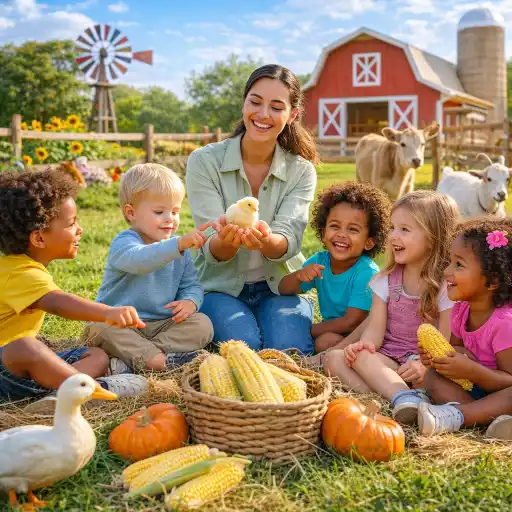
Why it matters:
1) Real-life learning: Preschoolers are #sensory learners. Seeing animals, hearing sounds, and smelling hay help learning stick. 2) Community connection: Visits show how farms feed towns and connect families to local work. 3) Social and language growth: Children ask questions, take turns, and talk about what they saw.
Short and simple: a farm visit can strengthen classroom lessons about life cycles, food, and responsibility without long bus rides. If you can’t travel, you can bring the farm to your classroom, like the Clyde Howell Farm Day example, where animals came to students instead of students going out (Clyde Howell Farm Day).
Which Oklahoma farms and ranches welcome preschool field trips?
- 🌾 Shepherd's Cross & Heart of the Shepherd — a working ranch with a farm museum and petting areas; great for group learning and seasonal events (Shepherd's Cross Pumpkin Festival).
- 🐑 Longshadows Ranch — a teaching homestead that shares sustainable lifeways and Cherokee traditions for visitors (Longshadows Ranch).
- 🚜 Local ranches, farm museums, and Clydesdale or horse centers listed in regional guides — see Oklahoma field trip listings for many site ideas (Oklahoma Homeschool field trip list).
2. How to choose: contact farms and ask about:
- Age-appropriate activities and time needed.
- Group size limits and cost (some farms suggest donations or small fees).
- Animal types and hands-on rules (some sites limit touching).
- Weather plans, bathroom access, and parking.
3. Book early and ask about group packages or teacher resources. Many farms (like Shepherd's Cross) encourage pre-registration for groups and offer packages or donation-based entry. See local listings for more options (more Oklahoma sites).
How do I plan an age-appropriate, safe farm visit for preschoolers?
- 🔍 Prepare: Collect permission slips, emergency contacts, allergies, and health forms from families.
- 🧑🏫 Assign roles: Number staff and chaperones; plan adult: child ratios and buddy pairs. Use name tags and bright shirts for easy supervision.
- 📋 Communicate with the farm: Ask about which animals are safe for young children (CDC notes reptiles, amphibians, and live poultry may be higher risk for young kids) and about handwashing areas.
- 🧴 Pack safety items: first-aid kit, hand sanitizer, water, sunscreen, hats, change of clothes, and a charged phone.
- 🚍 Plan transitions: Keep outings short, use clear arrival/departure steps, and schedule quiet time after the trip to process the experience. Reinforcing familiar classroom routines and using simple transition activities after the visit helps children settle; see our Going Back to School guide for practical routines, activity ideas, and strategies teachers can apply when returning from outings.
Safety notes:
- ✔️ Supervise all animal contact and prevent licking or putting hands in mouths. The CDC gives clear guidance on supervising and keeping animals in designated interaction areas (CDC guidance).
- ✔️ Talk to families about risks — young children and people with weak immune systems are more vulnerable to germs passed from animals (KidsHealth on pet infections).
- ✔️ Remind staff: state requirements vary - check your state licensing agency.
What learning activities connect the farm visit to classroom lessons?
Use pre-, during-, and post-visit activities to make the learning last. ChildCareEd explains how to choose age-appropriate outings and connect them to curriculum (ChildCareEd Field Trip Ideas).
- Before the trip:
- 📚 Read a short farm book or show photos of animals. Try simple books and songs so children know what to expect.
- 🖍️ Practice vocabulary (cow, sheep, duck) using pictures or matching cards from farm lesson resources (PreK Printable Farm Lessons).
- During the trip:
- 🐾 Use 1–2 simple learning goals (e.g., name 3 animals, notice animal homes, or count 5 sheep).
- 📸 Take photos and stick to quick sensory prompts: “What do you hear? What do you see?”
- After the trip:
- 🎨 Make art, classify animal sounds, or do a small-science seed planting activity to connect food to plants (Farm Science Activities).
- 🧩 Set up a small-world farm or dramatic play area with animals and a farm stand (ideas at Farm Small World Play).
Classroom-ready activities include:
- Counting games with toy animals (math).
- Sensory bins with hay, corn kernels, and animal figures (science, touch).
- Role play: run a farm stand to practice social skills and vocabulary (Preschool Farm Theme).
How do we avoid common health and supervision pitfalls on farm trips?
Common mistakes and how to avoid them:
- ❌ Mistake: Not planning for germs. ✅ Fix: Emphasize handwashing at the farm and on return. The CDC stresses washing with soap and water after animal contact; supervise young children while they wash (CDC).
- ❌ Mistake: Bringing children into contact with high-risk animals (like reptiles or poultry for very young kids). ✅ Fix: Confirm which animals are safe with the farm ahead of time and use viewing-only if needed. KidsHealth warns that some animals carry infections that affect young children more easily (KidsHealth).
- ❌ Mistake: Poor supervision and unclear adult roles. ✅ Fix: Assign staff roles, count children frequently, and use buddy systems. ChildCareEd offers practical supervision tips for outings (Field Trip Planning).
- ❌ Mistake: Leaving families uninformed. ✅ Fix: Send clear permission slips, clothing and snack notes, and the day’s schedule. Include allergy and health instructions and remind families: state requirements vary - check your state licensing agency.
Quick checklist before leaving:
- 📄 Signed permissions and health info
- 🧑⚕️ First-aid kit, medications labeled
- 🚻 Bathroom plan and water/snacks
- 🧼 Handwashing plan and staff roles
FAQ (short):
- Q: Can preschoolers pet every animal? A: No. Follow farm rules; avoid reptiles, amphibians, and live poultry for very young children or limit to viewing (CDC).
- Q: What if a child is scared? A: Offer observation options and let them stay a safe distance—learning doesn’t require touching.
- Q: What if a child has allergies? A: Plan with families and consider outdoor-only visits or smaller groups.
Conclusion
Oklahoma farms and ranches can be joyful places for preschool learning about animals and community. With clear goals, good communication, and strong safety steps, a short farm #fieldtrip becomes a memorable lesson in #community life, animal care, and where food comes from. Use local farm partners like Shepherd's Cross or Longshadows Ranch and classroom follow-ups from ChildCareEd and preschool lesson resources to deepen the experience. Keep safety first, involve families, and enjoy the curious questions that preschoolers bring to the farm. Happy exploring!
1. Look for farms with educational visits. Examples in Oklahoma: Use simple planning steps and follow best practices from trusted resources like ChildCareEd's field trip guidance (Fun Field Trip Ideas) and public health advice from the CDC (CDC Healthy Pets for Schools & Daycares).- Teachers, Assemble! Building Up Staff in Child Care
- CDA Home Visitor Subject Area 3 Part 3 Birth to 5
- CDA Home Visitor Subject Area 2 Part 3 Birth to 5
- Beyond the Classroom: Connecting Families to Essential Services
- From Tantrums to Triumphs: Equipping Preschoolers with Self-Regulation Skills
- Birth to Five CDA Credential with Portfolio Review
- CDA Bridge Bundle: Family Child Care without Portfolio Review
- CDA Bridge Bundle: Infant/Toddler without Portfolio Review
- CDA Bridge Bundle: Preschool without Portfolio Review
- Texas Director Credential
- CDA Certification en Español: Recursos y Consejos para Educadores Bilingües
- Las Mejores Ideas de Excursiones para Guarderías en Georgia
- Capacitación Previa al Servicio para Proveedores de Cuidado Infantil en Texas
- Best Daycare Field Trip Ideas in Wisconsin
- Best Daycare Field Trip Ideas in Maryland
- Best Daycare Field Trip Ideas in Virginia
- How can we use prairie animals and nature activities with young children in Oklahoma?
- How can Texas childcare providers use wildlife and outdoor discovery to teach young children?
- How can Georgia farm field trips teach young children about animals and food?
- How can Oklahoma nature walks and outdoor trips teach young children?
- Which Oklahoma Farms and Ranches Offer Preschool Field Trips That Teach About Animals and Community?
- Summer Field Trips for Daycares in Georgia
- Summer Field Trips for Daycares in Nevada
- Summer Field Trips for Daycares in Texas
- Summer Field Trips for Daycares in Wisconsin
- Summer Field Trips for Daycares in Virginia
- Summer Field Trips for Daycares in Maryland
- Summer Field Trips for Daycares in Illinois
- In-House Field Trips for Kids: Fun Ideas for Daycare
- Field Trips for Elementary Students: 15 Adventures That Bring Learning to Life
