Starting a family child care home in Maryland feels more manageable with a clear checklist and a practical business plan. ChildCareEd’s Business Planning: Family Child Care  Buy Now $16.00 course helps new providers understand finances, basic operations, and marketing as they prepare to open a home daycare. Use that foundation alongside this guide to organize your next steps and build a welcoming program for children and families.
Good preparation supports safer care, clear family expectations, and a more stable business. This checklist helps you approach opening day one step at a time. Before enrolling children, confirm current requirements with your Maryland child care licensing office and local authorities.
Why it matters:
1. Beach and tide pool visits build real-world science and social skills. 2. Outdoor trips support movement and calm sensory play. 3. With a few safety steps, you reduce risks and increase learning for every child.
These trips blend #beach play, #outdoorlearning, and careful #safety planning so that #children enjoy nature and meet learning goals.
What steps should I take before the trip?
- Confirm basics:
- Pick a safe, lifeguarded beach or tidepool area. Check tide charts and choose a low tide for tidepooling. See NOAA education tips and local tide predictions like those listed by the Farallones.
- Paperwork & permissions:
- Get signed family permissions and medical info.
- Share a packing list: hat, water, shoes that can get wet, sunscreen (with family OK).
- Staffing & safety:
- Assign adult zones and child-to-staff ratios. State requirements vary - check your state licensing agency.
- Ensure staff with First Aid & CPR are present; ChildCareEd explains practical training needs in its beach and ocean activities guide.
- Logistics:
- Plan transport, arrival time (low tide window), meeting spots, and restroom breaks.
- Bring radios/phones, a basic first aid kit, and extra towels/blankets.
- Learning goal:
- Choose one clear goal per activity (e.g., vocabulary, counting, or observation) so staff can focus observations and share quick notes with families.
How do I keep children safe at the beach and in tide pools?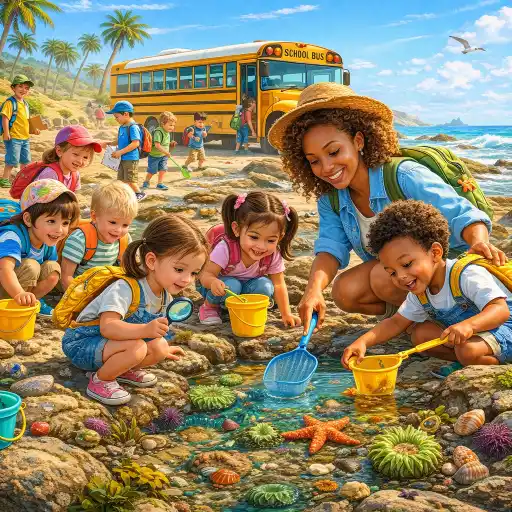
- Pick the right site:
- Use lifeguarded beaches when possible and avoid steep drops and strong currents. See Red Cross beach safety tips at Red Cross Beach Safety.
- On-site supervision:
- 👀 Assign adults to small groups and adult zones (sand area, tidepool edge, water line). Count children often.
- 🧭 Keep children within sight and reach. Never let a child go alone to the water.
- Water & life jacket rules:
- 🛟 Non-swimmers should wear U.S. Coast Guard-approved life jackets near open water; follow Red Cross advice on teaching water safety: WHALE Tales.
- Tidepool handling & wildlife respect:
- 🐚 Teach the "touch test" and gentle handling: if an animal resists, don’t force it. Put rocks back the way you found them. See NOAA Olympic Coast tidepool tips: Tidepooling.
- Watch for hazards:
- ⚠️ Watch for sneaker waves, slippery algae, and changing tides. Teach children to enter the water feet first and avoid diving.
Common mistakes & how to avoid them:
- ❌ Too many children per adult — fix by assigning zones and using rotating helpers.
- ❌ Small choking hazards — choose large natural items for toddlers and check family allergy notes.
- ❌ Poor tide timing — always check tide charts and arrive well before low tide ends.
What learning activities work best at the beach and in tide pools?
- Observation hunt:
- 🔍 Use magnifying glasses and muffin tins to collect and observe tiny finds, then gently return them to the water.
- Sensory & sorting stations:
- 🐾 Shell sorting (size, color), water pouring for measurement, and textured touch trays help fine motor and math skills. ChildCareEd offers beach-themed center ideas in its guide: beach and ocean activities.
- Art & story:
- 🎨 Make quick collage fish from found (clean) shells and paper, or read a beach book on the shore to build vocabulary—see book lists for classroom Beach Day ideas at sources like One Sharp Bunch. For simple, classroom-tested ocean crafts and DIY projects you can use on-site or as follow-up activities to extend learning, see our World Oceans Day craft ideas: World Oceans Day crafts for kids.
- Movement & safety games:
- 🏃 Play “chase the tide” (stay out of the return wave) or practice water-smart rules taught in Red Cross materials: WHALE Tales.
- Citizen science & follow-up:
- 🌊 Use NOAA teacher resources to bring data back to the classroom and inspire stewardship: NOAA classroom resources.
How can I involve families, community partners, and protect the site?
Family and community involvement deepens learning and helps with logistics.
- Family invitations:
- 📣 Ask families to join as chaperones, donate towels or binoculars, and review packing and safety lists ahead of time. Share the learning goal so families can support at home.
- Local experts:
- 🧑🏫 Invite a lifeguard, park ranger, or aquarium educator for a short talk or virtual visit. NOAA sanctuaries and local marine centers often offer educator resources and live connections: NOAA educator options.
- Conservation & respect:
- ♻️ Teach children to take only pictures, leave animals and rocks where they are, and pick up litter. Olympic Coast NOAA gives clear rules for gentle tidepool exploration: Tidepooling tips. Consider tying a follow-up litter clean-up or stewardship activity to Earth Day — see our Earth Day activities for families for simple, classroom-friendly ways to involve children and families.
- Local site choices:
- 🌍 Pick accessible spots with known tide windows like Fitzgerald Marine Reserve or local state beaches listed by sanctuary sites (see Farallones places to go).
- Follow-up at the center:
- 📄 Send a one-page family note about what children observed and a quick home idea (shell sorting or a simple collage). This keeps learning going and celebrates each child’s discovery.
Summary checklist (quick):
- Choose lifeguarded site + low tide window.
- Get permissions and share packing list.
- Assign staff zones, bring First Aid/CPR-trained staff.
- Plan 2–3 short activities tied to one learning goal.
- Involve families and follow conservation rules.
FAQ (quick):
- Q: Can toddlers touch tidepool animals? A: Only with close adult guidance and gentle touch. Follow the "touch test" from NOAA Tidepooling tips.
- Q: What if weather or air quality is poor? A: Move activities indoors—use books, sensory bins, and videos. ChildCareEd suggests indoor ocean activities in their guide: beach and ocean activities.
- Q: Who needs life jackets? A: Non-swimmers near open water and any child entering deeper water; choose U.S. Coast Guard approved life jackets and follow Red Cross guidance: Water Safety for Kids.
- Q: How do we protect fragile tidepools? A: Walk on bare rock footholds, don’t flip rocks over, and return animals where found—see Olympic Coast guidance: Tidepooling.
Field trips can be joyful, safe, and full of learning when planned with clear roles, a focused learning goal, and respect for nature. Use the linked resources above and child care training resources at ChildCareEd to prepare staff and families for a successful day by the sea.
Choose short, hands-on activities tied to one learning goal. Bring simple materials and keep transitions fast. Safety is the top priority. Use layers of protection, clear rules, and hands-on supervision. Before you go, follow a clear plan so staff and families know what to expect.
- Business Planning: Family Child Care
- CDA Family Child Care Credential
- CDA Family Child Care Credential with Portfolio Review
- Texas Primary Caregiver Qualification
- 24 Hour Texas Pre-Service
- CDA Bridge Bundle: Family Child Care without Portfolio Review
- Texas Director Credential
- Enriching Education: Field Trips
- CDA Certification en Español: Recursos y Consejos para Educadores Bilingües
- Field Trip Ideas in Florida: Fun, Educational Adventures for Children
- Cómo Abrir Una Quardería En Casa Sin Dinero?
- Recursos en Español sobre el Sueño Seguro del Bebé
- Que es Título 22 en California?
- Capacitación en Salud y Seguridad Preventiva en Línea para Proveedores de Cuidado Infantil
- ¿Cómo solicito la licencia para una guardería en California?
- Regulaciones de Licenciamiento de Cuidado Infantil en California para Centros y Hogares de Cuidado Infantil Familiar
- Lista para Guardería en Casa en Illinois: Cómo Iniciar una Guardería en el Hogar
- Lista para Guardería en Casa en Texas: Cómo Iniciar una Guardería en el Hogar
- Cómo Trabajar en el Cuidado Infantil en California: Requisitos y Pasos
- Cómo Ser Maestra de Preescolar en California
- Las Mejores Ideas de Excursiones para Guarderías en Dakota del Norte
- Las Mejores Ideas de Excursiones para Guarderías en Texas
- Las Mejores Ideas de Excursiones para Guarderías en Georgia
- How can I use beach and ocean-themed summer activities in my California early childhood classroom?
- How do I plan a California beach and tide pool field trip for early childhood classrooms?
- Summer Field Trips for Daycares in California
- Easy Pool Noodle Sea Creatures for Ocean Theme Activities
- Cómo simplificar la capacitación para sus empleados de daycare
