Working with young children on the prairie is a joy. This article helps childcare providers and directors plan simple, hands-on activities about prairie plants and animals that fit a child care setting in #Oklahoma. You will find ideas you can do in your yard, on short walks, or at local sites. Remember: state requirements vary - check your state licensing agency.
Why does prairie play and learning matter?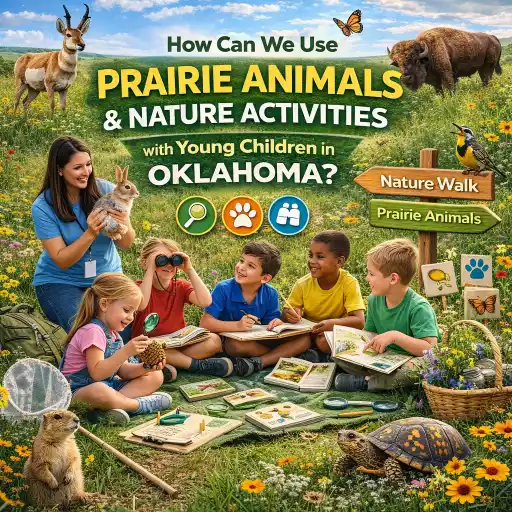
1) It builds skills. Outdoor experiences help children grow gross motor, language, and science thinking skills. Playing with soil, seeds, and small animals gives real learning that sticks. For ideas about outdoor routines and seasonal play, see outdoor activity planning from ChildCareEd.
2) It connects children to place. Oklahoma prairies have special plants and animals. A small pocket prairie or native plant garden brings pollinators and birds close to your center, as explained in a pocket prairie guide and a native plant garden resource.
3) It helps conservation. Young children who learn to care for the habitat grow into adults who protect it. Programs like BioBlitz! Oklahoma shows how community science helps kids notice wildlife locally (BioBlitz! OK).
Quick tip: Add a small list of questions children can ask: Who lives here? What do they eat? Where do they hide?
How can we bring prairie nature and animals into our program?
1) Start small with plants: Create a #prairie patch or container planting of native flowers and grasses. Use plants from local lists and books like those in the native plant and prairie book resources (plant and prairie books).
2) Make sensory and observation centers:
- 🌼 Seed and grass touch table: dried seed heads, grasses, magnifying glasses.
- 🐞 Bug jars with mesh lids for short observations (release after 10–15 minutes).
- 🪶 Bird-watching spot with binoculars or a simple bird feeder and picture guide.
3) Try themed invitations to play (rotate weekly):
- 🎨 Prairie art—leaf rubbings, grass prints.
- 🔬 Mini science—compare seeds and track which seeds float or sink.
- 🚶 Short discovery walks to count plants or listen for birds.
4) Use local places for real-world learning: plan short visits to a botanic garden or prairie reserve like the Tulsa Botanic Garden's discovery areas (Tulsa Botanic Garden).
For more ready-to-use activity ideas and seasonal tips, ChildCareEd's outdoor play article is a helpful place to adapt ideas for your classroom (see examples).
What hands-on prairie animal activities are safe and developmentally right?
1) Observation-based activities build curiosity and are low risk. Try:
- 🔎 Insect search: give each child a small net or jar with air holes and a clipboard to draw what they see. Release the insects after observing.
- 🪴 Plant-and-pollinator stations: plant milkweed or native wildflowers and watch bees and butterflies. Reference plant lists from native garden guides to choose good species (native plant garden). For classroom-friendly crafts, stories, and quick observation activities to celebrate pollinators, see our World Bee Day activities.
- 📷 Photo scavenger hunt: children take pictures or draw items such as "a grass, a seed pod, a bird" and check them off a list.
2) Use curriculum and activity banks: Organizations like Project Learning Tree have many PreK–8 activity guides for trees, seeds, and habitats that easily fit preschool levels .
3) Include community science: bring kids to a BioBlitz event or do a simple species count at your site to practice observation and recording (BioBlitz! OK).
4) Field trip reminders: plan short trips within your supervision limits and use ChildCareEd tips for field trip planning and safety .
How do we keep children safe and avoid common mistakes?
1) Supervision and planning are key. Use clear adult-to-child ratios, buddy systems, and assign roles before you go outside. ChildCareEd has planning tips and transportation ideas that translate to any state .
2) Watch for local hazards:
- ⚕️ Venomous snakes: Oklahoma has several venomous species. Teach staff to spot signs and keep children on paths; if you find a snake, keep distance and contact local wildlife control. See a list of snakes for local awareness (venomous snakes of Oklahoma).
- ⚠️ Prairie dog issues: Prairie dog colonies can be fun to observe but can also create holes and conflicts; learn local rules and humane options before interacting (prairie dog considerations).
- 🦟 Ticks and insects: use screening, clothing, and checks after outdoor time.
3) Common mistakes and how to avoid them:
- 🛑 Mistake: letting play become unsafe. Fix: set boundaries and model safe behavior.
- 🛑 Mistake: Collecting animals and keeping them too long. Fix: follow short observation rules and release animals quickly.
- 🛑 Mistake: planting non-native showy species that don’t help wildlife. Fix: choose local native plants from trusted lists (native plant resources).
4) FAQs (quick):
- Q: How long should outdoor sessions be? A: For young children, 20–40 minutes of focused outdoor play several times daily works well.
- Q: Do we need special permissions for short walks? A: Get parent permission and note any medical needs on forms; state requirements vary - check your state licensing agency.
- Q: How do we record observations? A: Use simple charts, drawings, or photos to let children show what they learned.
- Q: Can we start a pocket prairie at a center? A: Yes—start small with a container or one bed and add native grasses and flowers; see guidance on pocket prairies (pocket prairie).
Summary: What to do next?
1) Pick one small step: plant a native pot, schedule a 20-minute observation walk, or set up a bug finder station.
2) Use community resources: invite a local naturalist, join a BioBlitz, or visit a botanic garden to learn more (see BioBlitz! OK and Tulsa Botanic Garden).
3) Teach respect: small steps teach children to care for #nature and #animals. Share your successes with families and staff, and consider supporting broader conservation work in Oklahoma like the Recovering America’s Wildlife Act efforts (RAWA and Oklahoma).
Good luck—your outdoor prairie work will make your program richer, more joyful, and more meaningful for children. Try one activity this week and watch curiosity grow.
- Proveedores de Oklahoma: Beca de Evaluación CDA
- CDA Certification en Español: Recursos y Consejos para Educadores Bilingües
- 🔍 ¿Qué ves cuando observas a un niño aprender?
- 💛🧩 ¿Cómo puedo hacer que mi enseñanza sea inclusiva para los niños con autismo?
- ¿Cuáles son las mejores actividades del Día de la Tierra para niños en casa o en el aula?
- Actividades de Motricidad Gruesa que Desarrollan el Equilibrio, la Coordinación y la Fuerza
- Actividades de Fiesta para Niños de Preescolar y Primaria
- Proporciones de Cuidado Infantil y Tamaños de Grupo por Edad en Maryland (Guía Rápida para Centros y Hogares)
- Proporciones de Cuidado Infantil y Tamaños de Grupo por Edad en Nueva Jersey (Guía Rápida para Centros y Hogares)
- Proporciones de Cuidado Infantil y Tamaños de Grupo por Edad en Virginia (Guía Rápida para Centros y Hogares)
- Cómo Celebrar el Día Nacional del Kindergarten
- Lista para Guardería en Casa en Illinois: Cómo Iniciar una Guardería en el Hogar
- Apoyo en Preescolar para Retrasos del Habla: Estrategias Simples que Ayudan
- Retraso del Habla en la Guardería: Cómo Pueden Ayudar los Proveedores
- Las Mejores Ideas de Excursiones para Guarderías en Georgia
- How can we use prairie animals and nature activities with young children in Oklahoma?
- How can Oklahoma nature walks and outdoor trips teach young children?
- Celebrando la amistad en el cuidado infantil durante el Día de los Mejores Amigos
- Canciones, juegos y preguntas de círculo para niños
- Cómo simplificar la capacitación para sus empleados de daycare
