Summer in Texas brings warm days and big smiles. With a little planning, you can keep children cool, happy, and safe while they enjoy #waterplay. This short guide helps directors and providers plan heat-safe water fun for #preschoolers. It focuses on simple steps staff can use every day for #safety in #Texas this summer.
Why it matters: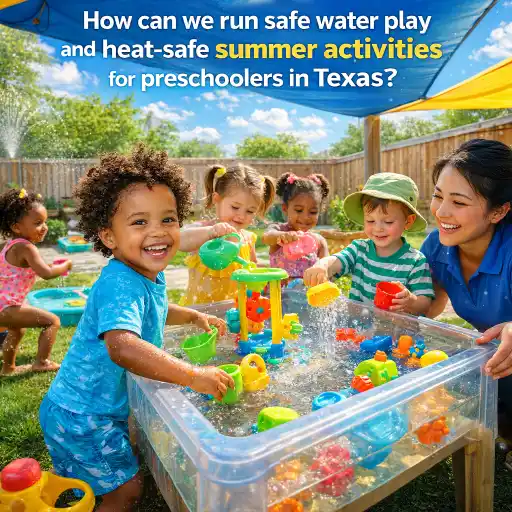
1) Young children’s bodies heat up fast. Heat illness and drowning can happen quickly, so small habits matter.
2) Water play supports learning, movement, and joy when it’s done safely and calmly.
For heat planning and Texas tips, see Texas Weather & Outdoor Time at Daycare, and for water rules, see Water Safety on ChildCareEd.
How can we keep water play safe for preschoolers in Texas?
- 🟢 Designate one adult as the water watcher for each small group. That person gives undivided attention and stays within arm’s reach of the youngest children.
- 🔢 Count children: before, during, and after water play. Keep a visible list and do quick headcounts at transitions.
- 💧 Use very shallow water: water tables, trays, or kiddie splash pads that are less than a few inches deep reduce drowning risk.
- 🔒 Remove hidden water hazards: empty buckets, coolers, pet bowls, and anything that can collect water right after use.
- 📵 Avoid distractions: no phones or tasks while supervising water play. Active supervision matters — see Active Supervision Tips.
- 🩺 Keep rescue tools, a phone, and first aid ready. Make sure staff have current CPR training (see ChildCareEd trainings on the site).
For toddler-specific water safety, read Water Safety for Toddlers and Young Children.
How do we prevent heat illness and keep children cool during summer?
- ☀️ Check conditions: look at the temperature and heat index before each outdoor block. Use a posted weather chart such as the one at Daycare Weather Chart.
- 💧 Offer water on a schedule: arrival, before outside, every 10–15 minutes when active, and after coming in. Make drinking easy (labeled bottles or cups).
- 🌳 Use shade and cooling: move play under trees, canopies, or create pop-up shade. Plan cool-down breaks indoors or in shaded spots.
- ⏱️ Shorten outdoor time: split outside into short blocks (15–20 minutes) and pick calm activities during the hottest hours.
- 🚨 Know heat signs: headache, dizziness, fatigue, nausea, very red skin. If you see danger signs, cool down and call emergency help. See heat guidance at Preparing for Extreme Heat and CDC tips at CDC Heat Health.
What are fun, heat-safe water play and summer activities can we use?
- 💦 Shallow water stations (water trays): pour, scoop, float toys. One adult watches each station.
- 🎨 Ice cube painting: colored ice cubes on paper or sidewalk — keeps hands cool and is a creative sensory activity.
- 🚗 Mini car wash: small tubs, sponges, and toy cars under shade — low water and lots of fun.
- 🧽 Sponge toss into buckets: soft and active but low risk. Put buckets in the shade and use sponges, not deep water.
- 📚 Shaded story + bubble time: story on a blanket under a tree with bubbles — calm and cool.
- 🌱 Nature watering: kids water garden pots with small cups under supervision; teaches care and uses little water.
For more craft and outdoor ideas, see Summer Smiles: Creative and Fun Activities.
What routines, supervision, and training keep our team ready every day?
Short answer: use checklists, teach active supervision, run short huddles, and keep training current. Also, state requirements vary - check your state licensing agency.
- 📋 Daily 60-second huddle: who watches which zone, where are extra supplies, and who carries first aid.
- 👀 Zone maps and ratios: post supervision zones and staff assignments so everyone knows their role.
- 🧯 Emergency steps: practice heat illness and water-incident drills. Have a clear incident form and family contact plan.
- 🎓 Staff training: offer quick refreshers on water safety, heat signs, and CPR. ChildCareEd has courses like 1,2,3 Eyes on Me: Classroom Safety
 Buy Now
 $32.00$24.00 and Pediatric First Aid & CPR Buy Now$85.00$80.00.
Common mistakes and how to avoid them:
- ❌ Skipping the weather check. ✅ Fix: add it to the opening routine and the pre-outside huddle.
- ❌ Letting a staffer supervise alone who is distracted. ✅ Fix: Assign one water watcher and remove distractions during water play.
- ❌ Using deep water or too many children at one station. ✅ Fix: lower water depth and reduce group size per station.
FAQ (quick):
- Q: How deep can water be for preschool water play? A: Keep it a few inches or less for tubs and tables; never leave children unattended.
- Q: How often should staff count children? A: At every transition, door, and movement to/from the yard.
- Q: Do we need lifeguards for splash pads? A: Splash pads still need active adult supervision and staff with CPR; follow local rules and facility guidance.
- Q: What if a child shows heat exhaustion? A: Move to a cool place, give sips of water, cool skin with wet cloths, and call emergency services if symptoms are severe.
For official water and drowning prevention guidance, see CDC’s Preventing Drowning and Red Cross water safety resources at American Red Cross: Water Safety. And for Texas weather planning, use ChildCareEd Texas Weather & Outdoor Time.
Conclusion
1) Plan: a short check before each outdoor time keeps heat and water risks low.
2) Supervise: one clear water watcher, shallow water, and frequent counts protect children.
3) Choose activities: calm, shady, and low-water options keep play fun and safe. Use quick training and tools from ChildCareEd to keep your team confident. Stay flexible, and remember state requirements vary - check your state licensing agency.
Short answer: choose low-water, shady, and movement-light options that support learning. Here are practical activity ideas that are easy to set up.Short answer: shade, frequent water, shorter outdoor blocks, and check the heat index. Texas heat can change fast, so plan each outdoor time.Short answer: watch closely, use shallow water, and remove hazards. Use active supervision and a clear plan every time.
- 45 Hour Child Growth and Development
- 45 Hour Preschool Methods and Materials
- Play Safe, Think Big: Literacy Through Play
- 45 Hour School Age Methods and Materials
- Texas Director Credential
- Behind the Scenes: Baby Routines ONLINE
- 10 Hour Health and Safety Orientation Training
- Family Child Care: Building, Premises, and Outdoor Safety
- Planning Summer Fun: Texas Child Care Providers
- Recursos en Español sobre el Sueño Seguro del Bebé
- Actividades de Motricidad Gruesa que Desarrollan el Equilibrio, la Coordinación y la Fuerza
- 10 Ejemplos de Cómo la Cultura Influye en el Desarrollo Infantil
- Capacitación en Salud y Seguridad Preventiva en Línea para Proveedores de Cuidado Infantil
- Proporciones de Cuidado Infantil y Tamaños de Grupo por Edad en Maryland (Guía Rápida para Centros y Hogares)
- Proporciones de Cuidado Infantil y Tamaños de Grupo por Edad en Virginia (Guía Rápida para Centros y Hogares)
- Lista para Guardería en Casa en Illinois: Cómo Iniciar una Guardería en el Hogar
- Lista para Guardería en Casa en Texas: Cómo Iniciar una Guardería en el Hogar
- Consejos de Supervisión Activa para Salones de Preescolar y el Juego al Aire Libre
- Cómo Trabajar en el Cuidado Infantil en Wisconsin: Requisitos y Pasos
- How can we run safe water play and heat-safe summer activities for preschoolers in Texas?
- How can preschool programs keep kids cool and practice self-control with heat-safe indoor activities in Texas?
- How Can Texas Child Care Providers Prepare Safe Classrooms for Weather Emergencies and Active Play?
- Summer Field Trips for Daycares in Texas
- Celebrando la amistad en el cuidado infantil durante el Día de los Mejores Amigos
- Canciones, juegos y preguntas de círculo para niños
- Cómo simplificar la capacitación para sus empleados de daycare
- How can you turn summer days into learning moments at your Minnesota program?
- Summer Preschool Activities for Art, Science, and Sensory Play
