Young children love to move, touch, and ask questions outside. A short nature walk in a nearby park or garden gives your program big learning for small legs. These walks help children build vocabulary, #nature knowledge, and big motor skills while enjoying fresh air. Use simple steps so staff and families know the plan. For Georgia programs, remember: state requirements vary - check your state licensing agency. This article shares easy planning tips, ready-to-use activities, learning links, and safety checks to make your wal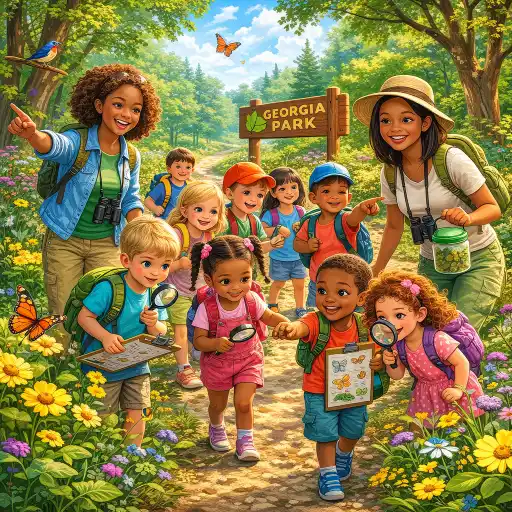
ks calm, meaningful, and fun for your #children and your team.
How can I plan a short, safe nature walk in Georgia?
- 📋 Prepare (before families arrive)
- Set a clear goal (count birds, find five leaf types, listen for sounds).
- Pick a close spot — a center garden, local park, or botanical garden to cut travel time. See ideas in Field Trip Ideas in Georgia.
- Check rules and fees for the site.
- 👥 Staff roles & ratios
- Assign buddies and zones. Use one staff member as a head counter and one as a verifier.
- Follow your program and Georgia ratio rules—train staff on active supervision as part of transportation and field trip safety.
- 🧰 Pack items
- First-aid, water, attendance list, parent contact info, sunscreen, and a spare shirt.
- Bring clipboards, simple scavenger sheets, and a nature bag for collections.
Before you step out: do a quick weather check. ChildCareEd's Georgia weather tips can help with hot or stormy days — see Georgia Weather & Outdoor Time. If you use a vehicle, follow seat and transport rules and training in Transportation Safety (Georgia Approved)  Buy Now $16.00. Keep plans short (30–60 minutes) for toddlers and preschoolers.
What simple, age‑friendly activities make a walk meaningful?
- 🍃 Nature scavenger hunt
- Give each child a picture checklist. For printable ideas, see a nature scavenger style at Messy Little Monster or ChildCareEd spring play ideas, Outdoor Spring Play.
- 👂 Listening walk
- Stop, close your eyes, and list sounds. Use the classic idea from The Listening Walk.
- 🎨 Nature bracelet or art
- Make bracelets with duct tape (sticky side out) and add small finds; see Scholastic.
- 🔢 Count & move
- Count acorns, jump for each leaf found, or do a gross-motor math walk from Nature Walk & Count.
- 📔 Nature journaling
- Draw one thing you saw and tell a friend about it. For prompts, see spring walk ideas at Backwoods Mama.
Keep materials simple and reusable. Let children lead discoveries — the best learning often happens when they pick up a stick or notice a bug. For training on designing outdoor lesson time, try Creating the Natural Outdoor Classroom Buy Now $16.00. For classroom design ideas and the research behind nature-based learning environments, see The Natural Classroom.
How can I link a nature walk to learning and include every child?
- 🎯 Pick 1 goal
- Examples: identify 3 leaf shapes, use listening words, or sort big/small rocks.
- 📚 Prep the children
- Read a short book or show pictures before you go. ChildCareEd suggests simple pre-visit readings in Little Explorers.
- 🧩 During the walk
- Use visuals, buddy systems, and small groups. Rotate activities so all children can try each station.
- ✏️ Follow-up back inside
- Have children draw, dictate, or build a class book about the walk. This keeps learning alive and supports language for ELL families.
Make trips low-cost and inclusive: invite a family volunteer, use free local spots like libraries and parks, or invite a guest to visit your site. ChildCareEd offers Georgia-specific field trip planning tips at Best Daycare Field Trip Ideas in Georgia. Remember to check accessibility needs and plan quiet spaces for children who need a break. State requirements vary - check your state licensing agency.
In spring, simple open-air play can extend learning—try seasonal ideas like kite activities for spring to combine gross-motor practice, science talk about wind, and family engagement.
What mistakes do teams make, and how can we stay safe?
Avoid these common pitfalls and use a short safety checklist every time you go out.
- ⚠️ Common mistakes
- Not collecting permission slips early. Fix: send forms 1–2 weeks ahead and confirm by phone.
- Forgetting ratios during transitions. Fix: assign a door watcher and a head counter.
- Skipping a weather check. Fix: check local forecast and follow Georgia weather guidance in Georgia Weather & Outdoor Time.
- Bringing food without allergy plans. Fix: confirm allergies and keep meds and plans on hand.
- 🛟 Quick safety checklist (use every time)
- 1. Attendance sheet and emergency contacts.
- 2. First-aid kit, water, sunscreen, spare clothing.
- 3. Staff roles: head counter, zone supervisors, and float staff.
- 4. Walk the area for hazards (ants, water, sharp objects).
- 5. Stop on thunder or unsafe weather and move inside.
- 🚗 Transportation & training
- When you travel, follow vehicle seat rules and consider Georgia-approved training, such as Transportation Safety Buy Now $16.00. For on-site and transit supervision tips, see Field Trip Ideas in Georgia.
- When you travel, follow vehicle seat rules and consider Georgia-approved training, such as Transportation Safety
Keeping walks short, simple, and staffed correctly turns a nature stroll into a calm learning moment. Use the training and printable resources linked above to build routines your team trusts.
Conclusion
Nature walks in Georgia parks and gardens are low-cost, high-value learning for young children. Use numbered routines, small goals, and simple supplies to make each walk safe and meaningful. For more help, check ChildCareEd courses like Creating the Natural Outdoor Classroom Buy Now $16.00 and the Georgia field trip page, Field Trip Ideas in Georgia. Your team can start small, try one activity, and grow from there. Happy exploring with your #children — keep play #outdoor, curious, and safe. #Georgia #nature #safety
FAQ (quick)
- Q: How long should a walk be? A: For toddlers/preschoolers, aim 20–45 minutes total outside.
- Q: What if a child can’t attend? A: Offer an in-center nature table and photos so they don’t miss the lesson.
- Q: Need training? A: Try ChildCareEd short courses on outdoor classrooms and transportation safety.
- Q: How do we document learning? A: Use photos, quotes, drawings, and a class book about the walk.
Set one clear learning goal and use short routines to reach it. Here is a 4-step plan that is easy for staff and families: Planning keeps walks short and smooth. Try this 1-2-3 checklist: Use tiny challenges and open play. Choose 1–2 activities for each walk so children stay curious and calm. Try these ideas, with links to printable or course ideas:
- Creating the Natural Outdoor Classroom
- CDA Home Visitor Subject Area 3 Part 3 Birth to 5
- CDA Home Visitor Subject Area 2 Part 3 Birth to 5
- CDA Infants/Toddlers: Health and Safety
- Play Safe, Think Big: Literacy Through Play
- Sensitive Periods in Montessori: Guiding Natural Learning
- Creating Environments that Nurture Growth and Community
- Texas Director Credential
- Today Is Earth Day!
- CDA Certification en Español: Recursos y Consejos para Educadores Bilingües
- 🚌🍑 Ideas de excursiones en Georgia
- Recursos en Español sobre el Sueño Seguro del Bebé
- ¿Cuáles son las mejores actividades del Día de la Tierra para niños en casa o en el aula?
- Capacitación en Salud y Seguridad Preventiva en Línea para Proveedores de Cuidado Infantil
- Proporciones de Cuidado Infantil y Tamaños de Grupo por Edad en Virginia (Guía Rápida para Centros y Hogares)
- Consejos de Supervisión Activa para Salones de Preescolar y el Juego al Aire Libre
- Cómo Trabajar en el Cuidado Infantil en Georgia: Requisitos y Pasos
- Cómo Trabajar en el Cuidado Infantil en Carolina del Norte: Requisitos y Pasos
- Best Daycare Field Trip Ideas in Nevada
- Las Mejores Ideas de Excursiones para Guarderías en Georgia
- How can childcare teams lead safe, fun nature walks in Georgia parks and gardens?
- Which Georgia Parks and Nature Centers Are Best for Preschool Field Trip Adventures?
- How can Oklahoma nature walks and outdoor trips teach young children?
- Summer Field Trips for Daycares in Georgia
- Summer Field Trips for Daycares in Maryland
- Canciones, juegos y preguntas de círculo para niños
- Cómo simplificar la capacitación para sus empleados de daycare
