Introduction: Why use outdoor learning all year?
Outdoor learning gives children fresh air, movement, and hands-on chances to learn. When you bring your classroom outside, you support #outdoor play, deeper #learning, and respect for the natural world across all #seasons. Using simple changes, outdoor time can work for infants through preschoolers and school-age groups.
Why it matters:
- Children move more, which helps their bodies and brains. Research and training on the outdoor classroom explain many benefits—see The Outdoor Classroom and the free resources at Creating the Natural Outdoor Classroom.
- Outdoor experiences build curiosity, language, and STEAM skills. Try seasonal science ideas from Winter Wonders and summer nature guides like the Natural History Museum summer ideas.
Use this article as a friendly plan for simple, safe, and playful outdoor learning. Remember: state requirements vary - check your state licensing agency.
What easy outdoor activities can we use year-round?
Here are low-prep ideas you can do any time of year. Each is flexible for age and space.
- 📚 Outdoor story corner
- Bring a few books and a blanket. Use nature words (wind, bud, melt) to boost vocabulary. See outdoor literacy ideas in Creating Your Own Outdoor Classroom.
- 🔎 Nature scavenger hunt
- Make picture lists for toddlers and word lists for preschoolers. Use the ChildCareEd spring and winter scavenger ideas like Outdoor Spring Play and Last Day of Winter Activities.
- 🧪 Simple STEM stations
- Set up 3 stations: water play, building (loose parts), and measuring (rulers, cups). For ideas, see outdoor STEM collections like Outdoor STEM Activities.
- 🌱 Gardening corner
- Plant seeds in pots or a small bed. Track growth, count leaves, and taste herbs. ChildCareEd and gardening-with-kids guides show how to keep it small and doable: Nature as your classroom.
- 🎨 Nature art and loose parts play
- Collect sticks, stones, leaves. Let kids arrange and glue to make art. Try rock painting or leaf rubbings from summer play guides like NHM summer activities.
Tip: Keep a small outdoor kit (clipboards, magnifiers, hand wipes, first-aid) on site. Use numbered groups and short rotations so all children get active time and choices. These everyday ideas help your #children explore safely and joyfully outdoors.
How do I adapt activities for each season?
Adapting means small changes in clothing, materials, and goals. Follow these simple seasonal tweaks so outdoor learning works year-round.
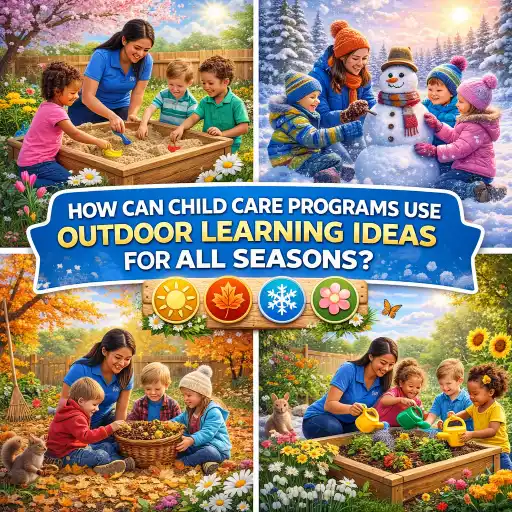
- Spring: focus on discovery and dirt
- ☘️ Try mud kitchens, planting tubs, and bird watching. Use the spring activity ideas from Outdoor Spring Play. For windy spring days, include kite-flying and simple wind experiments to teach about forces and patterns — see springtime wind activities for hands-on STEM ideas.
- Summer: shade and water play
- 💧 Offer water walls, pouring stations, and sun hats. Follow safety and heat tips like the CDC and Red Cross summer guidance: CDC Outdoor Play and Safety and Red Cross summer safety.
- Fall: collect and compare
- 🍁 Use leaf sorting, seed counting, and symmetry hunts. Fall is great for math and art outside—see outdoor curriculum connections in 11 Outdoor Learning Activities.
- Winter: science and sensory play
- ❄️ Try ice experiments, frozen-sculpture melts, and warm sensory bins. ChildCareEd's winter science ideas are helpful: Winter Wonders and practical winter centers in Last Day of Winter Activities.
Practical steps:
- Layer clothing: teach caregivers to send layers and spares. See clothing hints for young children at NMSU Clothing Hints.
- Rotate materials: keep some items outside year-round and swap delicate items by season.
- Plan short, frequent outdoor blocks so kids get movement and academic moments without long exposure.
Small changes keep play meaningful and safe for every #season.
How do we keep children safe and comfortable outdoors?
Safety is simple when you plan ahead. Use these clear steps so outdoor time stays healthy and calm.
- Check weather and air quality
- 🌤️ Use local guidance and the CDC's Air Quality Index tools before long outdoor times. See CDC tips: Outdoor Play and Safety.
- Dress for the day
- 🧤 Encourage layers, sun hats, or rain gear. Remind families: state requirements vary - check your state licensing agency for clothing and outdoor time rules.
- Protect from sun, heat, bugs, and water
- 🕶️ Follow sunscreen and insect repellent rules with parent permission. For swimming or water play, use constant active supervision and life jacket rules from the Red Cross: Summer Safety.
- Active supervision and boundaries
- 👀 Use sight lines, set clear boundaries, and practice outdoor routines. ChildCareEd and Minnesota DNR explain outdoor rules and setup in their guides: How to teach outside and The Outdoor Classroom.
- Gather a safety kit
- 🩹 Keep first-aid, extra clothes, water, and shade available. Store tools in a weatherproof bin and label items for quick use.
Follow posted safety checklists and staff training. ChildCareEd offers courses like Creating the Natural Outdoor Classroom  Buy Now $16.00 to build staff confidence. Good routines make outdoor learning a comfortable part of each day while supporting #safety and play.
How can outdoor learning meet curriculum goals and avoid common mistakes?
Outdoor time can teach early math, science, literacy, and social skills. Use these practical steps to connect play to learning standards without over-planning.
- Plan simple learning targets
- 🔢 For math: count seeds, compare sizes, measure plant growth.
- 🔬 For science: observe changes, test melting ice, track weather.
- ✍️ For language: nature journals, story stones, and vocabulary banks.
- Use loose parts for open-ended learning
- 🪨 Stones, sticks, and tubs invite sorting, building, and storytelling. See ideas in Nature Explore Classroom and forest school collections like Forest School Activities.
- Keep documentation light
- 📓 Use photos, short notes, and child quotes to link play to outcomes. A photo board outside helps families see learning.
- Common mistakes and how to avoid them
- ❌ Mistake 1: Too many activities at once. ✅ Fix: Offer 2–3 focused choices and rotate.
- ❌ Mistake 2: No backup for bad weather. ✅ Fix: Have indoor movement and sensory options ready, or create covered outdoor stations (see CDA: Creating the Outdoor Classroom resources).
- ❌ Mistake 3: Forgetting staff training. ✅ Fix: Use short team trainings or ChildCareEd courses like Creating the Natural Outdoor Classroom Buy Now $16.00.
Outdoor learning is a powerful, flexible way to hit many curriculum goals. Keep it simple, document learning, and build routines so your team and families feel confident. Your #children will benefit all year from playful, supervised time outside.
Conclusion: Where to start tomorrow
1. Pick one small change: add a daily 15–20 minute outdoor block or a single garden pot.
2. Create a tiny outdoor kit: clipboards, wipes, magnifier, sunscreen, and a photo camera.
3. Try one seasonal activity this week and rotate with staff favorites. Use ChildCareEd resources for ready ideas: spring, winter, and nature as your classroom.
FAQ (quick):
- Q: How long should outdoor blocks be? A: 15–30 minutes for toddlers; 30–60 minutes for preschoolers, more if weather and staffing allow.
- Q: What if staff are nervous? A: Start small, practice outdoor rules, and build confidence with short trainings like ChildCareEd courses Buy Now $16.00.
- Q: How do I document learning? A: Photos + short notes + child quotes are enough. Post one weekly photo board for families.
Get outside, keep it simple, and celebrate small wins. Your team can create a safe, fun, and learning-rich #outdoor classroom that works in every season.
- Creating the Natural Outdoor Classroom
- CDA Home Visitor Subject Area 3 Part 3 Birth to 5
- 1,2,3, Eyes on Me: Classroom Safety
- CDA: Creating the Outdoor Classroom
- Texas Director Credential
- CDA Infants/Toddlers: Brain Development and Gene Expression
- Access for All: Inclusion and the ADA
- CDA Infants/Toddlers: Stages of Development
- Family Child Care: Building, Premises, and Outdoor Safety
- CDA Home Visitor Subject Area 8 Part 1 Birth to 5
- Tips for Child Care Professionals: Adapting to Seasonal Changes
- CDA Certification en Español: Recursos y Consejos para Educadores Bilingües
- Recursos en Español sobre el Sueño Seguro del Bebé
- Normas de Licenciamiento de Cuidado Infantil en Virginia para Centros Diurnos Infantiles y Hogares Diurnos Familiares
- Proporciones de Cuidado Infantil y Tamaños de Grupo por Edad en Virginia (Guía Rápida para Centros y Hogares)
- Actividades de Otoño Fáciles para Preescolares esta Temporada
- How can we use nature-based learning through Minnesota's outdoor seasons?
- How can we safely take toddlers on nature walks in Minnesota?
- How Do Minnesota Winters Affect Young Children's Mental Health?
- Why is outdoor education essential for children growing up in North Dakota?
- How can New York childcare programs help children in the concrete jungle fall in love with nature?
- Canciones, juegos y preguntas de círculo para niños
- Cómo simplificar la capacitación para sus empleados de daycare
- How Can Michigan Providers Prevent Summer Learning Loss in Young Children?
- How can New York providers bridge the summer gap with year-round learning?
- How can Minnesota child care programs keep kids learning and engaged over the summer?
- How can outdoor learning help young children grow and learn?
- How can we turn playtime into learning time in North Dakota child care?
- How can seasonal activities (spring, summer, fall, winter) combine fun with clear educational goals?
- How can I bring a Forest Preschool (nature-based learning) to my program?
