Young children learn by doing. This article helps childcare providers and directors find and use California children’s museums to boost early learning. You will find quick lists, planning tips, safety reminders, and ideas to bring museum fun back to your #preschool program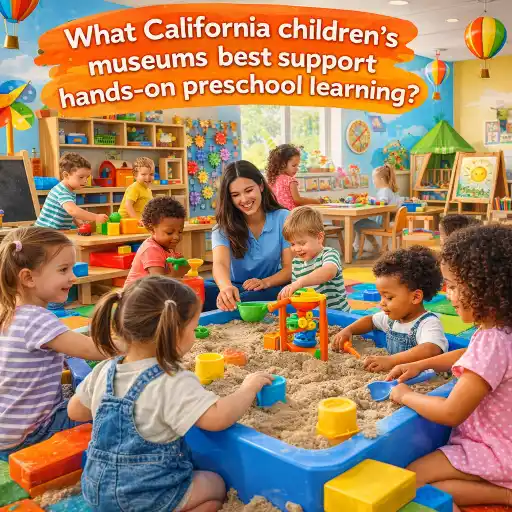 . Museums are great places for #handsOn, sensory play, and social learning. Visit local pages and plan ahead — state requirements vary - check your state licensing agency.
1. What museums in California offer great hands-on experiences for preschoolers?
Here are places in California known for child-focused, interactive exhibits. Use them for lesson ideas, field trips, or partnerships:
- 🧪 Field Trip Ideas in California lists top local museum types (science centers, aquariums, children’s museums) and why they fit early learning.
- 🎨 Kidspace Children’s Museum (Pasadena) — indoor and outdoor hands-on zones for ages 1–10, with nature play and farm activities as part of play-based learning. See Kidspace programs.
- 🔬 California Science Center (Los Angeles) — great for toddler-friendly science exhibits; named among top children’s museums in reviews like LA Times.
- 🌉 Exploratorium and California Academy of Sciences (San Francisco) — hands-on science and sensory spaces, recommended for family-style visits (San Francisco picks).
- 🚂 Children’s Museum of Stockton and smaller regional museums — offer role-play exhibits (grocery store, pet clinic, train tables) perfect for preschool learning (see Stockton exhibits).
These museums often host seasonal programs and camps that you can tie to your classroom themes. Many museums also partner with early education programs or run museum-preschool models (museum preschools).
2. How do museum visits support preschool development?
Why it matters: preschoolers learn best through real experiences. Museums give chances for hands-on play, social skills, and language growth. They connect classroom goals to real objects and places. Research shows interactive exhibits and tech like AR can increase family learning talk and engagement (AR study).
For guidance on how preschool teachers intentionally structure play and short, guided activities to promote learning, see how preschool educators foster learning through play and structured activities.
- 🔎 Cognitive growth
- 1) Children make observations, sort, and predict (science skills).
- 2) Museums let kids try, fail, and try again—key to problem-solving.
- 🎭 Language & social skills
- 1) Adults and kids talk about objects, which builds vocabulary.
- 2) Role-play areas (store, clinic) boost pretend play and cooperation.
- ⚙️ Motor & sensory development
- 1) Water tables, climbing, and fine-motor art stations support development.
Use field trips to extend the curriculum. ChildCareEd has practical how-to guides for tying trips to learning goals and safety (Field trip planning guide).
3. How can childcare providers plan safe, meaningful museum visits?
Good planning makes trips calm and rich with learning. Follow these steps:
- 📅 Before the trip
- 1) Visit the museum website or call to confirm hours, toddler spaces, group rates, and programs. Many museums have special preschool times.
- 2) Read guidance like ChildCareEd’s Field Trip Ideas for checklists and ideas.
- 3) Get written parent permission and health info; plan for allergies and medications.
- 🧑🏫 Staff roles & ratios
- 1) Assign adults to small groups and “buddies.”
- 2) Keep extra staff for transitions, snacks, and restroom runs.
- 🛟 Safety on site
- 1) Use name tags and bright shirts.
- 2) Practice active supervision—stay within sight and hearing.
- 3) Remember: state requirements vary - check your state licensing agency.
- 📚 Make it meaningful
- 1) Prepare children with a story or song about the place.
- 2) During the visit, prompt simple questions: “What do you notice?”
- 3) After the trip, do art or dramatic play that reflects the visit.
Common mistakes and how to avoid them:
- ❌ Too many activities in one visit — pack 1–2 learning goals instead.
- ❌ Not assigning clear adult roles — assign zones and responsibilities.
- ❌ Skipping the pre-visit — do a short walk-through or virtual tour with staff.
4. How can you use museums all year to strengthen your program?
Museums are more than one-day trips. Use them to stretch learning across the year.
- 🔁 1. Follow-up projects
- • After a nature exhibit visit, create a classroom nature table and rotating observations.
- • After a science center visit, set up simple experiments that echo the museum displays.
- 🤝 2. Build partnerships
- • Invite museum educators to your site for programs or loaned materials.
- • Some museums offer teacher resources and field-trip loans—ask about outreach.
- 🎒 3. Use museum-preschool ideas
- • Consider museum-inspired classroom spaces: discovery corners, mini-stages, sensory tables based on exhibits. See how museum-preschools blend informal and formal learning (museum preschools overview).
- 📱 4. Try tech thoughtfully
- • Some exhibits use AR and interactive screens to spark family talk—these can be powerful if paired with adult prompts (see the Bugtopia AR study).
FAQ (quick answers for busy providers):
- Q: How long should a preschool museum visit be? A: 1–2 hours works well for young children with built-in snack and bathroom breaks.
- Q: Can toddlers handle science centers? A: Yes—look for toddler/tot times or designated areas for younger children.
- Q: How many adults per child? A: Follow your licensing ratio, and add extra adults for transition times.
- Q: What if a child won’t participate? A: Let them observe first. Gentle invitations and one-on-one adult support help.
Summary
California has a wide range of #museums that support preschool learning through play, exploration, and social interaction. Use museum visits to strengthen your curriculum by planning clear goals, following safety best practices, and extending learning back at the program. For practical checklists and field trip ideas, start with ChildCareEd’s resources (Field Trip Ideas in California) and the preschool field trip guide (Fun Field Trip Ideas).
Enjoy the museums, build partnerships, and keep asking children what they notice—those simple questions lead to big learning on the move. Use museum visits to make learning visible, social, and joyful in your #California program.
- 45 Hour Child Growth and Development
- CDA Home Visitor Subject Area 3 Part 3 Birth to 5
- 45 Hour Preschool Methods and Materials
- Pediatric RSV First Aid & CPR/AED
- Working Together: Teachers & Preschoolers
- CDA Bridge Bundle: Family Child Care without Portfolio Review
- CDA Bridge Bundle: Infant/Toddler without Portfolio Review
- CDA Bridge Bundle: Preschool without Portfolio Review
- Myth: Preschool's Just About Playing with the Kids
- CDA Certification en Español: Recursos y Consejos para Educadores Bilingües
- 🩺 Cumplimiento de Salud e Inmunización en Cuidado Infantil de Nevada ✔️
- 🚌 ¿Qué Significan las Regulaciones de Transporte de Illinois para las Excursiones Infantiles? 🚦
- 📚 ¿Qué capacitaciones se requieren para el personal de cuidado infantil en California?
- Que es Título 22 en California?
- Regulaciones de Licenciamiento de Cuidado Infantil en California para Centros y Hogares de Cuidado Infantil Familiar
- Lista para Guardería en Casa en California: Cómo Iniciar una Guardería en el Hogar
- Cómo Trabajar en el Cuidado Infantil en California: Requisitos y Pasos
- Cómo Ser Maestra de Preescolar en California
- Best Daycare Field Trip Ideas in California
- What California children’s museums best support hands-on preschool learning?
- What Should California Child Care Providers Watch For in Preschool Social Skills?
- Summer Field Trips for Daycares in Wisconsin
- Summer Field Trips for Daycares in California
- Celebrando la amistad en el cuidado infantil durante el Día de los Mejores Amigos
- Canciones, juegos y preguntas de círculo para niños
- How can Michigan providers teach community and citizenship for the 250th anniversary?
- Field Trips for Elementary Students: 15 Adventures That Bring Learning to Life
