You work hard each day to keep children safe, calm, and learning. This short guide gives clear, doable steps to help presch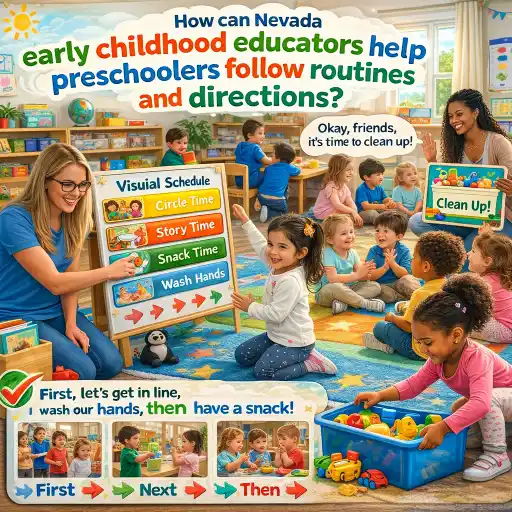 oolers follow routines and directions. It is written for Nevada child care leaders and teachers who want simple strategies you can use tomorrow. Remember: state requirements vary - check your state licensing agency.
Why it matters: predictable routines help children feel safe, reduce behavior problems, and give staff more time to teach. When routines match children’s needs, families notice the difference. Use these ideas with your team and flexible plans for each child.
What simple routines help preschoolers follow directions?
- 🔔 Morning arrival routine (hang coat, turn in note, choose a book). Keep steps to 3 items so children can remember.
- 🎵 Clean-up routine: 1) Warning, 2) Clean-up song, 3) Assigned job. Rotate jobs so each child helps.
- 🧼 Handwashing before meals: model, guide, praise. Use a visual at the sink so children see the steps.
- 🧭 Transition routine: give a 5-minute then 1-minute warning, show the next picture, use the same signal each time.
- 😴 Rest and nap steps: dim lights, quiet music, short story — same order every day.
Tips from ChildCareEd are practical and classroom-ready. See How Can I Make Transitions and Daily Routines Easier in My Classroom? and Smooth Days Start Here: Schedules & Routines for more checklists. Use short, practiced routines so your #preschoolers feel steady and safe. Good routines support #routines and strong adult-child relationships.
How do I give clear directions that preschoolers can follow?
- 👀 Get the child’s attention. Say the child’s name and make eye contact or come to their level.
- 📣 Give one short direction at a time. Use simple words: say what to do, not what to do. The CDC steps for giving good directions are a great guide.
- 🔁 Wait 3–5 seconds. If needed, repeat once and then give a brief consequence if the child still does not follow the direction.
- ✅ Check compliance. Ask a child to show you they understood, or say, “Point to what you will do.”
- 🎉 Give quick, specific praise: “You put your shoes on — great job zipping!”
Practice directions in games like "Simon Says" or "Listen and Draw" to build listening skills. These simple routines help with #transitions and reduce power struggles.
How can visual supports and schedules make routines stick in Nevada programs?
- 📷 Post a whole-group picture schedule for the day (6–8 pictures for preschoolers).
- 🔁 Use individual mini-schedules for children who need more structure (flip-books or pocket charts).
- ⏳ Add visual timers or countdowns so children can see time left.
- 🟢 Use First–Then boards to show a less-preferred task followed by a preferred one.
- 📂 Keep visuals simple and change them only when you review changes with children.
ChildCareEd explains how visuals help in How can visual schedules help preschool classrooms run more smoothly?. Evidence from the CSEFEL briefs also shows visuals cut transition time and lower anxiety. In Nevada, link visuals to daily routines that follow licensing rules. Use visuals to strengthen #visuals and to create a calmer day for #Nevada classrooms.
How do we adapt routines for children with different needs and prepare for licensing visits?
Some children need extra support. Small changes make routines work for everyone. Also, neat records and posted ratio charts help with licensing reviews.
- 🔧 Adaptations for diverse learners:
- 😊 Use photos of the room and child for schedules.
- 🧩 Offer choices (two options) and short movement breaks for busy children.
- 🗣️ Add words in the child’s home language if helpful.
- 📋 Practical prep for licensing: post ratio charts, show current CPR/First Aid, keep child folders current. See Nevada-specific checklists at How Can Nevada Child Care Providers Create Safe, Calm, and Well-Organized Learning Spaces?.
- ⚠️ Common mistakes to avoid:
- 🛑 Inconsistent cues across staff — fix by choosing one signal and training the team.
- ⏱️ Rushing transitions — fix by adding short buffer time and visual warnings.
- 📚 Too many pictures or steps — simplify to 3–5 steps per routine.
- 🤝 Teamwork: train staff together, use role-play, and review routines weekly. If a child needs more help, involve family and specialists early.
Remember: state requirements vary - check your state licensing agency.
Conclusion and Quick FAQ
Start small: pick one routine, add a picture schedule, teach the steps, and practice daily. Small, steady changes help children gain #confidence and make your day calmer. Use visuals, clear directions, and the same cues across your staff. Your work matters — these routines help children grow and make your classroom safer and more joyful.
- Q: How many pictures should a preschool schedule have? A: 6–8 main parts of the day is a good start.
- Q: How long to practice a new routine? A: Daily practice for 1–2 weeks shows change; keep reminding after that.
- Q: What if a child resists transitions? A: Use a visual, offer two choices, give a timer, and co-regulate feelings.
- Q: Where can staff get more training? A: ChildCareEd courses like Moving About the Classroom Buy Now $35.00 and Every Moment Matters
 Buy Now $55.00 are practical options.
Use these steps to build calmer days for your #preschoolers and stronger, more reliable #routines in your #Nevada program. Small steps = big gains.
Routines give children a clear plan for the day. Use short, repeated steps so children learn by doing. Try these classroom routines and practice them each day. Clear directions make it easier for children to do what you ask. Follow simple steps and check that each child understands. Visuals show the day in pictures. They help children who are non-readers or who need extra support. Use visuals at child's eye level and teach children how to check the schedule.
- 45 Hour Child Growth and Development
- CDA Preschool Credential with Portfolio Review
- 45 Hour Preschool Methods and Materials
- Birth to Five CDA Credential with Portfolio Review
- CDA Bridge Bundle: Preschool
- CDA Bridge Bundle: Family Child Care without Portfolio Review
- CDA Bridge Bundle: Preschool without Portfolio Review
- Texas Director Credential
- Behind the Scenes: Baby Routines ONLINE
- CDA Certification en Español: Recursos y Consejos para Educadores Bilingües
- 🎢 Ready to Train with a Nevada Twist? Your Guide to Must-Have Training Bundles for Early Educators!
- Cómo Trabajar en el Cuidado Infantil en Carolina del Norte: Requisitos y Pasos
- Best Daycare Field Trip Ideas in Nevada
- How can Nevada early childhood educators keep classrooms safe in hot weather?
- How can Nevada preschool programs help children with special needs feel heard, included, and understood?
- How can Nevada early childhood educators help preschoolers follow routines and directions?
- How can Nevada fix its early childhood workforce with better training pathways?
- Did Nevada’s 'Powered by Play' Conference Show Why Play-Based Learning Still Matters?
- Celebrando la amistad en el cuidado infantil durante el Día de los Mejores Amigos
- What are the most important school readiness skills for preschoolers?
- Can Nevada’s Early Childhood Plan Close Funding Gaps and Boost Access and the Workforce?
- What skills do preschoolers need to be ready for school?
- How Can Task Cards Build Independent Learning Centers?
- How Can Child Care Programs Reduce Decision Fatigue for Children and Educators?
- How Can Sorting Activities Strengthen Early Thinking Skills?
- How Can Child Care Providers Help Young Children Follow Directions?
- What Should You Review When a Preschool Day Feels Constantly Rushed?
- How Do You Handle a Preschooler Who Refuses to Follow Directions?
- When a Preschool Rule Expects More Self-Control Than Children Can Manage, What Should Educators Do?
