Watching young children grow is one of the most important parts of your job as a child care #providers. This article explains what developmental #milestones are, how to watch and record them, and what to do when you worry. It pulls together easy steps and trusted resources you can use right away, including practical tools from ChildCareEd and guidance from the CDC.
Why it matters: Early spotting and action help children learn skills and get services faster. When you notice a difference, you can help families by sharing clear observations and by knowing where to refer them. Early help often changes a child’s path for the better. Keep in mind: state requirements vary - check your state licensing agency.
What are developmental milestones and which domains do they cover?
- 🧠 Language/Communication — using words, following directions, back-and-forth talking.
- 🤝 Social & Emotional — playing with others, managing feelings, taking turns.
- 🧩 Cognitive (thinking) — solving problems, remembering, pretend play.
- 🏃 Movement/Physical — big and small muscle skills like running or picking up small objects.
Each domain gives you clear signs to watch for. Tracking across settings (snack time, circle time, outdoor play) helps you see a pattern. For printable lists and a quick booklet you can share with families, see the ChildCareEd CDC booklet at CDC Developmental Milestones Booklet Buy Now $0.00 and the CDC's downloadable checklists by age.
How can I track milestones every day in my classroom?
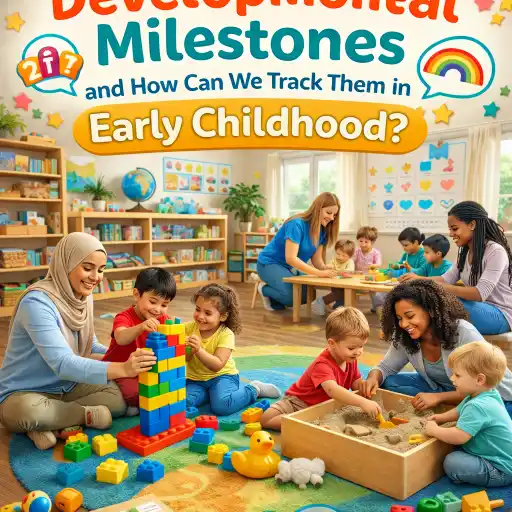
Tracking can be simple and part of your routine. Use short notes, checklists, and a few tools that families and health providers recognize. The CDC Milestone Tracker app and ChildCareEd resources make recording and sharing easy.
- 📋 Prepare: Print or bookmark the right age checklist (see CDC checklists or ChildCareEd lists at What Are the Milestones).
- 📝 Observe: Note exact actions (what the child did, when, and who saw it). Short dated notes are best.
- 😊 Celebrate: Mark strengths first when you share with families — parents are partners.
- 📱 Use tech: Encourage families to try the CDC Milestone Tracker app (Milestone Tracker) and send a summary to the child’s doctor if needed.
- 🔁 Check regularly: Review notes monthly for infants and toddlers, and at regular intervals for preschoolers.
- 📁 Keep records: Put copies in the child’s file and set a follow-up check date.
These steps pair well with training like ChildCareEd’s Baby Steps to Milestones Buy Now $35.00 or Milestones: By Leaps & Bounds Buy Now $35.00 so staff feel confident using the tools. Also remember: state requirements vary - check your state licensing agency.
When should I be concerned and what steps should I take?
- 🔎 Watch for red flags (examples): not babbling by 12 months, losing skills, little eye contact, very stiff or floppy movements. For a full list, see ChildCareEd’s red-flag guidance at What Are the Milestones.
- 🗒️ Document specifics: date, setting, exact behavior, and who observed it.
- 🤝 Talk with the family: start with strengths, show your notes, ask what they see at home.
- 📞 Suggest screening and referral: encourage a visit with the child’s doctor and share CDC resources like the early intervention page. For a concise, provider-focused list of programs, referrals, and family handouts you can share locally, see our Early Intervention Resources.
- ➡️ Make or help with referrals: if the doctor or screening suggests risk, families may be referred to state early intervention programs (contact info on the CDC early intervention page).
Common mistakes and how to avoid them
- ❌ Waiting too long — Fix: Share small concerns early and set a check-in date.
- ❌ Vague notes like “not talking” — Fix: Write the child’s exact words or attempts.
- ❌ Using one observation as proof — Fix: Look across days and activities for patterns.
How can I support children and partner with families and early intervention?
Your daily support helps a child keep growing while families get answers. Use classroom strategies that promote development and make referrals smooth and kind.
- 🎯 Build strengths into routines: read aloud, give simple choices, add play that practices the skill you want to see more of.
- 🤗 Communicate with kindness: begin conversations with what the child does well, then share observations and next steps. ChildCareEd gives sample language in articles like How to Talk to Parents.
- 📘 Share resources: hand families the CDC booklet (CDC Developmental Milestones Booklet Buy Now $0.00) or the Milestone Tracker app so everyone uses the same checklist.
- 🔗 Connect to local supports: help families find early intervention and community programs. Local Help Me Grow or county resources (see examples at Help Me Grow LA) can be useful.
- 📅 Follow up: set a date to review progress and keep notes shared with the family.
Working together — provider, family, and health or early intervention teams — is the fastest way to get a child the right help. Training courses from ChildCareEd and CDC resources listed above make these partnerships easier.
Conclusion & FAQ
Summary:
- Monitor daily using simple checklists and notes.
- Share strengths first, then concerns with clear examples.
- Use CDC and ChildCareEd tools to screen and refer when needed.
- Follow up and keep families involved.
Quick FAQ
- Q: When should I refer to early intervention? A: If a child is missing milestones, has lost skills, or you and the family have concerns. See CDC early intervention info at Early Intervention.
- Q: What tools should I use? A: Use CDC checklists, the Milestone Tracker app (app), and ChildCareEd resources for classroom examples.
- Q: Do I need to diagnose? A: No. Observe, document, and refer to professionals for screening and diagnosis.
- Q: How often to check? A: Monthly for infants/toddlers and at regular intervals for preschoolers; keep notes across days.
Thank you for the careful work you do every day. Your observations and caring actions help children grow. Keep using clear notes, share strengths, and act early — it makes a real difference for our #children and their #development. For more classroom-ready tips, see Understanding Child Development Milestones.
Developmental milestones are the skills most children can do by a certain age. They show how children play, learn, talk, behave, and move. Good guides that match the well-child visit ages are available from the CDC Milestones and a clear provider-focused overview at ChildCareEd.Not every difference is a delay. But some red flags need action. The CDC and related trainings list warning signs and the ages when to watch closely. The American Academy of Pediatrics recommends formal developmental screening at 9, 18, and 30 months and autism screening at 18 and 24 months; you can read more at the CDC page on developmental monitoring and screening.- 45 Hour Child Growth and Development
- 45 Hour Infant and Toddler Methods and Materials
- Baby Steps to Milestones
- CDA Bridge Bundle: Family Child Care
- CDA Bridge Bundle: Family Child Care without Portfolio Review
- CDA Bridge Bundle: Infant/Toddler without Portfolio Review
- CDA Bridge Bundle: Preschool without Portfolio Review
- 45-Hour Infant and Toddler Curriculum
- Texas Director Credential
- Identifying Developmental Milestones in Children
- Recursos en Español sobre el Sueño Seguro del Bebé
- What are the developmental milestones from birth to 5 years and how can providers track them?
- Retraso del Habla en la Guardería: Cómo Pueden Ayudar los Proveedores
- What Are Developmental Milestones and How Can We Track Them in Early Childhood?
- Understanding Developmental Milestones in Children
- Helping Children Reach Developmental Milestones
- 8-Week-Old Baby Milestones: What Should Your Baby Be Doing?
- What are developmental milestones and how can child care providers use them?
- Cómo simplificar la capacitación para sus empleados de daycare
- How Can Child Care Providers Understand and Use Developmental Milestones from Birth to Age Eight?
- How Does Early Development Shape Children's Behavior?
- What Should Child Care Providers Expect: Developmental Milestones From Birth to Five?
- How should child care programs document infant and toddler development?
- What Is the Difference Between Early Childhood Education and Child Development?
- More Than ABCs and 123s: The Real Importance of Early Childhood Education
- How Can Child Care Providers Support Healthy Child Growth and Development?
- What Developmental Milestones Should Teachers Know From Birth to Age 5?
- How Can Early Childhood Teachers Distinguish Typical from Atypical Development?
