Young children sometimes act out. That is normal. This article helps California #educators support #preschoolers who show tough behavior. You will find simple steps you can use in your classroom today. We link to helpful ChildCareEd resources and other gui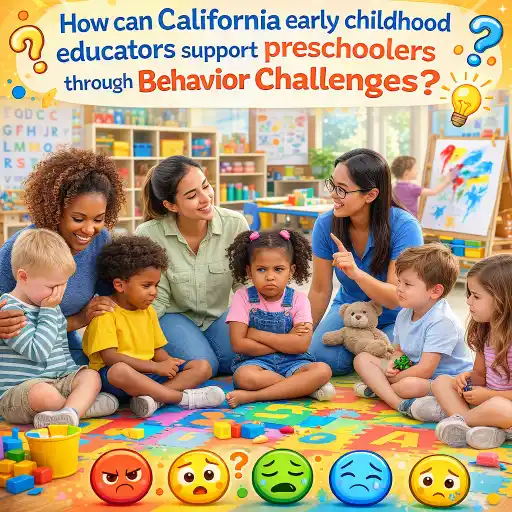 des so you can learn more. Remember: state requirements vary - check your state licensing agency.
Why does this work matter for our classrooms and children?
- Children learn best when they feel safe and understood.
- Helping a child with behavior builds social skills, confidence, and calm for the whole group.
- Early support prevents bigger problems later and helps children be ready for school.
When we see behavior as a way a child tries to communicate, we can teach new skills instead of just punishing. For easy-to-use ideas about why behavior matters and how to teach social skills, see ChildCareEd's guides like How to Support Children with Challenging Behaviors and Emotions in Motion: Teaching SEL. Research summaries like the CSEFEL briefs also explain practical steps for emotional learning and prevention (CSEFEL What Works Briefs).
What simple everyday strategies prevent and manage challenging behavior?
- 📅 Make a clear routine.
- Post a picture schedule at the child's height.
- Give 1–2 minute warnings before a change.
- 😊 Build warm relationships.
- Greet each child by name. Notice good choices often.
- 🧭 Teach behavior like a skill.
- Label feelings: "You look sad." Then show a calm skill (deep breaths).
- 🎯 Use positive rules and consistent limits.
- Keep 3–5 simple rules with pictures. Praise when children follow them.
🔁 Set up the room to prevent trouble.
- Make quiet and active areas. Offer duplicates of favorite toys. See tips in Positive Discipline Strategies.
- Keep 3–5 simple rules with pictures. Praise when children follow them.
When a child is upset, try this short 4-step plan every time:
- 🧘 Stay calm and get to the child's level.
- 📣 Name the feeling briefly.
- ⛔ State the limit kindly (what is okay and not okay).
- 🔁 Teach one replacement skill (ask, breathe, or use a calm spot).
For classroom tools, routines, and printable resources, see ChildCareEd’s practical pages like Classroom Behavior Support Tip Buy Now $0.00s.
For a short, practical online course that walks educators through step-by-step strategies to prevent and respond to challenging behaviors in preschool settings, see the Going Head-to-Head with Challenging Behavior course.
How can we partner with families and our team to help a child?
- 📋 Share strengths and facts. Start messages with a strength, state the behavior, and offer one plan idea. Example: "Marco loves blocks. He hits when crowded. We will try a calm corner and a 2-minute warning. What helps at home?" See Family Engagement Strategies.
- 🔍 Observe and record for a few days: when, where, and who. Use the ABC idea: Antecedent, Behavior, Consequence.
- 🤝 Meet with families and staff to make a short plan.
- Include clear prevention steps, a taught replacement skill, and consistent adult responses.
- 📧 Keep communication quick and regular: one-sentence updates, photos, or a short note.
- 🧾 If a child needs extra support, involve specialists and follow any IEP/IFSP steps. ChildCareEd’s Creating Behavior Plans for Children with Extra Needs gives clear guidance.
Include language supports for dual language learners. The California ELD Foundations explain how to support English learners (ELD Foundations). Ask families for their favorite songs or words in the child’s home language.
What supports help children with extra needs or trauma, and how do we avoid common mistakes?
Some children need more structured help. Follow these steps:
- 📝 Start with careful observation and a simple behavior plan.
- Record triggers and what works to calm the child. Use a Mini Behavior Support Plan from ChildCareEd resources.
- 🔬 Use Positive Behavior Support (PBS) ideas: prevent, teach, and change responses. Read about PBS at CSEFEL and ChildCareEd’s PBS guidance (Support the Individual).
- 🌿 Use trauma-informed steps: steady routines, calm corners, and staff support. ChildCareEd’s trauma guides show daily ideas (Trauma-Informed Care).
- 🧑⚕️ Ask for help early: mental health consultants, special educators, or local agencies can support you. Laws and programs in California, like efforts tied to AB 1644, push for more school-based mental health supports—learn local options and partners.
Common mistakes and fixes:
- ❌ Mistake: Waiting too long to act. ✅ Fix: Start simple plans and review progress in 1–2 weeks.
- ❌ Mistake: Adults respond differently. ✅ Fix: Use one short script and train staff to use it.
- ❌ Mistake: Long lectures during meltdowns. ✅ Fix: Use the calm 4-step plan and practice skills when children are calm.
Conclusion
Quick steps to try this week:
- 📌 Post a picture schedule and give a 2-minute warning.
- 🛋️ Make a calm spot and practice using it with the group.
- 🗣️ Teach one replacement skill during circle (deep breaths or asking for help).
- 🤝 Send one short strength + fact + plan note to a family.
Remember these five words: #preschoolers #behavior #educators #families #routines. Use small steps and be patient. For training and printable tools, visit ChildCareEd’s courses like Going Head-to-Head with Challenging Behavior  Buy Now $24.00 and Turning Behavior Around Buy Now $25.00. You are not alone—reach out to your team, use local consultants, and keep learning.
FAQ (short)
- Q: How long should a calm-down be? A: Short and child-led—stay nearby until the child is ready.
- Q: When to do a behavior plan? A: When patterns repeat despite prevention steps.
- Q: What if a child hurts others? A: Ensure safety, then use the calm plan and document the event.
- Q: Where to learn more? A: ChildCareEd articles and local mental health consultants.
Why it matters: Use small changes that work each day. Try these steps: Working with families helps children learn faster. Try this step-by-step plan you can use today:
- 45 Hour Child Growth and Development
- CDA Home Visitor Subject Area 3 Part 3 Birth to 5
- CDA Preschool Credential with Portfolio Review
- Birth to Five CDA Credential with Portfolio Review
- Pediatric RSV First Aid & CPR/AED
- CDA Bridge Bundle: Family Child Care without Portfolio Review
- CDA Bridge Bundle: Infant/Toddler without Portfolio Review
- CDA Bridge Bundle: Preschool without Portfolio Review
- Texas Director Credential
- Online Childcare Courses
- Going Head-to-Head with Challenging Behavior
- Did Someone Say Free? ChildCareEd Does!
- Tiny Hands, Big Dreams: Fostering Creativity in Preschoolers
- Why ‘Why’ is the Magic Word: How Early Education Turns Questions into Quests
- Gold Stars Aren’t Just for Kids: Why Childcare Certifications Are the Secret Sauce to Success
- New Year, Fewer Tantrums: Tips for Building Strong Parent-Educator Partnerships in 2025
- Increasing Fine Motor Skills in the Early Childhood Education Classroom
- CDA Certification en Español: Recursos y Consejos para Educadores Bilingües
- Early Childhood Education in California ☀️
- How can California early childhood educators support preschoolers through behavior challenges?
- How can California early educators start strong and grow their careers with ChildCareEd?
- How can early educators in California start strong and become teachers?
- California Preschool Ratios: How Many Children Can One Teacher Supervise?
- Title 22 Home Daycare Ratios: How Age Mix Changes Your California Capacity
- Which Positive Guidance Strategies Actually Work in Child Care?
- What Are 10 Proactive Classroom Management Techniques for Early Educators?
- Why Does Repeating the Rule Stop Working in a Preschool Classroom?
