Working in hot weather takes planning and teamwork. This short guide is for Nevada child care directors and teachers 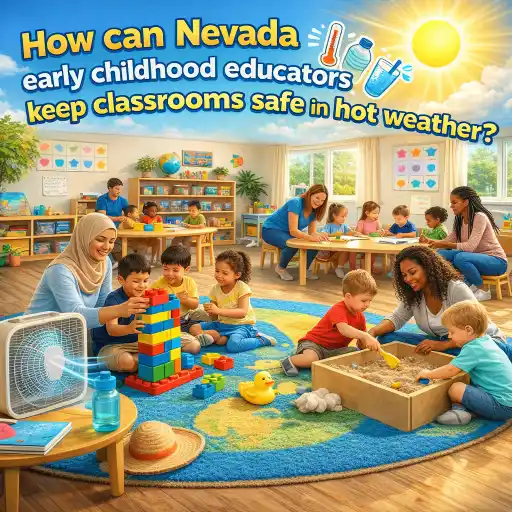 who want clear, practical steps to keep kids cool and safe. You will see numbered checklists, simple routines, and quick actions to use today. This matters because young bodies heat up faster than adults and can get very sick from the sun or heat. Read the tips, use the charts, and share them with staff and families. Remember: state requirements vary - check your state licensing agency.
Why it matters:
1) Young children lose water faster and may not tell you they are thirsty. 2) Heat can quickly lead to heat cramps, heat exhaustion, or heat stroke if staff don’t act. 3) Good routines cut risk and keep playtime fun and calm. Use resources like Preparing for Extreme Heat and Heat Awareness to train staff and families. Keep these five quick words in mind: #heat #safety #children #hydration #Nevada.
1) How should I prepare my Nevada classroom and yard before a hot day?
- 🌤️ Check temperature, heat index, and air quality. Use a posted tool like a weather chart (Child Care Weather Watch) or the ChildCareEd weather chart resource (weather chart Buy Now $0.00).
- 🌳 Make shade ready: open umbrellas, put canopies up, or lead children under tree shade. Shade should be easy to reach and large enough for your group (shade tips).
- 💧 Set up permanent water stations and labeled cups or bottles. Cold water should be reachable for everyone.
- 🧰 Put first-aid and cooling supplies where all staff can find them: towels, wet cloths, spray bottles, ice packs (wrapped), and a list of emergency numbers.
- 📋 Post health plans and medication info for children with special needs; make sure staff know where to find them. Also, encourage staff to review broader cardiovascular awareness materials—see World Heart Day guidance on cardiovascular health—so the team recognizes when underlying heart conditions may change a child’s heat response.
Tip: Assign one staff member each day to do the 1–2 minute weather check before any outdoor time. Use the list above so the team acts the same way every day. For guidance on outdoor play and sun protection, see the CDC’s Outdoor Play page (CDC Outdoor Play and Safety).
2) What daily routines keep children safe and comfortable in the heat?
- 🕘 Morning: 15–20 minutes of active play before the hottest part of the day.
- ⏱️ Midday: move to quiet indoor play, water play in shade, or shaded story time.
- 🌇 Late afternoon: a short, calm outdoor block if the heat index drops.
2. Hydration schedule (simple and effective):
- 💧 Offer water upon arrival.
- 💧 Offer water before going outside.
- 💧 Offer water every 10–15 minutes during hot weather when outdoors.
- 💧 Offer water after outdoor play and at nap time.
3. Clothing and sun safety:
- 👕 Ask families for lightweight, light-colored clothing and wide-brim hats.
- 🧴 With parent permission, apply sunscreen before outdoor play and reapply per label directions. See CDC guidance on sunscreen use and infants (CDC Outdoor Play and Safety).
4. Activity choices and supervision:
- 🎈 Choose low-exertion games (bubbles, chalk, sensory play) during hot hours.
- 👀 Increase supervision intensity; assign staff to shaded zones and do head counts often.
5. Use a posted weather chart and a traffic-light decision rule (green/yellow/red) so staff make the same call: go, shorten, or stay inside. ChildCareEd has a clear guide: Child Care Weather Watch.
3) How do I spot heat illness, and what first aid steps should staff take?
- ⚠️ Heat cramps: painful muscle spasms, sweating.
- ⚠️ Heat exhaustion: heavy sweating, cold/clammy skin, faintness, dizziness, headache, nausea.
- 🚨 Heat stroke: high body temperature (104°F or higher), confusion, loss of consciousness, dry or very hot skin. Call 911 right away.
2. First aid actions (first, do no harm):
- 🏃 Move the child to shade or an air-conditioned area immediately.
- 🧊 Loosen clothing and cool the child quickly using wet cloths, spray bottles, or cool (not icy) baths.
- 💧 Offer small sips of water for heat cramps or heat exhaustion if the child is awake and alert.
- 📞 For heat stroke or if the child is vomiting, confused, or not improving, call 911 right away.
3. Follow up and document:
- 📝 Record the incident, notify parents, and review the event with staff to avoid repeats.
- 🔁 Update plans for that child (extra water breaks, shade seating) and refresh staff training using tools like First Aid for Heat Illness Buy Now $0.00 and CDC resources (Infants and Children and Heat).
Common mistakes and how to avoid them:
- ❌ Mistake: Waiting for symptoms. ✅ Fix: Offer water and shade often—don’t wait.
- ❌ Mistake: Leaving cooling supplies out of reach. ✅ Fix: Store a ready kit near exits.
- ❌ Mistake: Letting one staff member decide alone. ✅ Fix: Use the posted weather chart and a daily assigned weather-checker.
4) What licensing, training, and paperwork do Nevada programs need to follow?
1. Nevada rules: Review Nevada licensing laws and regulations for child care so your plan matches state expectations. Key state resources include the Nevada Administrative Code and Nevada Revised Statutes for child care. These cover staffing, health records, emergency plans, and more.
2. Training and documentation:
- 📚 Train staff in heat-illness recognition, first aid, and CPR. Keep certificates in personnel files.
- 🧾 Keep written plans: heat response steps, hydration schedules, and where to move children during power outages or cooling needs.
- 📞 Maintain emergency contacts and health plans for children with special needs, and ensure quick access during an incident.
3. Indoor heat rules: If your facility gets hot indoors, know employer guidance like California’s indoor heat prevention rule. Even when not required in Nevada, the ideas help: provide cool-down areas, encourage water breaks, and track temperatures. Always remind families and staff that state requirements vary - check your state licensing agency.
4. Use national guidance and checklists to build your written policy: Caring for Our Children standards (Caring for Our Children), CDC heat resources (CDC Heat Health), and ChildCareEd training and printable resources (Preparing for Extreme Heat, Heat Awareness).
Conclusion
1) Use simple routines: morning weather checks, shade ready, water schedule, and short outdoor blocks.
2) Train and practice: rehearse move-ins for thunder, cool-down steps, and first aid for heat illness.
3) Document and follow rules: keep health plans, training records, and emergency steps up to date. Use ChildCareEd tools and national guidance to build your plan and remember: state requirements vary - check your state licensing agency. Your effort keeps kids safe, calm, and ready to learn even on hot days.
FAQ (short):
- Q: When should we keep kids inside? A: Use your heat-index or weather chart rules—stay inside when the chart says red or when air quality is unhealthy (Child Care Weather Watch).
- Q: How often do you offer water? A: At least every 10–15 minutes outdoors during hot weather.
- Q: Who calls 911? A: The staff member who sees severe signs (confusion, passing out, very high temperature). Then notify the director and parents.
- Q: Are fans enough? A: Fans help a bit, but cooling with shade, air conditioning, and wet cloths is better during extreme heat (Red Cross).
1. Assess the space with a simple checklist every morning:1. Know the signs (easy list for staff):1. Plan short outdoor blocks and several cooling breaks. Example routine:
- Bienvenido! Welcoming All Families
- Nutrition Essentials for Child Care Providers
- Engaging Indoor Activities for Inclement Weather
- Transportation and Field Trip Safety in the Early Childhood Environment
- Recognizing and Reporting Child Abuse and Neglect
- Texas Director Credential
- Balancing Active Play in Child Care
- Ah-Choo!
- CDA Certification en Español: Recursos y Consejos para Educadores Bilingües
- Recursos en Español sobre el Sueño Seguro del Bebé
- 10 Ejemplos de Cómo la Cultura Influye en el Desarrollo Infantil
- How Can Child Care Programs Keep Children Safe in Different Weather?
- Cómo Trabajar en el Cuidado Infantil en Carolina del Norte: Requisitos y Pasos
- How can Nevada early childhood educators keep classrooms safe in hot weather?
- How Can Texas Child Care Providers Prepare Safe Classrooms for Weather Emergencies and Active Play?
- Summer Field Trips for Daycares in Nevada
- How can Nevada child care programs keep children safe outdoors when air quality is poor?
- Safe Temperature Regulations in Daycare: Texas Rules for Child Care Providers
- Safe Temperature Regulations in Daycare: California Rules for Child Care Providers
- Safe Temperature Regulations in Daycare: Nevada Rules for Child Care Providers
- What are Oklahoma's safe temperature rules for daycares and how do we follow them?
- What Are Florida's Safe Temperature Rules for Daycare Providers?
- Daycare Temperature Regulations in Arizona: How Hot Is Too Hot?
- Daycare Temperature Regulations in California: What Providers Should Know
- Daycare Temperature Regulations in Nevada: How Hot Is Too Hot?
- Daycare Temperature Regulations in Utah: How Hot or Cold Is Too Much?
- Daycare Temperature Regulations in Hawaii: Keeping Children Safe Indoors and Outdoors
