Most children learn best when adults use clear words and pictures. This short guide helps Texas child care providers and directors use simple #Texas steps, #visuals, and plain #language to support young #children and their #families. It includes quick how-tos, easy tools, and links to free resources you can use today.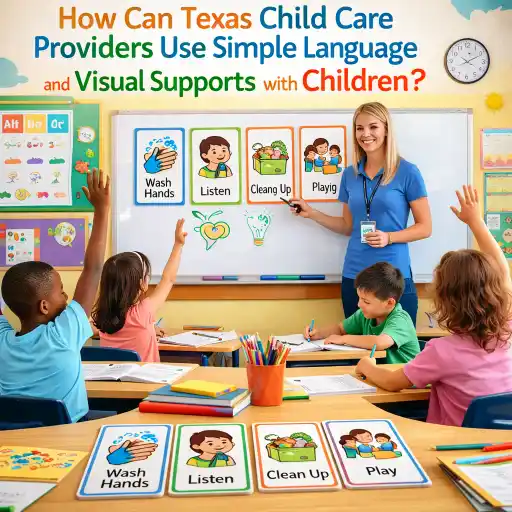
Why do simple words and pictures help children — and why does it matter?
Why it matters for your program:
- Predictable routines lower stress and behavior problems — this frees staff time for teaching. See how visual schedules calm transitions in How can visual schedules help preschool classrooms run more smoothly?.
- Simple language plus visuals support Dual Language Learners and children with delays. For practical tips, see Supporting Dual Language Learners in Child Care Settings.
- Early support builds future learning. Use milestone guides like the CDC's Milestones by 3 Years to notice when to act.
Small changes today make a big difference tomorrow — children join more, cry less, and learn faster when words are short, and pictures match the day.
How do I use simple language every day with kids?
- 😀 Speak in short phrases: use 1–6 words for directions. Example: “Coat on. Zip up.”
- 📣 Pause and wait: give at least 5–10 seconds after asking a question so children can respond. This tip is emphasized in How can child care providers best support language development.
- 🔁 Repeat and expand: repeat the child’s words and add one new word. Child says “ball” → you say “Red ball. Roll the red ball.”
- 📚 Read and sing daily: pick short books and ask 1–2 simple questions. Dialogic reading boosts talk and is described in ChildCareEd tips.
- 🗂️ Label the room: add simple picture labels at child height (door, cubby, sink). This links print to objects and supports #literacy.
State rules and paperwork: state requirements vary - check your state licensing agency for training hours or documentation you must keep. For Texas-specific records, see the Texas Staff Training Record Buy Now $0.00.
How do I make and teach visual supports that actually work?
- 📷 Choose real photos when possible: photos of your room or the child doing the task help most (see visual schedule guide).
- ✂️ Keep pictures simple: use 6–8 main parts for an all-day chart for preschoolers. Too many cards can confuse.
- 🔧 Make it changeable: use Velcro, magnets, or a flip book so you can swap activities quickly.
- 😊 Teach the support: model checking the chart, move the current card, and let children try moving it themselves.
- 🧩 Personalize when needed: create an individual flip-book or First–Then board for a child who needs more structure.
Use tested tips from visual experts: the Indiana Resource Center shows how visuals teach steps and routines (Using Visual Supports), and the CDC offers guidance on clear visuals (Visual Communication Resources).
Common mistakes and how to avoid them:
- 🛑 Too many tiny pictures — fix: simplify to main activities.
- ⚠️ Staff use different words — fix: pick one short phrase per routine and teach the team.
- ⏳ No practice time — fix: role-play the schedule for 2–3 minutes daily until it sticks.
How do I partner with families and follow Texas steps for referrals?
Families are your strongest partners. Work in simple steps so families feel trusted and included.
- 🤝 Start with strengths: open by naming what the child does well, then share one observation (e.g., "I noticed Miguel points to pictures during circle time").
- 📄 Share visuals and words: send a photo of the day or a printable schedule home so families can use the same words. ChildCareEd’s DLL guide suggests labels and family photos to link home and care (Supporting Dual Language Learners).
- 📋 Track and suggest next steps: if you see consistent delays, note examples and refer to the CDC milestones (Milestones by 3 Years). Encourage families to talk with their child’s doctor or local early intervention program.
- 📞 Know local help: many areas offer inclusion coaches, speech therapists, or early intervention. Offer to help families make a call or fill out forms.
- 🧾 Train your team: keep notes of staff training and use simple staff checklists (see Texas training record ideas at Texas Staff Training Record Buy Now $0.00).
Remember: be kind, factual, and brief when sharing concerns. State requirements vary - check your state licensing agency for referral steps and record keeping.
Conclusion
Simple language and clear #visuals help children feel safe, take part, and learn. Start with 1–2 easy changes this week:
- 😀 Post a 6-step picture schedule at child's height.
- 📣 Use short phrases and pause after questions.
- 🤝 Send one photo of the day to families each afternoon.
Want quick links? Try these:
FAQ (short):
- Q: How many pictures should a preschool schedule have? A: 6–8 main parts.
- Q: What if families don’t speak English? A: Ask for key home words, use photos, and share visuals that the family can keep.
- Q: When should I refer for screening? A: If you see repeated delays across weeks, use CDC milestones and suggest a doctor visit or early intervention.
- Q: Who pays for materials? A: Many supports are low-cost; photo printing, laminating, or simple magnetic strips go a long way. For big needs, check local inclusion funds.
You are doing important work. Small, consistent steps — easy words and clear pictures — help every child belong and learn.
Use steady, short language across routines so children hear the same words again and again. Try these easy steps: Visual supports include schedules, choice boards, step pictures, and simple signs. Follow these numbered steps to make useful visuals:1) Children understand pictures faster than many words. Visuals give meaning when language is new or when a child is upset. 2) Simple words and short sentences reduce confusion and help children follow directions. 3) When children know what will happen next, they feel safe and can join learning and play.
- What Makes Me Special: An Overview of Autism and ADHD
- 💛🧩 ¿Cómo puedo hacer que mi enseñanza sea inclusiva para los niños con autismo?
- Capacitación en Salud y Seguridad Preventiva en Línea para Proveedores de Cuidado Infantil
- Proporciones de Cuidado Infantil y Tamaños de Grupo por Edad en Maryland (Guía Rápida para Centros y Hogares)
- Proporciones de Cuidado Infantil y Tamaños de Grupo por Edad en Nueva Jersey (Guía Rápida para Centros y Hogares)
- Proporciones de Cuidado Infantil y Tamaños de Grupo por Edad en Virginia (Guía Rápida para Centros y Hogares)
- Lista para Guardería en Casa en Texas: Cómo Iniciar una Guardería en el Hogar
- Cómo Ayudar a Niños con Retraso del Habla en el Cuidado Infantil
- Apoyo en Preescolar para Retrasos del Habla: Estrategias Simples que Ayudan
- Retraso del Habla en la Guardería: Cómo Pueden Ayudar los Proveedores
- How can providers become lifelines for families in Texas child care deserts?
- How can Texas child care providers use simple language and visual supports with children?
- How Can Texas Early Childhood Educators Build Strong Communication with Children with Special Needs?
- How can early childhood programs in Texas build strong communication with families?
- How can Texas child care programs support inclusion every day?
- Celebrando la amistad en el cuidado infantil durante el Día de los Mejores Amigos
- Canciones, juegos y preguntas de círculo para niños
- Can Texas Child Care Providers Turn Business Coaching and Employer Partnerships into Real Support?
- Cómo simplificar la capacitación para sus empleados de daycare
- How Can Texas Providers Learn from San Antonio’s Infant-Toddler Expansion About Six-Week Learning?
