In childcare, inclusion means making choices so every child can join in. This article gives simple, practical steps you can use today. You will find quick ideas for the room, routines, families, and handling hard moments. Remember: state requirements vary - check your state licensing agency.
Why it matters:
1. When children feel they belong, they are calmer and learn more. See basic inclusion ideas at Inclusive Practices in Early Childhood Education.
2. Inclusion helps build friendships, respect, and stronger family trust. For program planning and examples, check How Do I Create an Inclusive Environment.
What simple steps can I add to my daily routine to be more inclusive?
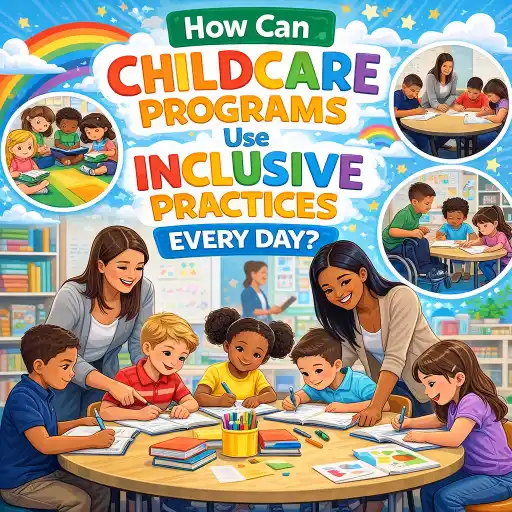
Try these easy actions you can start this week. Numbered steps make it clear for staff and families.
- 📌 Make routines visible:
- 1. Use a picture schedule for arrival, snack, play, and clean-up.
- 2. Post one short rule at each center (photo + 3 words).
- 🎯 Offer choices during activities:
- 1. Two ways to join (quiet table or movement space).
- 2. Let children show learning by drawing, acting, or telling.
- 🧩 Change materials so all can use them:
- 1. Add big crayons, adaptive scissors, or tactile objects.
- 2. Label bins with photos and words for easy access.
- 📚 Add diverse books, dolls, and music so children see themselves. See ideas at How to Create an Inclusive Childcare Environment.
- 🔁 Use short, consistent directions and a calm transition cue (song or visual timer). For UDL tips, see UDL starter guide.
These steps follow the idea of planning once and helping many children. Small, steady changes make your #inclusion stronger and easier for staff to keep up.
How do I include children with disabilities without singling them out?
For practical strategies, classroom adaptations, and training to support diverse learners and children with special needs, see Supporting diverse learners and special needs.
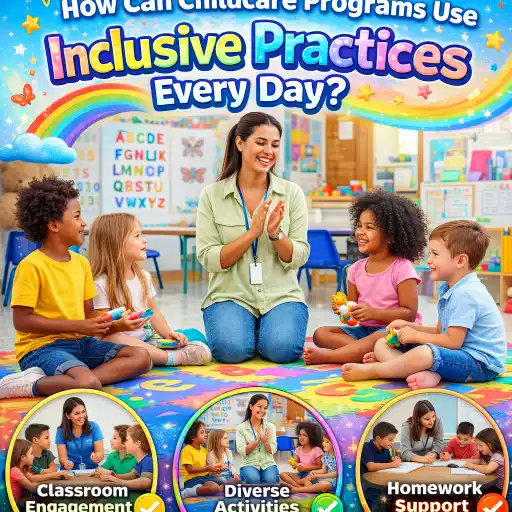
Inclusion is "same activity, different access." Use supports that let a child join the group while getting what they need.
- 🔧 Start with simple adaptations:
- 1. Provide extra time, choice of tools, or a quiet corner.
- 2. Offer alternate ways to respond (point, gesture, show).
- 🤝 Use teamwork:
- 1. Work with families, therapists, and your director to follow IFSP/IEP plans.
- 2. Keep a short, shared note about what helps the child each day.
- 📘 Know the law and resources:
- 1. Learn about equal access and accommodations from Access for All: Inclusion and the ADA and the ADA overview at Equal Access to Child Care Under the ADA Buy Now $0.00.
- 2. Use free checklists and guides from ChildCareEd like Inclusive Lessons for Preschoolers.
- 🧠 Start with Universal Design for Learning (UDL): plan activities with options so supports are for everyone. See the simple starter guide at UDL in early childhood.
Use invisible supports when possible (extra time, adapted tools) so the child stays part of the group. These ideas are also discussed in depth in the ChildCareEd article What Are Inclusive Practices. Keep communication with families kind and regular—families are your best partners in #children's success.
How can I build strong partnerships with families and the community?
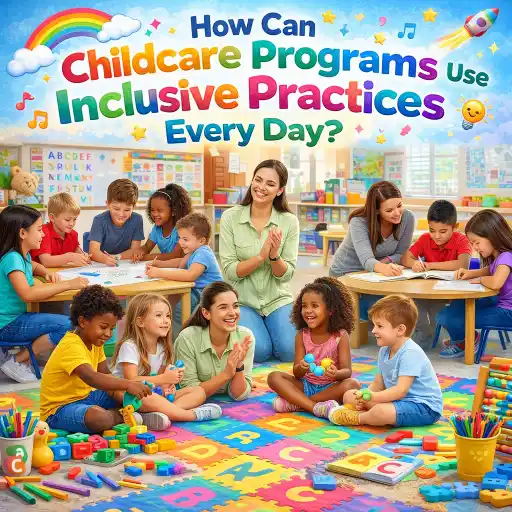
Families know what helps their child. Make small steps to welcome them and invite their ideas.
- 🤝 Start with a short welcome form:
- 1. Ask about home language, favorite comfort items, and calm strategies.
- 2. Invite one family member to share a song or food from home.
- 📣 Give regular, respectful updates:
- 1. Share one strength and one small goal each day or weekly.
- 2. Use translation tools or an interpreter when needed.
- 🌎 Include cultures and languages:
- 1. Label key areas in home languages and teach peers simple greetings.
- 2. Display family photos and celebrate many traditions. See cultural strategies at Embracing Diversity and Culture. For concrete, child-centered activities and family-based ways to honor Juneteenth and other cultural celebrations, see how to celebrate Juneteenth with young children.
- 📚 Connect to local supports:
- 1. Share community resources like the Indiana University preschool inclusion webinars: Preschool Inclusion resources.
When families feel heard and respected, they join with you to help the child thrive. This builds trust and makes inclusion real in your program. Keep your notes short, positive, and practical so families can use them at home. These actions help your #families feel welcome and involved.
How do I respond to challenging behavior while keeping inclusion strong?
Behavior often tells us what a child needs. Use a plan that finds the cause and teaches a new skill.
- 🔍 Observe first:
- 1. Watch for what happens before and after the behavior for 2–3 days.
- 2. Use simple notes or a short ABC chart (Antecedent, Behavior, Consequence).
- 🧾 Make a small behavior support plan:
- 1. Pick one behavior to focus on.
- 2. Add 1–2 prevention steps and teach a replacement skill.
- 3. Try the Mini Behavior Support Plan from ChildCareEd: Mini Behavior Support Plan.
- 📘 Use research-based tools:
- 1. Functional Behavioral Assessment helps find reasons for behavior (see CSEFEL FBA brief).
- 2. Positive supports and teaching skills keep the child with peers rather than alone.
Common mistakes and how to avoid them:
- ❌ Mistake: Making the child change to fit the room. Fix: Change the task or tools instead.
- ❌ Mistake: Not asking families. Fix: Ask one question at pick-up this week and write it down.
- ❌ Mistake: Using too many visuals at once. Fix: Use 1–2 clear images and be consistent.
These steps are practical and protect dignity. For more on behavior supports and skill development, see Supporting Skill Development and the ADA resources on Access for All. Keep responses calm, short, and teach the child a helpful skill for next time. This keeps your #children safe and learning.
Summary
1. Inclusion is everyday work: small changes add up.
2. Use visible routines, choices, and adapted materials so all children can join.
3. Partner with families, learn UDL basics, and use simple behavior plans when needed.
4. For training and free tools, visit ChildCareEd pages like Inclusive Practices and course options such as Building Equity  Buy Now $10.00.
FAQ
- Q: Where do I start if my staff is nervous about inclusion?
A: Start with 1 or 2 small changes (picture schedule, calm corner) and share wins each week. - Q: Who pays for adaptations?
A: Many supports are low-cost. For bigger needs, explore local funds, early intervention, or guidance in ADA resources. - Q: How can I learn more quickly?
A: Take short courses like Building Equity: Inclusionary Practices in Preschool Buy Now $10.00. - Q: What if a family disagrees with suggestions?
A: Listen, ask what they already try at home, and invite them to set one small goal with you.
Inclusion is not perfect the first day. It grows when staff, families, and children work together. Keep things simple, focused on strengths, and celebrate small steps. Your daily choices make a big difference for every child’s chance to belong and learn.
- 45 Hour Child Growth and Development
- 45 Hour Preschool Methods and Materials
- Easy Steps to Resume and Interview Success
- Bienvenido! Welcoming All Families
- Pediatric RSV First Aid & CPR/AED
- 45 Hour School Age Methods and Materials
- Equity in Action with Head Start
- Texas Director Credential Renewal
- Texas Director Credential
- Child Development Training
- Celebrating International Women's Day
- Daycare Near Me: A Parent's Necessity
- From Challenges to Triumphs: Strategies for Childcare Educators in New York
- Normas de Licenciamiento de Cuidado Infantil en Virginia para Centros Diurnos Infantiles y Hogares Diurnos Familiares
- How can Florida early learning programs include every child with exceptionalities?
- How can childcare programs use inclusive practices every day?
- How Can We Create Inclusive Learning Environments for Every Child?
- What Do Minnesota's Native American Communities Need From Childcare Providers?
- How can DC classrooms welcome every child and make inclusion real?
- Celebrando la amistad en el cuidado infantil durante el Día de los Mejores Amigos
- What can the National Mall teach us about building a classroom where every child has a voice?
- How can we create classrooms where every child feels represented?
- How Can Child Care Programs Best Support Families Observing Ramadan?
- How Can Child Care Directors Make Inclusive Practices Consistent Across Every Classroom?
- Including Every Child: What Child Care Providers Should Know About the ADA
- How Can Providers Create an Inclusive Classroom for Every Child?
- How Can Universal Design Make Every Classroom More Inclusive?
- How Can Child Care Providers Create Inclusive Father’s Day Activities for Diverse Family Structures?
- How Can Child Care Programs Plan Appreciation Activities When Families Use Different Names for Caregivers?
