Open-ended art—often called process art—gives young children the time, materials, and freedom to explore ideas without being expected to copy a model or create an identical finished product. This article gives child care providers and directors practical strategies for making open-ended art a consistent part of classroom routines through thoughtful material choices, accessible art spaces, supportive teacher language, inclusive adaptations, and meaningful documentation. These experiences strengthen creativity, decision-making, fine-motor development, flexible thinking, self-expression, and confidence. To deepen staff practice, explore ChildCareEd’s self-paced online course Open Heart, Open Art  Buy Now $16.00, which focuses specifically on open-ended art concepts, children’s self-esteem, adapting art experiences for different ages and abilities, and practical techniques educators can use in the classroom. By emphasizing exploration rather than a perfect final product, programs can help children become confident creators who are willing to experiment, solve problems, and express their individual ideas. Remember that state requirements vary, so always check with your state licensing agency when selecting materials and planning art experiences.
1) What is open-ended art, and how does it differ from product art?
Open-ended art (process art) emphasizes exploration, decision-making, and the sensory experience of making; there is no single correct final product. Product art (teacher-directed crafts) uses a model or step-by-step directions and aims for a specific outcome. Both have value, but they serve different developmental goals. For a clear primer, see Why Open-Ended Art Matters in Early Childhood and the comparison in Process Art or Product Art.
Practical distinctions (quick list):
- 🎨 Who leads? — Open-ended: child; Product: teacher.
- 🧭 Primary goal — Open-ended: exploration and #creativity; Product: technique and a predictable gift or display.
- 🛠️ Typical teacher role — Open-ended: scaffold and document; Product: demonstrate and guide steps.
2) How does open-ended art support development — and why does it matter?
Open-ended making weaves many domains of development together. When children choose materials, iterate, and narrate their work, they exercise fine motor control, language, problem-solving, and social-emotional skills. ChildCareEd summarizes these benefits in Open-Ended Art Activities That Build Confidence in Preschoolers and in Benefits of Art Exploration.
Why it matters:
- ✅ Long-term returns — child-centred, exploratory time predicts stronger #creativity, resilience, and self-regulation (see OECD guidance on pedagogy at Shaping Pedagogy).
- ✅ Visible learning — documenting process (photos, child quotes) shows families and inspectors that the messy table is a classroom of thinkers (see Open-Ended Preschool Activities).
3) How can you set up materials, space, and routines so that open-ended art works in a busy program?
Systems reduce stress and increase teacher capacity. Use low, labeled shelves, one predictable messy zone, and a rotation plan for materials. ChildCareEd’s practical setup guidance is helpful: What Classroom Materials Best Foster Learning and Creativity?.
- 📌 Space and access:
- Use low shelves and clear bins with pictures so children can reach materials independently.
- Create distinct zones: messy/art, quiet/reflective, and display/documentation (drying racks, photo station).
- 🧰 Routines & management:
- Offer 1–2 art invitations at a time; rotate every 2–6 weeks to prevent overload.
- Teach a short clean-up routine (e.g., tools away, wipe surface, wash hands).
- 🔎 Safety & materials:
- Use age-appropriate loose parts and do regular inspections; for chemical and product safety, see Health Canada’s guidance at Information for Art Class Teachers: Chemical Safety.
Tip: Photograph work in process and keep a short sentence or child quote to make learning visible. Training such a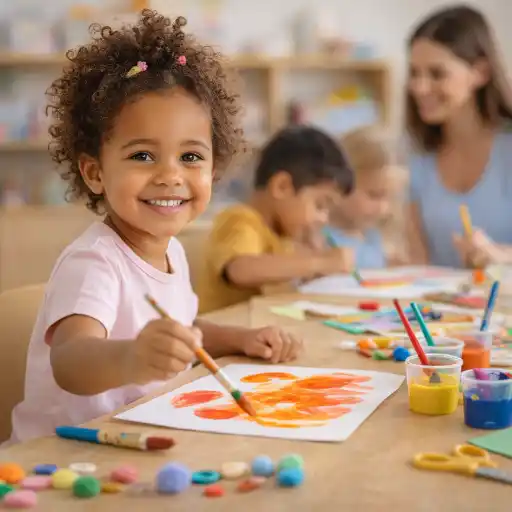 s Open Heart, Open Art Buy Now $16.00 can help staff with documentation and social-emotional framing.
4) What low-cost, ready-to-run open-ended invitations can staff implement this week?
Start small. Here are five practical invitations you can set up with common materials. Each is intentionally open and supports different skills.
- 🎨 Open Art Tray — paper, tempera, sponges, recycled loose parts (buttons, yarn). Invite: “Make a picture that sounds like a story.” See examples at Open-Ended Art Activities.
- 🔧 Loose-Parts Discovery — bottle caps, corks, fabric scraps in a low bin. Ask: “What can these become?” (See loose parts play ideas in Open-Ended Preschool Activities.)
- 🧪 STEAM Tray — droppers, cups, colored water. Prompt: “What happens when colors meet?” (Links to Preschool STEM Activities.) For additional activities and strategies for integrating science, technology, engineering, art, and math into everyday invitations, see STEAM Learning in the Early Childhood Education Classroom.
- 🌿 Nature Collage — collected leaves, petals, seeds on cardboard. Invite sorting, describing, and pattern-making.
- 🖌️ Clay + Loose Parts — clay with buttons, sticks, and shells to press in and rework. Emphasizes process and fine motor strength.
How to introduce: give a short, one-sentence invitation, then step back. Use descriptive language and ask an open question when you join (e.g., “I notice you used a lot of blue — tell me about that”). This scaffolds #process thinking without taking over.
5) How do you involve families, avoid common mistakes, and evaluate impact?
Family communication and staff expectations are central to sustaining open-ended practice. Use simple documentation and clear messaging to prevent misunderstandings.
- Family involvement:
- 📸 Send one photo/week with a one-line caption about learning (child quote or teacher observation). Link parents to a short article like Why Open-Ended Art Matters so they see the rationale.
- Invite safe donations and explain what items are used for.
- Common mistakes & how to avoid them:
- ❌ Overfilling shelves → ✅ Rotate down to 1–2 invitations at a time.
- ⚠️ Over-directing kids (doing the work for them) → ✅ Ask a single open question and model a strategy rather than finishing their piece.
- ❗ Not communicating goals with families → ✅ Share photos + short notes about skills practiced.
- Measuring impact:
- Take photos of the process + write one child quote.
- Track 1–2 child goals for 2–4 weeks (new words, turn-taking, trying a tool).
- Use brief checklists or a shared documentation log for staff reflection.
FAQ (quick):
- Q: How often should open-ended art happen? A: Aim for 1–2 substantial open-ended sessions weekly plus daily short invitations when possible.
- Q: Will parents expect tidy crafts? A: Some will — share documentation that highlights learning to shift perceptions.
- Q: How do we manage safety? A: Age-appropriate materials, regular inspections, labeled bins, and following product safety guidance; state requirements vary - check your state licensing agency.
Summary:
- Open-ended #art gives children choice, builds #creativity, and strengthens language and social-emotional learning.
- Set up clear systems: low shelves, one messy zone, rotations, and simple documentation habits.
- Try one small change this week: swap a teacher-directed craft for a process invitation and photograph the process.
- Share learning with families and support staff with short trainings like Open Heart, Open Art Buy Now $16.00 or Art from the Heart.
You already provide the conditions children need to become makers, storytellers, and flexible problem solvers. Small, predictable systems plus a few open invitations each week will let your program amplify play-based learning and nurture confident young creators. Keep a focus on process, document learning, and celebrate each child’s unique path.
- CDA Home Visitor Subject Area 3 Part 3 Birth to 5
- Open Heart, Open Art
- Power of Art: Bldg Self-Esteem & Positive Behavior for ALL Abilities
- Birth to Five CDA Credential with Portfolio Review
- Open Ears: Listening in Child Care
- 45 Hour School Age Methods and Materials
- Art from the Heart for Preschoolers: Open Ended Art Projects that Build Self-Esteem
- 45-Hour Infant and Toddler Curriculum
- Texas Director Credential
- Montessori Cultural Activities: Exploring the World Through Play and Learning
- "Junk" Art
- Supporting Children's Self-Esteem
- CDA Certification en Español: Recursos y Consejos para Educadores Bilingües
- Why Open-Ended Art Matters in Early Childhood
- Open-Ended Preschool Activities for Creativity, Language, and Social Skills
- How can child care programs support creativity through open-ended art?
- Why Should Children’s Artwork Not All Look the Same?
- How Can Early Childhood Programs Support Creativity Through Process Art?
- Can recycled materials build real creativity in early childhood classrooms?
- How Can I Create a Classroom Where Creativity Is Valued?
- Who Qualifies for a Crayola Donation Request? A Guide for Child Care Programs
- Open-Ended Art Activities for Preschoolers: 15 “What Can You Make?” Invitations
- How Can Flag Design Help Children Explore Symbols, Patterns, and Individual Expression?
- How Can You Plan Patriotic Crafts Without Limiting Children’s Creativity?
- How Do Cut-and-Paste Activities Build Fine-Motor Control and Planning?
- How Can a Simple Watermelon Craft Build Fine-Motor and Language Skills?
- How Can Drawing and Dictation Help Children Respond to Juneteenth?
- What Should You Do When a Child Wants to Remove Their Contribution from Group Artwork?
- How Can Educators Respond When a Child Says Their Drawing Is “Nothing”?
- How Can Child Care Providers Recognize Children’s Effort Without Competitive Classroom Awards?
