When a preschool art table produces twelve identical projects, children may be practicing compliance more than creativity. Open-ended invitations restore choice, experimentation, and self-expression; for deeper guidance on supporting social-emotional growth through process art, explore Open Heart, Open Art  Buy Now $16.00, which can strengthen classroom practice and may support CDA Subject Area 3 learning.
Why Do Open-Ended Art Invitations Matter in Preschool?
Open-ended art, often called process art, centers the child’s decisions rather than a predetermined finished product. Children choose how to combine materials, revise an idea, respond to unexpected results, and decide when their work feels complete. This makes the art experience a meaningful context for #creativity, language, fine-motor development, problem-solving, and social-emotional learning.
Research-informed early childhood guidance consistently emphasizes accessible materials, time, and child-directed exploration. The ChildCareEd guidance on open-ended art similarly highlights decision-making, flexible thinking, confidence, and self-expression. The goal is not to eliminate all teacher guidance; it is to shift the adult role from director to thoughtful facilitator.
For providers, this approach can also make learning more visible. A photograph of a child testing a dropper, negotiating space with a peer, or explaining a design often communicates more about development than a polished craft displayed without context.
How Can You Prepare a Safe and Inviting Art Environment?
A successful invitation begins before children arrive. Select a manageable number of materials, place them where children can see and reach them, and establish one clear boundary such as “Paint stays on the paper.” Too many choices can overwhelm preschoolers, while a carefully edited collection encourages sustained attention.
- Use low shelves, labeled baskets, and picture cues to support independence.
- Offer washable, age-appropriate materials and inspect loose parts regularly.
- Provide trays, smocks, drying space, and a predictable cleanup routine.
- Adapt tools with larger handles, textured grips, or vertical surfaces when helpful.
- Rotate one or two invitations at a time rather than filling the table with every supply.
Safety decisions should reflect children’s ages, abilities, supervision needs, and the materials’ intended use. State requirements vary - check your state licensing agency. The ChildCareEd resource on simple open-ended activities offers additional guidance on access, organization, and safety.
Keep the opening brief: name the materials, state the boundary, offer a wondering question, and step back. Children do not need a model to copy.
What Can Children Make with Paint, Color, and Movement?
Paint invitations are powerful because children immediately see the relationship between movement, pressure, color, and marks. Offer a limited palette at first so children can notice changes rather than simply selecting from an overwhelming rainbow.
- Two-color discovery: Provide two colors, paper, and one brush. Ask, “What happens when the colors meet?”
- Unusual-tool painting: Offer sponges, combs, corks, feathers, or cardboard pieces. Invite, “What kinds of marks can this tool make?”
- Whole-arm mural: Tape large paper to a wall or floor and provide broad brushes. Children can explore sweeping, dabbing, and layering movements.
- Dropper color mixing: Place tinted water in small cups with droppers and a clear tray. Ask, “Where will the color travel?”
- Ice painting: On a warm day, offer washable paint or tinted water on large ice blocks and observe melting, spreading, and blending.
These invitations support cause-and-effect reasoning, visual discrimination, hand strength, and vocabulary such as “drip,” “blend,” “smooth,” “rough,” and “transparent.” Allow children to repeat an action; repetition is often where investigation deepens.
Use descriptive language: “You pressed the sponge lightly,” or “The yellow moved into the blue.” Avoid judging the product as pretty or correct.
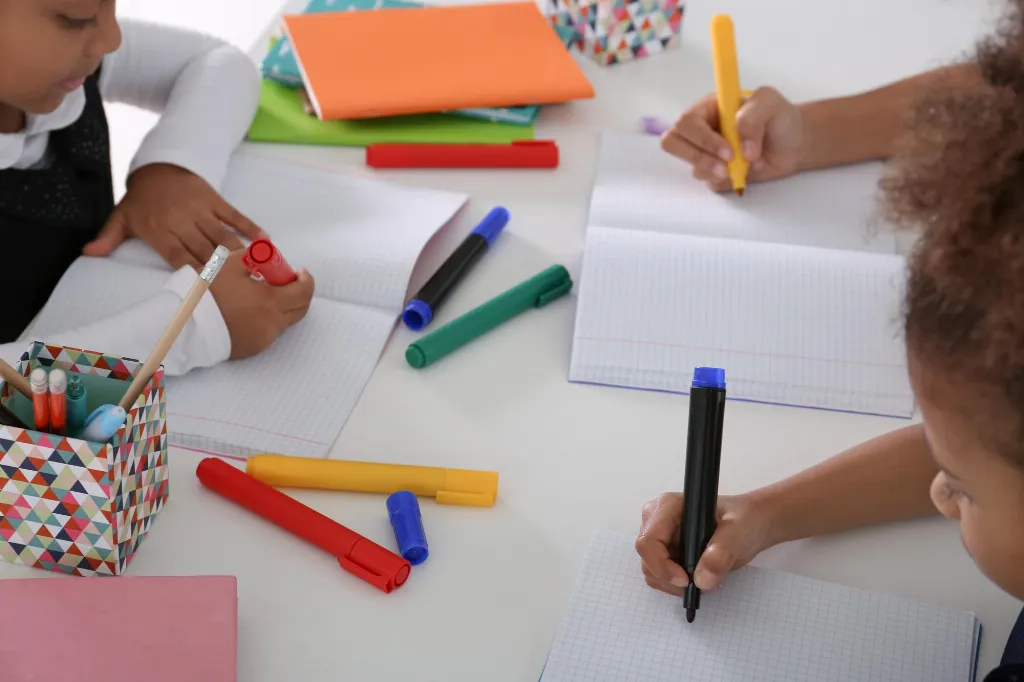
What Can Children Make with Collage, Texture, and Nature?
Collage and nature invitations invite children to sort, arrange, attach, compare, and revise. They also welcome different artistic styles: some children carefully compose a design, while others enjoy collecting, layering, or experimenting with texture.
- Torn-paper collage: Offer paper strips, a glue stick, and cardboard. Invite children to tear, overlap, and arrange pieces in any way.
- Sticky-wall collage: Secure contact paper, sticky side out, at child height. Add tissue paper, yarn, feathers, and lightweight fabric.
- Texture rubbings: Place leaves, textured tiles, or safe objects under paper and provide crayons on their sides.
- Nature arrangement: Provide collected leaves, seed pods, sticks, and stones for temporary patterns or designs.
- Window light collage: Offer translucent paper, cellophane, and clear shapes on a safe transparent surface.
Temporary work is still meaningful. Photograph a nature mandala or loose-parts design, record the child’s words, and then return materials for future exploration. This honors children’s ideas without requiring every creation to become permanent.
Invite language with prompts such as “Tell me about your arrangement,” “What did you notice about this texture?” and “What might you change?” The ChildCareEd article on confidence-building open-ended art provides related examples and teacher-language strategies.
What Can Children Make with Clay, Loose Parts, and Recycled Materials?
Three-dimensional materials make children’s thinking visible through building, balancing, joining, and transforming. Clay and play dough are especially forgiving: children can press, pull apart, rebuild, and try again without treating revision as failure.
- Clay and loose-parts sculptures: Provide clay with sticks, shells, large buttons, stones, or craft pieces. Ask, “How could you attach these?”
- Recycled-material constructions: Offer clean cardboard tubes, boxes, egg cartons, paper cups, and fabric scraps with tape and child-safe scissors.
- Cardboard texture boards: Add corrugated cardboard, foil, yarn, and fabric to a sturdy base for rubbing, pressing, and arranging.
- Play-dough tool studio: Provide rollers, craft sticks, stamps, and natural objects without suggesting a specific subject.
- Collaborative sculpture: Invite two or more children to create together. Provide ample space and support negotiation about materials.
Recycled materials can also connect art to sustainability and engineering. Children may discover that a tube rolls, a box supports weight, or tape changes the strength of a connection. The ChildCareEd resource on loose-parts play describes how open materials promote independence, collaboration, problem-solving, and fine-motor development. For another way to transform paper into three-dimensional creations, explore these paper mache activities for children.
Use caution with small parts, sharp edges, adhesives, and materials that may contain residue. Supervise closely and adjust choices to the group.
How Can Teachers Support Exploration Without Taking Over?
The most influential tool may be the teacher’s language. Observe first, then join only when your presence can extend thinking, communication, or access. A child who says, “I don’t know what to make,” may need reassurance rather than a project idea.
- Say, “You can begin by trying one material,” instead of supplying a finished plan.
- Describe actions: “You placed the pieces in a long line.”
- Ask open questions: “What are you wondering?” or “What could you try next?”
- Offer a challenge without prescribing a result: “Can you find a way to make it stand?”
- Respect refusal, pauses, and observation; participation need not look identical for every child.
Avoid drawing on a child’s work, correcting placement, or completing a difficult step without invitation. If a child requests help, provide the smallest useful scaffold: stabilize the paper, demonstrate a tool, or offer an alternate material. This preserves agency while making the experience accessible.
Documentation can be simple: one process photograph, one child quote, and one observation about a developing skill. Share the learning with families, especially when the artwork looks abstract or unfinished. A note such as “Maya tested three tools and explained how each made a different mark” reframes mess as evidence of thinking.
How Can You Use the 12 Invitations Across the Week?
A consistent rhythm helps open-ended art become part of the curriculum rather than an occasional special event. Consider offering two invitations at a time: one familiar material for independent entry and one novel material for investigation.
- Monday: Two-color discovery painting.
- Tuesday: Torn-paper or sticky-wall collage.
- Wednesday: Clay with loose parts.
- Thursday: Nature arrangement or texture rubbing.
- Friday: Collaborative recycled-material sculpture.
Repeat an invitation with one variable changed. For example, keep the same paint colors but change the tool; or use the same collage materials on paper, cardboard, and contact paper. Repetition allows children to build theories and notice differences.
Common mistakes include presenting a sample, offering too many materials, praising only the finished product, and rushing cleanup. Prevent these pitfalls by using short verbal invitations, limited choices, descriptive feedback, and a cleanup routine taught as part of the activity.
For additional professional learning, consider Art from the Heart for Preschoolers Buy Now $35.00, which focuses on open-ended projects, self-esteem, decision-making, and practical classroom application. The online Power of Art Buy Now $24.00 course is another relevant option for connecting art experiences with self-esteem, positive behavior, and inclusion. A broader curriculum foundation is available through 45-Hour Preschool Curriculum Buy Now $399.00$275.00. Confirm course details and whether training meets your local requirements before enrolling.
How Can Programs Document and Evaluate the Impact?
Evaluation does not require grading children’s artwork. Instead, gather evidence of participation, thinking, communication, and growth over time.
- Photograph the process, not only the final piece.
- Record a short child quote or explanation.
- Note one skill, such as tool control, persistence, vocabulary, collaboration, or planning.
- Review documentation with colleagues to identify useful next invitations.
- Share concise learning stories with families.
Look for changes such as children selecting materials more independently, sustaining attention longer, using increasingly specific language, negotiating shared space, or revising a plan after an unexpected result. These observations can inform individualized support without turning creative work into a performance task.
Invite families to contribute safe recycled materials and cultural perspectives, while avoiding assumptions that every family has the same access to supplies or art traditions. Inclusive invitations can include multiple textures, adaptive tools, visual supports, and opportunities to use home languages when children describe their work.
Conclusion: What Is the Main Goal of “What Can You Make?” Invitations?
The central question is not whether children can reproduce an adult’s example. It is whether they can enter an environment where their ideas matter, materials invite investigation, and mistakes become information. Open-ended art supports this goal through painting, collage, nature exploration, clay, loose parts, and recycled construction.
Start with one invitation, a few carefully selected materials, and one descriptive teacher comment. Observe what children do, document the process, and adjust the next experience to their interests. When providers protect children’s agency while offering thoughtful support, the art table becomes a place for #preschoolers to think, communicate, persist, and discover what they can make.
References: ChildCareEd: Supporting Creativity Through Open-Ended Art; Process Art or Product Art; ChildCareEd: Open-Ended Activities for Preschoolers: Simple Ideas for the Classroom; Open-Ended Art Activities That Build Confidence in Preschoolers; Eastern Connecticut State University: Creative Arts with Young Children.
- CDA Preschool Credential
- CDA Home Visitor Subject Area 3 Part 3 Birth to 5
- Open Heart, Open Art
- Open Ears: Listening in Child Care
- CDA Bridge Bundle: Family Child Care
- Art from the Heart for Preschoolers: Open Ended Art Projects that Build Self-Esteem
- CDA Bridge Bundle: Infant/Toddler
- Emergent Learning & Development
- CDA Preschool Renewal
- Creating Environments that Nurture Growth and Community
- 💛🧩 ¿Cómo puedo hacer que mi enseñanza sea inclusiva para los niños con autismo?
- Apoyo en Español para Capacitaciones Grupales Presenciales y por Zoom en Cursos Selectos
- Actividades de Motricidad Gruesa que Desarrollan el Equilibrio, la Coordinación y la Fuerza
- Proporciones de Cuidado Infantil y Tamaños de Grupo por Edad en Maryland (Guía Rápida para Centros y Hogares)
- Capacitación Previa al Servicio para Proveedores de Cuidado Infantil en Dakota del Norte
- Open-Ended Activities That Help Preschoolers Learn
- Why Open-Ended Art Matters in Early Childhood
- Celebrando la amistad en el cuidado infantil durante el Día de los Mejores Amigos
- Open-Ended Preschool Activities for Creativity, Language, and Social Skills
- Cómo simplificar la capacitación para sus empleados de daycare
- Fun Crayon Activities for Toddlers and Preschoolers
- Can traditional child care programs add forest preschool activities without starting a new program?
- How Can Early Childhood Programs Support Creativity Through Process Art?
- How Can I Create a Classroom Where Creativity Is Valued?
- 15 Around-the-World Activities Toddlers Can Explore Through Play
- Open-Ended Art Activities for Preschoolers: 15 “What Can You Make?” Invitations
- How Can Flag Design Help Children Explore Symbols, Patterns, and Individual Expression?
- How Do Cut-and-Paste Activities Build Fine-Motor Control and Planning?
- How Can Educators Respond When a Child Says Their Drawing Is “Nothing”?
- Why Did My Stamp Print Backward? Discover Reversal Through Printmaking
