Creating art can give children opportunities to exercise creativity and experience pride in their decisions and effort. Educators can support self-expression by offering varied materials and allowing children to determine how to use them. Because children differ in how readily they communicate verbally, visual art can provide an additional mode for expressing ideas and feelings. To explore ways to encourage creativity and self-expression through art, educators can take ChildCareEd’s Open Heart, Open Art  Buy Now $16.00 course. Additionally, Opportunity for Growth: Emotional Development Buy Now $16.00 offers insights into supporting children's emotional growth and building their confidence.
How Does Self-Esteem Develop During the Preschool Years?
Self-esteem refers to how children perceive themselves and their abilities. During early childhood, this developing self-concept is shaped by everyday experiences, including whether children feel accepted, make meaningful choices, and receive responsive support as they attempt new tasks. It is not a fixed trait that educators can produce through a single activity. Art can offer children a meaningful opportunity to make decisions, communicate interests, and recognize their growing capabilities. Consistent, responsive relationships and opportunities to contribute also influence children’s developing self-image. Educators can reinforce these experiences by acknowledging children’s perspectives and incorporating their ideas into daily routines.
Focus on the child’s process rather than judging the finished product. Specific observations—such as, “You chose three colors and kept working when the paper tore”—tell a child that their decisions and effort were noticed. Avoid comparing children’s work or implying that a picture must look a certain way to be successful. A child who prefers to watch, talk about an idea, or use a different material can still participate in a way that feels comfortable.
What Classroom Practices Help Children Build Confidence?
Predictable, respectful interactions help children feel safe enough to explore. Offer manageable choices, allow time for children to attempt tasks independently, and provide help when it is needed rather than taking over. Acknowledge effort and problem-solving with specific language. For example, “You tried another way to attach the paper” recognizes persistence without evaluating the child’s worth. This balance of autonomy and responsive assistance gives children opportunities to experience themselves as capable while remaining supported.
Make materials accessible and adapt tools or the process so children with different abilities can take part. Some children may prefer large paper, thicker drawing tools, tactile materials, or an adult scribe. Invite children to share their work, but do not require them to explain personal feelings or display a piece publicly. These choices protect autonomy and make participation more inclusive. For related ideas, explore how child care providers can use art and creative expression, ways to foster creativity in preschoolers, and how to encourage creative play without overdirecting.
How Can Educators Facilitate the Personal Shield Activity?
The Personal Shield activity gives children a visual way to represent their interests, strengths, goals, or sources of happiness. Before beginning, explain that children may draw a picture, use a symbol, choose colors, dictate an idea, or leave a section blank. The goal is expression, not a polished product or a test of what a child can disclose.
Prepare the materials in advance and demonstrate how to use the sections without supplying children’s answers. Use open prompts such as, “What would you like this part to show?” and give children time to think. If a child is unsure, offer a neutral choice—“Would you like to draw, choose a color, or take a moment?”—rather than filling in the meaning for them.
During the activity, observe how children make choices and respond to challenges. Offer practical help with materials while preserving each child’s authorship. If a child shares a personal feeling, listen calmly and acknowledge what they chose to communicate. Do not press for more detail or interpret a symbol for the child. If a disclosure raises a safety concern, follow your program’s established response and reporting procedures rather than promising confidentiality.
Afterward, invite—but do not require—children to talk about one part of their shield. They can share with a partner, show the group, or keep the work private. Respond with respectful curiosity: “Would you like to tell me about this color?” If the child declines, accept that choice. You can revisit the activity later without treating the shield as a measure of a child’s self-esteem.
How Can Art Activities Stay Inclusive and Child-Led?
Offer varied, open-ended materials such as markers, crayons, finger paint, watercolors, oil pastels, clay, recycled materials, colored pencils, pencils, scissors, glue, feathers, sequins, and colored or textured paper. Consider children’s sensory preferences, motor skills, cultural experiences, and access needs. Use child-safe materials and supervise tools according to their age and your program’s practices.
Keep the invitation flexible: children may draw, build, collage, dictate, or combine approaches. Avoid sample products that children may feel expected to copy. When children ask, “Is this right?” describe what you notice and return the decision to them: “You made a shape with a lot of lines. What would you like to do next?” For more ideas, see open-ended art invitations for preschoolers, how to respond when a child dismisses their drawing, and strategies for social-emotional support.
Art is one part of a broader supportive environ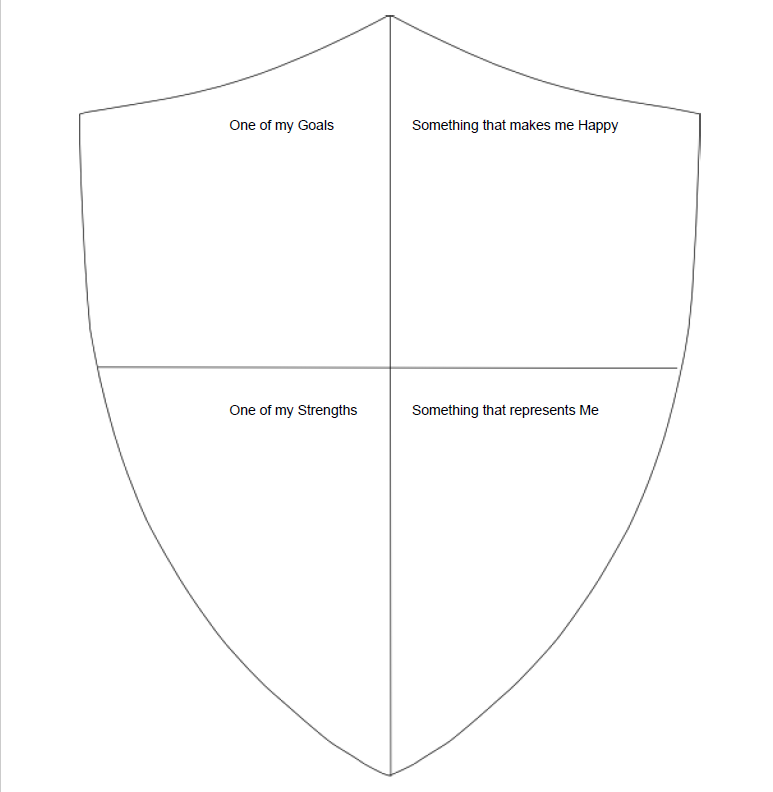 ment. If a child consistently seems distressed or struggles to participate, observe patterns, offer a calm and respectful connection, and collaborate with the family and appropriate program supports. Do not use an art project to diagnose a child or assume that a particular image has a single meaning. For related guidance on nurturing peer connections, see supporting social relationships among young children.
Summary: How Can Art Support Children’s Self-Esteem?
Offer children varied materials, meaningful choices, and time to explore. Notice effort and problem-solving, make participation accessible, and respect a child’s decision about whether to share personal work. The Personal Shield activity can invite children to represent what matters to them, but its value lies in the child’s own choices—not in producing a particular picture or disclosure.
Markers, crayons, finger paint, watercolors, oil pastels, clay, recycled materials, colored pencils, pencils, scissors, glue, feathers, sequins, colored paper, textured paper
#SelfEsteem #Creativity #Art #Confidence #Expression
My Personal Shield Activity.
Objective: To express or represent a feeling or value in a drawing.
Invite children to represent these prompts in the shield using a drawing, symbol, color, dictated idea, or another approach that works for them. Children may leave a section blank or choose whether to share their work:
- One of my goals.
- Something that makes me happy.
- One of my strengths.
- Something that represents me.
Interested in learning more ways to support children's self-esteem, art, and creativity?
ChildCareEd offers several training courses that provide strategies for early childhood educators in their work with young children.
- CDA Home Visitor Subject Area 3 Part 3 Birth to 5
- CDA Home Visitor Subject Area 2 Part 3 Birth to 5
- Open Heart, Open Art
- Money Matters in Medicine
- Children at the Wheel: Emergent Curriculum
- CDA Bridge Bundle: Family Child Care without Portfolio Review
- Art from the Heart for Preschoolers: Open Ended Art Projects that Build Self-Esteem
- CDA Bridge Bundle: Infant/Toddler without Portfolio Review
- CDA Bridge Bundle: Preschool without Portfolio Review
- Creating Environments that Nurture Growth and Community
- CDA for Oregon Providers
- New free online childcare training courses with certificate
- ChildCareEd is on Illinois Gateways to Opportunity Professional Development System
- CDA Certification en Español: Recursos y Consejos para Educadores Bilingües
- How to Get Your Preschool Teacher Certification: Steps, Tips, and Benefit
- 🤝¿Cómo fomentar respeto e inclusión en el aula infantil? 🌻
- 🪁¿Cómo puede el juego apoyar de manera poderosa a los niños con autismo?🧩
- 🩺 Cumplimiento de Salud e Inmunización en Cuidado Infantil de Nevada ✔️
- 🚌 ¿Qué Significan las Regulaciones de Transporte de Illinois para las Excursiones Infantiles? 🚦
- ¿Cómo incluir a niños con necesidades especiales en cuidado infantil? Guía práctica y sencilla
- Cómo Ayudar a Niños con Retraso del Habla en el Cuidado Infantil
- Apoyo en Preescolar para Retrasos del Habla: Estrategias Simples que Ayudan
- Retraso del Habla en la Guardería: Cómo Pueden Ayudar los Proveedores
- How can Nevada early childhood educators communicate to support children with special needs?
- How can dress-up and pretend play support young children’s identity and self-expression?
- How Do You Explain Ego to a Child Without Making It Sound Like a Bad Thing?
- Why Do Home-Language Resources Matter for Preschool Families?
- ¿Todos los niños deben participar en el tiempo de círculo?
