Introduction
This article helps child care leaders answer a big question: should your program use #process art or #product art? You will learn what each approach looks like, why it matters for young #children, and how to use both in ways that build #creativity in your classroom. State requirements vary - check your state licensing agency.
Why it matters: Art choices shape how children learn to make decisions, manage feelings, and try new things. When children practice open-ended making, they learn to solve problems. When teachers share results and skills, children learn techniques. This article pulls practical ideas from research and from training resources like Open-Ended Art Activities That Build Confidence in Preschoolers and training courses such as Art from the Heart for Preschoolers Buy Now $35.00.
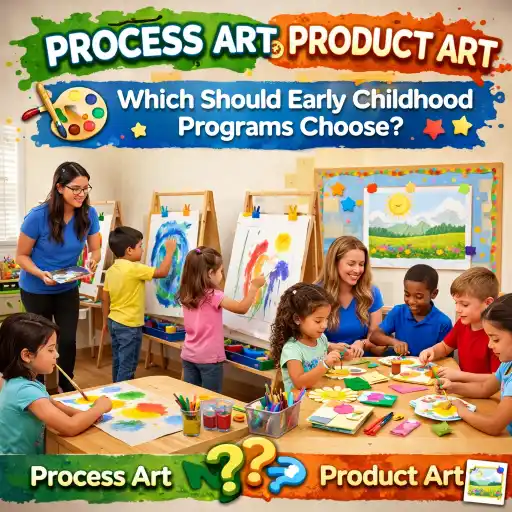
1) What is the difference between process art and product art?
Answer:
- Process art (open-ended): The focus is on exploration, choice, and the making experience. There is no single right way to finish. Teachers offer materials and step back. See the idea explained on ChildCareEd and on blogs like Messy Little Monster.
- Product art (teacher-directed craft): The teacher gives exact steps and a clear model. Everyone often makes similar finished pieces. This can teach following directions and specific skills, as explained by FunShine Express.
- Quick chart:
- Who leads? Process = child, Product = teacher
- Main goal? Process = exploration, Product = a clear outcome
- Best for? Process = creativity & self-esteem, Product = step skills & parent gifts
Both approaches can belong in one program. Training like How to Encourage Creativity in Early Childhood Education shows ways to combine them so children get both freedom and skill practice.
2) How does process art support child development?
Answer:
- Process art builds many skills at once. For example:
- Fine motor: using brushes, scissors, or clay (see Benefits of Art Exploration).
- Language & social skills: describing work and telling stories about it, which boosts vocabulary and talking skills (ChildCareEd).
- Emotion & self-regulation: art is a way to manage feelings and reduce stress (Power of Art Buy Now $35.00).
- Research supports rich observation and open materials. Studies inspired by Reggio Emilia show that deep observation and making ideas visible advance thinking; see reflections from Reggio Emilia and research on observation coaching improving drawing skills (Vlach & Carver).
- Practical benefits:
- Children learn cause and effect (mixing paint, how glue works).
- Confidence grows when there is no single “right” answer. ChildCareEd describes this in Open-Ended Art.
Why it matters: Process-focused time helps children become thinkers and risk-takers. Displaying process work (not just the product) shows families what children learned—this idea is useful when talking with parents who expect cookie-cutter results.
3) How can providers set up and manage process art in busy programs?
Answer:
- Use clear systems and zones. Teachers report success with choice-based centers and simple routines; see tips from a classroom artist on managing centers at Princess Artypants and practical Montessori painting procedures at NAMC.
- Try this 6-step setup:
- 📌 Low shelves with labeled supplies so children can help themselves.
- 🎨 One “messy” center per session and other low-mess options (paper, crayons, loose parts).
- 🕒 Timers and short rotations (5–15 minutes depending on age).
- 🧽 Teach clean-up as part of the art routine.
- 📂 A place to hang or store process work for drying and documentation.
- 🔁 Rotate materials to keep interest high.
- Documentation: Photograph children while they work and write short notes about the process—this makes learning visible to families and inspectors. ChildCareEd courses show ways to document benefits like self-esteem building (Art from the Heart Buy Now $35.00).
Tip: Keep expectations clear with staff and families. You can offer one product-style project for special events while keeping daily art mostly process-based.
4) How do we balance process and product art and avoid common mistakes?
Answer:
- Common mistakes to avoid:
- 🛑 Forcing all projects to look the same (the “Stepford penguins” problem) — this stops creativity (see a strong critique at Rainbows Within Reach).
- ⚠️ Over-helping: Adults finish or “fix” children’s work instead of coaching observation and skill (research warns against this; see Vlach & Carver).
- ❗Not communicating goals with families—parents may expect fridge-ready crafts.
- How to balance:
- Offer both: 1–2 product projects a month (holidays, gifts) + regular process art sessions.
- Teacher-facilitated process: give an idea or invitation, then let children choose materials and direction (FunShine).
- Share learning: Post photos and short notes so families see the process and the learning behind the work (ChildCareEd).
- Communication tips for families:
- Send home a guide about process art (what it teaches and why it may not look like a picture of a dog).
- Host a short demo night to show process stations and outcomes.
Conclusion and FAQs
Conclusion: Both process and product art have value. Process art is essential for developing decision-making, persistence, and creativity. Product art helps teach steps and gives children practice with specific skills. A thoughtful program uses both with clear systems, documentation, and family communication. Training and resources from ChildCareEd can help your staff prepare meaningful art experiences.
Common FAQs:
- Q: How often should process art happen? A: Aim for at least 1–2 open-ended art sessions per week and add short process invitations daily if possible.
- Q: Will parents complain if work isn’t “pretty”? A: Some will. Share photos and quick notes about learning to show value beyond the final image.
- Q: How do we document learning? A: Photos, children’s quotes, and brief teacher notes work well—ChildCareEd courses show easy documentation techniques.
- Q: Can product and process be combined? A: Yes. Offer a sample idea but let children choose materials, colors, and steps to keep it open-ended.
Next steps: Try one small change this week—replace one teacher-directed craft with an open-ended invitation. Watch how children make choices, solve problems, and talk about their ideas. For more ideas and training, explore ChildCareEd's open-ended art resources and follow up with staff planning. Remember to check that art routines meet licensing rules—state requirements vary - check your state licensing agency.
Key ideas in one line: Support children’s #process and #product strengths with art, put #art experiences in systems that help #children grow, and keep #creativity at the center.
- 45 Hour Child Growth and Development
- CDA Home Visitor Subject Area 3 Part 3 Birth to 5
- Many Colors, One Canvas: MD ECE Conference
- Bienvenido! Welcoming All Families
- Power of Art: Bldg Self-Esteem & Positive Behavior for ALL Abilities
- Pediatric RSV First Aid & CPR/AED
- Art from the Heart for Preschoolers: Open Ended Art Projects that Build Self-Esteem
- Texas Director Credential
- Montessori Cultural Activities: Exploring the World Through Play and Learning
- Reminder for Mother's Day
- CDA Certification en Español: Recursos y Consejos para Educadores Bilingües
- Open-Ended Art Activities That Build Confidence in Preschoolers
- Process Art or Product Art: Which Should Early Childhood Programs Choose?
- Why Open-Ended Art Matters in Early Childhood
- How Do Art Activities Support Cognitive Growth in North Dakota Preschoolers?
- How can New York child care providers use art and creativity to help young children learn?
- Crayon Colors and What They Mean in Children’s Art
- Art Exploration for Kids: Colors, Textures, and Creativity
- Classroom Grants for Teachers: Crayola and Other Helpful Resources
- How can I turn viral crafts into real learning activities?
- How can child care programs support creativity through open-ended art?
- Why Should Children’s Artwork Not All Look the Same?
- How Can Early Childhood Programs Support Creativity Through Process Art?
- How can I support children who say "I can't draw"?
- How Can I Create a Classroom Where Creativity Is Valued?
- Who Qualifies for a Crayola Donation Request? A Guide for Child Care Programs
- Open-Ended Art Activities for Preschoolers: 15 “What Can You Make?” Invitations
- How Can Open-Ended Summer Art Encourage Planning and Creativity?
- How Can You Plan Patriotic Crafts Without Limiting Children’s Creativity?
