New materials can spark curiosity—or make a classroom feel unpredictable when too much changes at once. The Spicing Up the Classroom: Learning Centers  Buy Now $16.00 course offers practical guidance for planning inviting, purposeful centers, while The Best Promotion is Play Buy Now $24.00 deepens understanding of how play supports children’s learning; explore either as a helpful next step for strengthening your classroom practice.
When children encounter a new basket of blocks, unfamiliar art tools, or a different sensory-table filler, adults may hope for instant enthusiasm. But hesitation, brief exploration, or even refusal can be a reasonable response to novelty. Thoughtful introductions protect children’s sense of security while opening a path to discovery. The goal is not to persuade every child to use every item; it is to create an accessible invitation that children can approach at their own pace.
Why can new materials feel overwhelming?
Young children are still learning to process sensory information, make choices, and connect unfamiliar experiences to what they already know. A material may be visually busy, have an unexpected texture or smell, make a loud sound, or be difficult to manipulate. Even a child who enjoys exploration may need time to watch before joining in. When many new items appear together, children must also work out what is available, what each item might do, and how to begin.
Environmental complexity can affect engagement. The Illinois Early Learning Project notes that too many available choices may make it harder for children to select an activity and can complicate play and cleanup. This does not mean classrooms should be sparse or that novelty should be avoided. Rather, a carefully chosen few options can make the possibilities easier to notice and explore.
Look at children’s responses as information, not as a problem to correct. A child who watches from the edge may be gathering information; a child who turns away may be communicating discomfort or a need for more predictability. Consider the child’s temperament, prior experiences, language, interests, energy level, and the surrounding noise or activity. Avoid assuming that all children of the same age—or children with similar support needs—will respond alike.
- Notice whether the child observes, approaches, touches, avoids, or uses the material in an unexpected way.
- Consider whether several new features were introduced at the same time.
- Check whether the space is crowded, noisy, or visually busy.
- Remember that watching can be meaningful participation and may precede hands-on exploration.
How should providers choose and prepare a new material?
Start with a reason for introducing the material. It might connect to a child’s emerging interest, extend a familiar activity, offer a new way to represent an idea, or support a developmental goal. The Virtual Lab School advises selecting materials that are meaningful, developmentally appropriate, varied in their possibilities, and connected to children’s interests. This helps providers choose materials for their learning potential rather than novelty alone.
Before setting it out, consider what a child might see, hear, smell, touch, or need to do to use it. Make sure the material is safe, appropriate for the age group, and manageable for the children in your care. Then decide what familiar element can accompany it: a known tool, favorite play object, trusted routine, or nearby adult. This pairing gives children a recognizable starting point.
Keep the first presentation simple. Place a small, coherent selection on a tray, mat, or accessible shelf rather than filling a whole center with new objects. A few cardboard tubes beside familiar blocks, for example, offer a clear invitation without requiring children to sort through a large assortment. Open-ended materials can support multiple ideas and forms of play, but even flexible materials are easier to investigate when the initial display is uncluttered.
- Choose one main new material or one new feature at a time.
- Offer a limited number of tools or pieces, with enough for the children likely to use them.
- Keep some familiar favorites available to provide continuity.
- Consider cultural relevance, accessibility, sanitation, supervision, and safe storage.
How can a gradual, low-pressure introduction work?
Make the material available without making participation a requirement. Set it near a familiar activity and allow children to approach, watch, or move on. Describe what you are doing in calm, brief language: “I’m rolling the clay. You can watch, try the roller, or choose something else.” This makes the invitation clear while preserving children’s agency.
Demonstrate one or two possibilities, then pause. Children may imitate, invent a different use, or decide they are not ready. Each response can be useful. The NAEYC resource on open-ended materials encourages adults to follow children’s interests, narrate what children are doing, and focus on the process rather than a prescribed finished product. That stance helps adults resist taking over the play.
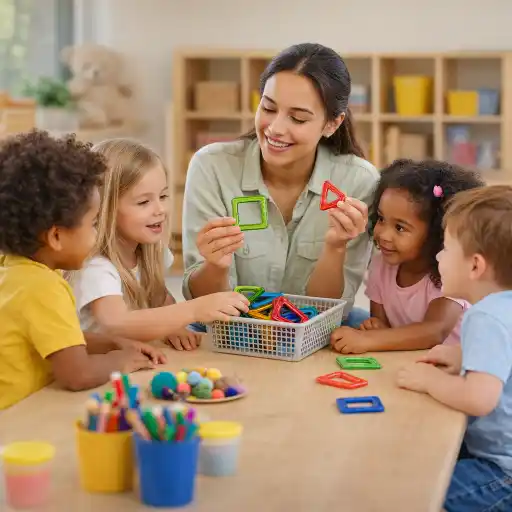
Some children benefit from a buffer between their hands and an unfamiliar texture. Offer a scoop, paintbrush, tongs, glove, or container if appropriate. A child may first look, point, tap, or move an object before touching it directly. These options should expand choice—not become steps the child must complete to prove readiness. For infants and toddlers, keep demonstrations short and closely matched to their attention and motor abilities.
- Give advance notice when a new material will appear, using words, photos, or a visual cue.
- Introduce it alongside something familiar and allow children to return later.
- Offer choices such as watching, using a tool, exploring with a peer, or choosing another activity.
- Use neutral encouragement and avoid pressure, rewards, or forced sensory contact.
- 🎨 Try a gentle invitation: “I wonder what the sponge can do. You can watch me or choose a brush.”
How can the environment and adult support invite exploration?
Set the material up so children can understand where it belongs and how to reach it. A shallow basket, tray, or clearly defined work area can make the invitation easier to read than an overfilled bin. Child-level shelves, picture-and-word labels, and predictable storage support independence. Head Start guidance emphasizes that effective environments are accessible, engaging, safe, and responsive to children’s interests and abilities.
Think about the sensory and social context as well as the objects themselves. A new sound-making item may be easier to explore in a quieter space; a messy material may need a defined area near cleanup supplies. Some children may prefer an adult or familiar peer nearby, while others explore more comfortably with space. Offer varied seating, accessible surfaces, visual supports, and a calm option in accordance with children’s needs.
Use open-ended materials that can be combined with what children already know. Blocks, fabric, boxes, natural objects, and art tools can lead in many directions, supporting #creativity, language, problem-solving, and collaboration. NAEYC’s guidance on open-ended materials notes that familiar items can change meaning as children explore and represent their ideas. Follow the child’s lead: describe an action or ask a genuine, open question once the child is engaged, then give time for a response.
- Keep the new invitation visually distinct but not isolated from familiar play.
- Allow children to explore individually, with peers, or alongside a trusted adult.
- Use home-language words, photographs, stories, or real-life connections to build meaning.
- Protect uninterrupted time so children can revisit the material after observing it first.
How can providers notice progress and avoid common mistakes?
Progress with a new material is not measured only by how long a child handles it. Looking closely, staying nearby, naming a feature, using a tool, watching a peer, or returning another day may all show growing comfort or interest. Record observable details rather than broad labels. For example: “After watching an educator squeeze the sponge, Amir picked up a cup and poured water over it” is more informative than “Amir likes sensory play.”
Use brief notes to guide your next step: what was offered, where and when, how the child responded, what support was available, and what happened next. If many children seem unsettled, simplify the display or reduce competing noise. If children are engaged, leave enough time for them to develop their own ideas before adding more materials.
Common pitfalls are understandable, especially when educators are excited to share a fresh activity. The key is to respond to children’s cues rather than stick to an adult’s original plan.
- Too much novelty at once: Keep familiar materials and change one element at a time.
- Expecting immediate hands-on use: Let children watch, approach, or decline without pressure.
- Over-directing: Model briefly, then allow children to explore in their own ways.
- Interpreting hesitation as defiance: Consider sensory comfort, uncertainty, context, and communication.
- Skipping safety checks: Inspect materials for hazards and plan supervision and sanitation. State requirements vary - check your state licensing agency.
Conclusion: What is the best way to introduce new materials?
The most supportive approach is gradual, intentional, and responsive. Choose materials for a clear purpose, present a small selection alongside familiar experiences, explain or model without demanding imitation, and give children time to observe and return. Make reasonable adaptations so children can participate through different senses, tools, social arrangements, and levels of involvement.
Above all, treat children’s responses as useful feedback. If a new invitation creates confusion or discomfort, adjust the amount, setting, or pace; if curiosity grows, allow it room to deepen. Introducing new materials without overwhelming children is less about finding a perfect recipe than about creating a calm, safe invitation where every child can choose, explore, and feel capable.
Five related ChildCareEd courses
- Birth to Five CDA Credential with Portfolio Review
- Pediatric RSV First Aid & CPR/AED
- CDA Bridge Bundle: Family Child Care without Portfolio Review
- CDA Bridge Bundle: Infant/Toddler without Portfolio Review
- CDA Bridge Bundle: Preschool without Portfolio Review
- Emergent Learning & Development
- 45-Hour Infant and Toddler Curriculum
- CDA: Curriculum Alignment & Materials
- Spicing Up the Classroom: Learning Centers
- CDA Certification en Español: Recursos y Consejos para Educadores Bilingües
- ❄️ ¿Qué actividades al aire libre funcionan bien para los niños de Illinois en cada estación? 🌷🍂
- ¿Cuál es la Diferencia Entre la Crianza Respetuosa y la Crianza Permisiva?
- Consejos de Supervisión Activa para Salones de Preescolar y el Juego al Aire Libre
- Canciones, juegos y preguntas de círculo para niños
- First Week of Pre-K Activities That Help Children Feel Comfortable
- Rosh Hashanah Kindergarten Lesson Plans: 5 Days of Apples, Kindness, and New Beginnings
- Getting to Know You Activities for Preschoolers When a New Child Joins the Class
- How Can Child Care Providers Build Young Children’s Problem-Solving Skills?
- How Can Social Stories Prepare Children for New Experiences?
- How Can Child Care Providers Create Sensory-Friendly Learning Spaces for All Children?
- How Can Providers Rotate Classroom Materials Without Overwhelming Children?
- Keep It Simple: Introducing Classroom Rules Preschoolers Can Remember
- How Can Child Care Programs Celebrate Juneteenth Through Respectful, Child-Centered Art?
- How Can Coloring Pages Spark Meaningful Historical Conversations About Juneteenth?
- How Can Ocean Art Build Marine Vocabulary and Curiosity in Young Children?
- How Can You Offer an Adapted Tool Without Making a Child Feel Singled Out?
- How Can Sorting Activities Build Preschool Vocabulary?
- How Can You Welcome a Family Who Joins Child Care Midyear?
- What Are the Best Ways to Introduce New Materials Without Overwhelming Young Children?
