Watching children play is not just fun — it’s a powerful way to learn about each child. This article helps DC child care providers and directors see what play can tell you, how to watch with purpose, and how to turn what you see into real teaching steps. We use plain steps, links to helpful ChildCareEd guides on observation, and quick examples you can use tomorrow. Remember: state requireme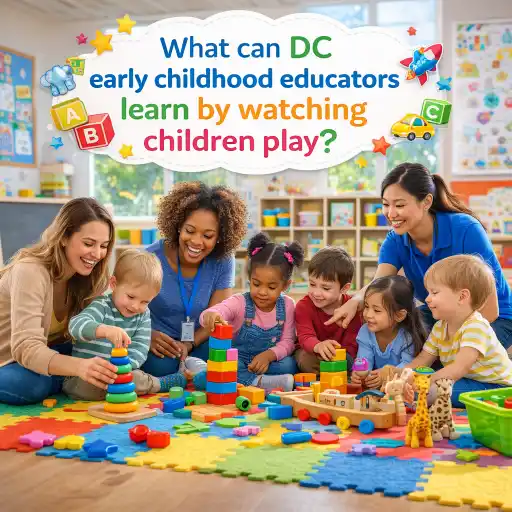 nts vary - check your state licensing agency.
Why this matters
1) Play shows how children think and try out ideas. When you watch, you see strengths and what to teach next. See research summaries like What Does Research Really Say About the Power of Play?.
2) Play gives real examples to share with families so conversations are kind and clear. For ways to share notes, see how to document child progress.
Here are five words to keep in mind as you read: #play #observation #children #development #families
What can watching a play tell us about a child’s strengths and needs?
2) Look for these 6 simple signs in play (use a clipboard for 5–10 minutes):
- 😊 Language — Does the child use new words or ask questions?
- 🧩 Problem solving — Do they try different ideas when one fails?
- 🤝 Social skills — Do they share, lead, or ask others to join?
- 🎭 Pretend play — Is there role-taking, which links to thinking and language (pretend play research)?
- 🏃 Motor skills — How do they move, carry, or build?
- 😌 Emotion skills — Can they calm down or ask for help?
3) Why it matters: these moments become the facts you use to plan learning, to set a small goal, and to talk with families. See How do we observe with purpose? for steps to turn play into goals.
How do we observe play simply and fairly in a DC classroom?
2) Use one or two simple methods:
- ⏱ Time sampling — watch for set intervals (good for attention and engagement).
- 🎯 Event sampling — note every time a target behavior happens (helpful for sharing or asking for help).
- 📝 Anecdotal notes — one short factual story with date, setting, and exact words. Use the Assessing through Observation resources for templates.
3) Keep notes objective. Write what you see and hear: “Sam stacked 7 blocks and said, ‘Watch this!’ ” not “Sam is a leader.” Practice with a colleague to reduce bias. ChildCareEd’s course training options and the CSEFEL tips help staff learn fair observation.
4) Use photos or short videos only with permission and follow privacy rules. For forms and storage tips, see free resources.
How do we turn play observations into goals, family talks, and support?
2) Match teacher supports to routines so learning happens in the day:
- 🙂 Model language during the routine (say the words you want the child to use).
- 🧩 Offer a small choice (two crayons) to prompt naming, counting, or asking.
- 🔁 Re-check in 2–3 weeks and note progress in the child's file.
3) Share with families using strengths-first language. Start with a short example: “At block time on 5/6, Maya stacked 7 blocks and pointed to red blocks when asked.” Invite the family’s ideas and share one next step. ChildCareEd offers scripts and family forms in communication guides and record templates in the Assessing through Observation resources.
4) Know when to screen or refer. If progress is slow despite good support, document carefully, use multiple observations, and consult specialists. The CDC milestone tools are helpful: CDC milestones. Remember: state requirements vary - check your state licensing agency.
How can programs support staff to make play observation doable and avoid common mistakes?
1) Build simple systems. Use a small routine that teachers can maintain every day: pick a focus, use a short form, and set a re-check date. ChildCareEd’s free checklists and courses, like Assessing through Observation and staff supervision trainings (Staff Supervision, Observation & Feedback Buy Now $20.00), help supervisors set up coaching.
2) Common mistakes and quick fixes:
- ❗ Writing opinions: Fix — write facts and direct quotes (example: “said ‘help’ ”).
- ❗ Watching only problem moments: Fix — observe play and routines to capture strengths (Wondering with Children).
- ❗ No follow-up: Fix — pair each observation with a short goal and a re-check date.
- ❗ Overwhelming tools: Fix — start with one form and one routine; add tools as staff succeed.
3) Train and coach. Offer short workshops, practice with video, and brief coaching notes. ChildCareEd courses and DC course listings show many local training options: Childcare Courses in DC.
4) Celebrate small wins to keep staff motivated. Use weekly huddles to share a quick success story and one new observation tip.
Summary
1) Watch the play to see real learning. 2) Use short, fair methods (anecdotes, time or event sampling). 3) Turn what you find into 1–3 small goals and supports you use in routines. 4) Share strengths and one next step with families. For step-by-step templates and training, explore ChildCareEd’s resources like Assessing through Observation, purposeful observation, and research on play. Your careful watching helps each child grow stronger every day.
FAQ
- Q: How often should we observe? A: Quick notes daily; deeper, focused observations monthly.
- Q: Who should observe? A: Staff who know the child best; add a second observer when possible.
- Q: Can playing really teach skills? A: Yes—research shows play supports language, thinking, social skills, and motor skills (Importance of Play).
- Q: Where can we get training? A: ChildCareEd offers many online and local courses; see DC courses.
Extra links worth bookmarking: Observation in DC classrooms, Assessing through Observation resources, and the CDC milestones: CDC milestones.
1) Make 1–3 small goals from what you saw. Good goals are short and measurable. Example: "Will name 3 colors during art time in 3 of 5 tries." See How do we observe with purpose? for sample goal steps.1) Pick a short focus. Try one routine each week (blocks, snack, dramatic play). Short, repeated checks are easier than long evaluations. ChildCareEd suggests starting small. How can teachers observe children's development effectively?.1) Watch for big ideas you can count on. Play shows: what a child can do, how they solve problems, how they talk with friends, and how they manage feelings. Good background reading includes ChildCareEd’s play research summary and the Reggio-inspired ideas about using documentation to see children’s thinking (Learning to Document in Reggio-inspired Education).- 45 Hour Child Growth and Development
- 45 Hour Preschool Methods and Materials
- CDA Bridge Bundle: Preschool
- CDA Bridge Bundle: Family Child Care
- CDA Bridge Bundle: Family Child Care without Portfolio Review
- CDA Bridge Bundle: Infant/Toddler without Portfolio Review
- CDA Bridge Bundle: Preschool without Portfolio Review
- CDA Bridge Bundle: Infant/Toddler
- Texas Director Credential
- CDA Certification en Español: Recursos y Consejos para Educadores Bilingües
- What are DC pre-service trainings and how do I complete them?
- Retraso del Habla en la Guardería: Cómo Pueden Ayudar los Proveedores
- How can DC early childhood educators meet OSSE requirements without feeling overwhelmed?
- What Should DC Early Childhood Teachers Know About Pay Equity Right Now?
- How can DC early childhood educators keep classrooms safe in busy urban child care settings?
- What new child care news in DC should providers know and how can training help?
- How can observation help us better understand children in DC early childhood classrooms?
- How can DC early childhood educators keep children safe from poisonous plants during outdoor play?
- How can DC child care programs keep kids safe outdoors from insects, wildlife, and bites?
- What can DC early childhood educators learn by watching children play?
- Why should DC early childhood educators start their career journey with ChildCareEd?
- How do I become an early childhood teacher in DC?
- How do I become a child care director in DC?
- Will DC’s Early Childhood Educator Pay Equity Fund Survive?
- After DC Early EdX 2026: Why Do Early Educator Mental Health and Advocacy Matter More Than Ever?
- What Can DC Child Care Providers Learn from the City’s Pay Equity Wage Fight?
- How Did DC’s Pay Equity Fund Help Early Educators Be Seen as Professionals?
- How Can DC Providers Support Infants During the Child Care Subsidy Waitlist?
- How can I integrate the World Cup into my daycare program in an inclusive, safe, and developmentally appropriate way?
