Play is how young children learn best. This short article explains, in plain language, what research says about the power of #play and how child care providers can use it every day. You will find clear steps, common mistakes to avoid, and links to trusted resources. Research shows play helps the brain, builds social skills, and supports early math and language. For more classroom ideas, see The Power of Play and Play-Based Learning and Cognitive Growth. The five most important words here are #play #children #development #learning #educators.
What does research say about play and learning?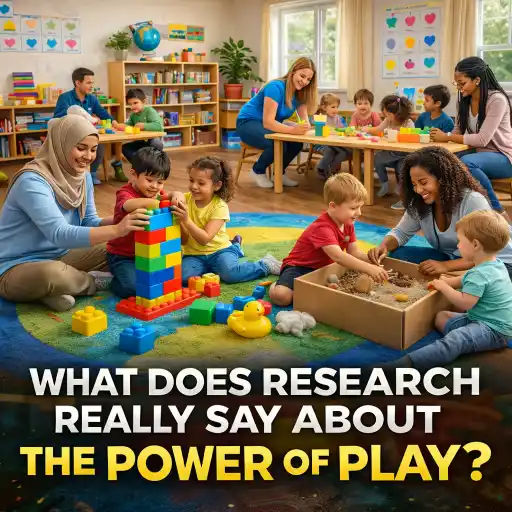
Key research takeaways (numbered):
- Guided play works: adults add gentle prompts to reach learning goals (Cambridge review).
- Play boosts many skills: cognitive, language, social, emotional, and physical — see ChildCareEd summaries like Play with a Purpose.
- Play supports school readiness and long-term benefits when programs are high quality (see RAND).
- Play helps narrow gaps when used with thoughtful planning and trained staff (OECD).
Why this matters: knowing the evidence helps you explain play to parents and to plan meaningful learning moments. For quick teaching ideas, check ChildCareEd courses like The Best Promotion is Play Buy Now $35.00 and Play, Learn, Grow Buy Now $25.00.
How does play build key skills in children?
- 😄 Language and communication:
- During pretend and group play children use new words and tell stories. Research links block and pretend play to richer math and spatial language (block play math study).
- 🧠 Thinking and executive function:
- Play challenges planning, memory, and self-control. Meta-analyses show play-based activities support these skills and later school math (executive function & math).
- 🤝 Social-emotional learning:
- Sharing roles, solving conflicts, and practicing empathy happen in play. ChildCareEd articles describe how dramatic play and guided play build social skills (How Play-Based Learning Shapes Development).
- 🏃 Physical and sensory skills:
- Active and outdoor play grow gross and fine motor skills; see resources like Active Play in Early Education Buy Now $0.00.
Putting it together: when you plan play, think about which skill you want to support and choose materials and questions that help that learning. For examples of how play can teach early math, see play-based interventions in the research (play-based math study).
How can providers use guided and free play in everyday programs?
- 😃 Arrange learning zones:
Set up clear areas (blocks, art, dramatic play, reading). Make materials easy to reach and rotate items for fresh ideas. ChildCareEd gives room-planning tips in Playful Learning.
- 🧐 Offer open-ended materials:
Loose parts, blocks, fabric, and natural items let children invent many uses. Fewer single-use toys = more creativity.
- 🙂 Follow the child and add little guidance:
Watch what children choose. Ask open questions: “What will you build next?” or “How can we make it stronger?” This is guided play — it keeps the child in charge but moves learning forward (guided play evidence).
- 👀 Document and reflect:
Take quick notes or photos, link moments to goals (language, math, social). Use short observations for family conversations and planning.
- 📚 Train and support staff:
Quality matters. Consider ChildCareEd trainings like Play, Learn, Grow Buy Now $25.00 or The Best Promotion is Play Buy Now $35.00 to help teams use play with purpose.
What common mistakes should providers avoid and how can we prevent them?
Even with good intentions, programs sometimes reduce play’s value. Below are common pitfalls and easy fixes.
- ❌ Mistake: Rushing play.
Fix: Give long, uninterrupted play blocks (30–60 minutes). Children need time to deepen ideas and solve social problems.
- ❌ Mistake: Too much adult control.
Fix: Let children lead. Adults should step in with a question or a new prop — not take over the play. See tips in How Play-Based Learning Shapes Development.
- ❌ Mistake: Limited materials.
Fix: Add open-ended items and rotate them. Natural and recycled materials spark creativity.
- ❌ Mistake: Overprotecting risk.
Fix: Use managed risk—teach safe ways to try new things and supervise appropriately. Outdoor active play supports confidence and motor skills (Active Play Buy Now $0.00).
- ❌ Mistake: No staff training.
Fix: Invest in training; better-trained caregivers and lower ratios lead to stronger outcomes (see RAND and OECD guidance OECD).
Conclusion
Research is clear: play is powerful. Guided play and free play both help children grow in language, thinking, social skills, and physical ability. As a provider, you can make play more effective by arranging thoughtful spaces, offering open materials, asking good questions, and supporting your team with training. For classroom ideas and training, visit ChildCareEd courses such as The Best Promotion is Play Buy Now $35.00 and Play, Learn, Grow Buy Now $25.00. Keep learning, share successes with families, and remember the five key words: #play #children #development #learning #educators.
Quick FAQ (4 common questions):
- Q: How long should play time be? A: Aim for at least one long block (30–60 minutes) when possible.
- Q: Can play teach math? A: Yes — guided play and block play can support early math and spatial skills (research).
- Q: What if parents want more worksheets? A: Share how play builds the same skills (language, self-control, math) and show examples from your classroom (ChildCareEd summary).
- Q: Where to get staff training? A: ChildCareEd offers practical courses and resources linked above. State requirements vary - check your state licensing agency.
- 45 Hour Child Growth and Development
- The Best Promotion is Play
- Hidden in Plain Sight: Depression in Young Children
- Bienvenido! Welcoming All Families
- Developing Program Tranquility
- The Best Promotion is Play
- Play with Purpose: Supporting Children with Autism
- Role of Play in Learning
- Texas Director Credential
- CDA Certification en Español: Recursos y Consejos para Educadores Bilingües
- What Skills Really Matter for Kindergarten Readiness (and Why Worksheets Aren't the Answer)?
- Can play-based learning and academic readiness work together for New York educators?
- What can DC early childhood educators learn by watching children play?
- Did Nevada’s 'Powered by Play' Conference Show Why Play-Based Learning Still Matters?
- How did Georgia’s "Play With Purpose" teacher event show the power of intentional play?
- What Kindergarten Readiness Skills Should My Program Build?
- How can preschool programs build early literacy every day?
- What Is Guided Play and How Can Minnesota Providers Use It?
- Why Does Self-Regulation Matter More Than ABCs for Minnesota Kindergarten Readiness?
- How Does Guided Play Build School-Ready Skills in New York Preschoolers?
- What simple early literacy activities really help children learn?
- What Does Toy Story 5 Teach Us About the Power of Imaginative Play?
- Do Toys Come Alive: How Can Pretend Play Spark Creativity in Your Daycare?
- How can child care providers support friendships and peer relationships?
- How Can Child Care Providers Prevent and Respond to Bullying?
- How Much Structured Learning Do Preschoolers Really Need?
- How Should Child Care Providers Respond When Preschoolers Lie?
- How Can Child Care Providers Handle Bossy Behavior in Preschool?
- How Should Child Care Providers Respond When a Treasured Item from Home Breaks?
