Every day, you watch children learn. This short guide gives easy steps to notice, record, and act on what you see — without lon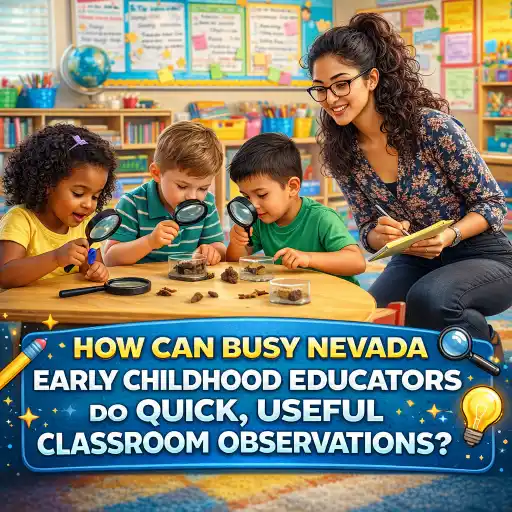 g paperwork. The tips fit Nevada rules and real classrooms. Use small steps, share strengths with families, and protect children. Quick reminders: state requirements vary - check your state licensing agency. You’ll see five key words as hashtags in the text: #observation #Nevada #children #families #safety.
Why does quick observation matter in Nevada classrooms?
1) It helps teachers plan. When you notice tiny moments in play, you learn what to teach next. For simple reasons and steps, see What Should Nevada Child Care Providers Notice During Preschool Play and Learning? from ChildCareEd.
2) It protects children and the program. Short, factual notes can reveal patterns in safety and health and are useful for inspections and family talks. Nevada rules about records, staffing, training, and safety are in the state code.
3) It builds good family partnerships. Families trust short, clear examples. Start with strengths, add one fact, and ask what they see at home — a simple step from ChildCareEd resources like How do I run effective classroom observations (Checklist included)?
Why it matters (quick):
- 😊 Children get the right help sooner.
- 🔍 Notes make teaching stronger and fairer.
- 🤝 Families and staff work together from clear facts.
What quick steps can a busy educator use to watch with purpose?
Use short, repeatable routines so observation becomes part of the day. Here are quick steps you can use in any Nevada preschool or child care room.
- 🔎 Pick 1 focus for the day (example: sharing at snack or naming colors). Keep rotating focuses across the week.
- ⏱ Choose a short method: 1–15 minutes. Try time sampling or event sampling. For simple descriptions of methods, see Assessing through Observation and a plain overview like the time-sampling lesson Time Sampling: Overview & Examples.
- 📝 Use a one-line anecdotal note: who, what, when, where, exact words or actions. Download the free Anecdotal Record form from ChildCareEd: Anecdotal Record Template Buy Now $0.00.
- 📸 Optional: one photo or short video with family permission. Store it securely and include a one-line caption.
- 🔁 Repeat: do short checks often and one deeper check monthly for each child.
Practical tip: have a laminated pocket sheet with your 3-item plan (focus, time, note) so staff can jot fast. Keep a classroom binder or child folder for easy filing. See quick how-to steps at Observations in Childcare.
How can I record and share observations fast and without bias?
Writing fair notes matters. Short facts are stronger than opinions. Follow these steps and avoid common mistakes.
- 🧾 Write facts only. Example: "Juan stacked 6 blocks," not "Juan is good at blocks." Include date, time, and setting.
- 📚 Use consistent forms. Try the Anecdotal Record template above. Keep one page per short note per child.
- 😊 Start family conversations with strengths. Show one example and ask for their view. ChildCareEd shows scripts and examples in How can we document child progress effectively?.
- 👥 Reduce bias: sometimes have a co-worker observe the same moment and compare notes. Use short video clips for team practice (with permission).
- ⚠️ Common mistakes and fixes:
- ❗ Opinion writing — Fix: use direct quotes and actions.
- ❗ Only watching tantrums — Fix: watch play and routines to capture strengths.
- ❗ No follow-up — Fix: make 1 goal and pick a re-check date (2–4 weeks).
For help turning notes into goals and short plans, see ChildCareEd's observation-to-goal guides, such as " How do I run effective classroom observations and training courses, such as Assessing through Observation.
When should I act, refer, or follow Nevada rules?
Knowing when to act keeps children safe and helps families get services early. Use clear steps and keep records. Remember: state requirements vary - check your state licensing agency.
- 📌 Watch for patterns across days, not just one moment. If the behavior or delay repeats, write 2–3 short notes across days.
- 🛠 Try classroom supports first: change materials, model the skill, or give small group time. Document the supports you used and the date.
- 🔎 If progress is limited after planned supports, share notes with the family and suggest screening (like ASQ) or a doctor visit. ChildCareEd explains referral and documentation steps in several guides, like What Should Nevada Child Care Providers Notice....
- 📁 Keep records organized and ready for inspections: child folder, classroom binder, program file. Nevada licensing rules and standards are in NAC Chapter 432A and NRS Chapter 432A.
- 🤝 If you suspect a safety, medical, or abuse concern, follow Nevada reporting rules immediately and file an incident report. Use your program policy and the state code as your guide.
Quick referral checklist:
- 1) Document 2–3 observations over time.
- 2) Try 2 teacher supports and document dates.
- 3) Meet family, share strengths and notes, and agree on next steps.
- 4) If no progress, contact screening or early intervention, and follow state rules.
Summary — Simple steps to start today:
- 🔎 Pick one focus (language, turn-taking, safety) and do a 5–15 minute check this week.
- 📝 Write one short anecdote per child (who, what, when, where) and file it.
- 🛠 Try one small teacher move and re-check in 2 weeks.
- 🤝 Share one strength example with each family this month.
For ready tools and short courses, start at ChildCareEd: ChildCareEd. You are doing important work for Nevada's #children — small observation habits make big differences for learning, safety, and family trust.
- 45 Hour Child Growth and Development
- Easy Steps to Resume and Interview Success
- Pediatric RSV First Aid & CPR/AED
- Look What I Can Do! Developmental Disabilities Overview
- CDA Bridge Bundle: Family Child Care without Portfolio Review
- CDA Bridge Bundle: Infant/Toddler without Portfolio Review
- CDA Bridge Bundle: Preschool without Portfolio Review
- Texas Director Credential
- CDA Certification en Español: Recursos y Consejos para Educadores Bilingües
- Recursos en Español sobre el Sueño Seguro del Bebé
- Cómo Trabajar en el Cuidado Infantil en Carolina del Norte: Requisitos y Pasos
- Online Child Care Courses in Nevada: Training Made Simple
- Why should Nevada early childhood educators use ChildCareEd for flexible training?
- How can Nevada child care providers stay on track with ChildCareEd’s self-paced courses?
- How can Nevada preschool programs help children with special needs feel heard, included, and understood?
- How can Nevada child care providers communicate clearly with busy families?
- How Can Oklahoma Early Educators Turn Daily Observations into Better Classroom Support?
- How can busy Nevada early childhood educators do quick, useful classroom observations?
- How Do I Become a Child Care Director in Nevada?
- How can Nevada fix its early childhood workforce with better training pathways?
- Bright Lights, Big Learning: How Nevada Providers Can Bring Conference Inspiration Back to the Classroom
- Cómo simplificar la capacitación para sus empleados de daycare
- Can Nevada’s Early Childhood Plan Close Funding Gaps and Boost Access and the Workforce?
- How can Nevada’s updated infant-toddler guidelines refresh daily routines in Birth–4 classrooms?
- What Counts as Professional Development for Early Childhood Educators?
- What Should a Useful Early Childhood Lesson Plan Include?
- What Does Active Listening Look Like at a Busy Child Care Pickup?
- How Can Directors Make Time for Classroom Observation in a Busy Week?
