Busy city child care rooms are full of energy. This guide helps Washington, #DC, early childhood directors and providers use simple strategies to keep children safe, calm, and learning. You will find easy steps for supervision, room setup, emergency planning, 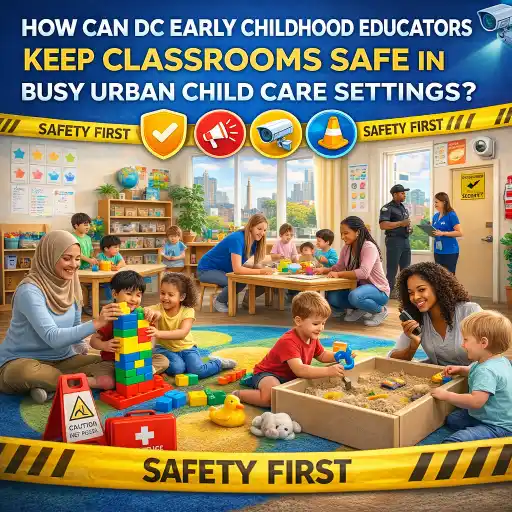 training, and everyday choices that lower risk. These ideas build on trusted resources like ChildCareEd courses and guides and national safety standards. Remember: state requirements vary - check your state licensing agency.
Why does safety matter for my program?
Why it matters:
1) Children learn best when they feel safe. A safe room lets kids explore and grow. 2) Families trust your program to protect their children. Clear safety habits build trust and reduce stress for staff and families. 3) Good safety systems help your program run smoothly and meet licensing needs.
Use quick checklists, simple routines, and training to make big safety gains. For short, practical courses on everyday safety, see ChildCareEd's Everyday Safety and the 1, 2, 3, Eyes on Me strategy. These resources show easy practices you can use today. Also consult national guidance like Caring for Our Children and the CDC child care safety tips for health rules.
How can I keep kids safe during busy transitions and outdoor time?
- 👀 Use a consistent attention cue (for example, the "1, 2, 3, Eyes on Me" tool). Teach children to stop and look when you say the cue. For staff training that emphasizes preventing child injury in classrooms and on playgrounds, see the 1,2,3 Eyes on Me injury-prevention course.
- 🧭 Position staff so every child is visible. Low shelves and clear sight lines help adults see all areas at once. See ideas in Safe, Sound & Smiling.
- 🔢 Use short, simple steps: 1) tidy a bit, 2) line up, 3) walk out. Practice with a song or count-down to make it predictable.
Active supervision is key. That means watching, listening, and moving so you can stop problems before they start. Keep ratios and staffing predictable: check guidance like staff qualifications and ratios Buy Now $0.00 to plan safe coverage. For outdoor play, follow safety checks and ensure equipment is safe each day (CDC resources can help).
Tip: Put one adult in charge of the line and one scanning the play area. Teach children safety steps for doors, sidewalks, and street crossings in your neighborhood.
What should my emergency plan include for a busy DC childcare program?
- 📋 Write clear actions for: 1) Evacuate, 2) Shelter-in-place, 3) Lockdown, 4) Reunification. Use plain words so substitutes understand. See sample plans from How can my classroom be ready for an emergency?.
- 🎒 Pack and practice with a Go-Bag in an easy spot by the exit. Include attendance sheets, contact lists, meds, first aid and supplies. ChildCareEd's Go-Bag checklist is useful.
- 📞 Make a family contact plan with multiple ways to reach parents. Post-primary and backup reunification sites and practice reunification steps with staff.
- 🗓️ Train staff on day one and practice drills often. Record what worked and one change after every drill.
For full guidance and templates, see ChildCareEd's emergency preparedness resources at How can my classroom be ready for an emergency?. Also know national standards like Caring for Our Children and tips from the CDC. And remember: state requirements vary - check your state licensing agency.
Which trainings and policies help DC programs build a strong safety culture?
- 📚 Make basic health and safety and first aid training required for all staff. ChildCareEd offers courses like Medication, First Aid & Basic Health and the 1,2,3 Eyes on Me
 Buy Now
 $32.00$24.00 class. - 👥 Use short coaching cycles: train, watch, give feedback, and celebrate wins. DC providers can use local options and ChildCareEd materials to meet OSSE rules (supporting DC providers).
- 🔟 Follow easy program actions like the 10 Actions to Create a Culture of Safety Buy Now $0.00 to make safety part of daily work.
Common mistakes and how to avoid them:
- ❌ Relying only on phones during emergencies. Fix: keep printed contact lists in the Go-Bag.
- ❌ Teaching rules without practicing. Fix: Do short drills with kids and staff each month.
- ❌ Not updating medication or contact info. Fix: Review forms whenever enrollment changes.
DC programs should review the Top Trainings for DC list to meet local licensing requirements and use ChildCareEd as a trusted training partner. Building a culture of safety takes small, steady steps: train, practice, review, and praise progress.
Conclusion: What can I do tomorrow to make my classroom safer?
Quick action steps you can take tomorrow:
- 📝 Do a 5-minute morning safety walk and use a checklist.
- 🎵 Practice one transition cue (like "1, 2, 3, Eyes on Me") three times that day.
- 🎒 Check your Go-Bag and update contact lists.
- 📅 Schedule a short staff review of emergency roles this week.
- 📚 Enroll a staff member in a short health & safety class if needed.
FAQs (quick):
- Q: How often should we drill? A: Fire drills monthly, other drills quarterly or as required by OSSE.
- Q: Who updates emergency contacts? A: Program director or assigned staff whenever enrollment changes.
- Q: Can volunteers be left alone with children? A: No—volunteers must be supervised and cleared by program policy and licensing.
- Q: Where to find templates? A: Use ChildCareEd's emergency plan and Go-Bag templates on their resources pages.
Keeping children safe in a busy urban classroom is a team job. Use simple routines, smart room design, active supervision, clear emergency plans, and ongoing training. For practical tools and courses, explore ChildCareEd resources such as Emergency Preparedness, 1,2,3 Eyes on Me, and DC training pages. When you make safety easy and predictable, children thrive, families trust, and staff feel confident. Stay #safe, keep strong #supervision, and protect the #children in your care every day.
Training and clear policies keep safety consistent across busy shifts. Follow these steps to build a safety-first team: Every room needs a simple, written plan that staff can find and follow. Use these steps to build a plan that works in urban settings: Transitions—moving from play to snack or indoor to outdoor—are when accidents often happen. Use these 1-2-3 steps to make them safe and calm:
- How Can Childcare Educators Thrive in the Big Apple?
- CDA Certification en Español: Recursos y Consejos para Educadores Bilingües
- 👶 ¿Cuáles son las proporciones y grupos requeridos en Dakota del Norte? 🏫
- Recursos en Español sobre el Sueño Seguro del Bebé
- 10 Ejemplos de Cómo la Cultura Influye en el Desarrollo Infantil
- Proporciones de Cuidado Infantil y Tamaños de Grupo por Edad en Virginia (Guía Rápida para Centros y Hogares)
- Retraso del Habla en la Guardería: Cómo Pueden Ayudar los Proveedores
- Cómo Trabajar en el Cuidado Infantil en Carolina del Norte: Requisitos y Pasos
- Cómo Ser Maestra de Preescolar en Maryland
- What Should DC Early Childhood Teachers Know About Pay Equity Right Now?
- How can DC early childhood educators keep classrooms safe in busy urban child care settings?
- How do ChildCareEd's urban childcare courses help Michigan providers in high-density communities?
- Why should DC early childhood educators start their career journey with ChildCareEd?
- Will DC’s Early Childhood Educator Pay Equity Fund Survive?
- After DC Early EdX 2026: Why Do Early Educator Mental Health and Advocacy Matter More Than Ever?
- Canciones, juegos y preguntas de círculo para niños
- La mejor manera de hacer seguimiento a la capacitación de su equipo de daycare How to Organize Staff Training for Your Child Care Center Cómo organizar la capacitación del personal para su centro de cuidado infantil
- Cómo simplificar la capacitación para sus empleados de daycare
- How Did DC’s Pay Equity Fund Help Early Educators Be Seen as Professionals?
