Working with children who are deaf or hard of hearing is rewarding and important. This guide helps Minnesota child care providers and directors learn clear, practical steps to support these children every day. You will find tips for spotting needs, setting up the room, teaching strategies, and working with families. Why it matters: early language and access make a big difference for learning and social growth. The Minnesota Early Hearing Detection and Intervention (EHDI) work shows early services help children catch up with peers as they grow, and providers play a key role in that path as part of MN EHDI resources.
Quick note: state requirements vary - check your state licensing agency. Use this guide as friendly, practical help and connect with local specialists when you need support.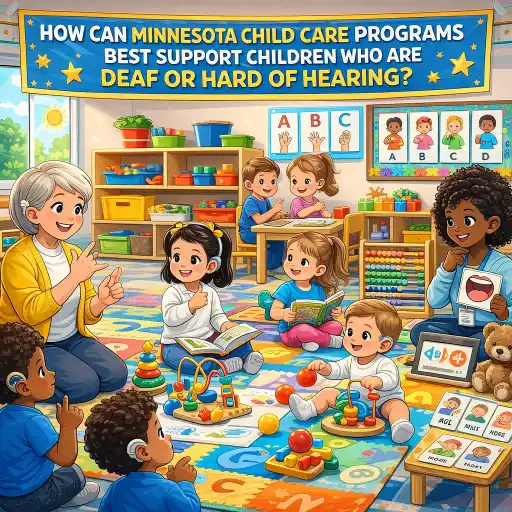
What should we know to spot and refer children who might be Deaf or Hard of Hearing?
- Does the child not respond to their name or loud sounds?
- Does the child use fewer words than peers by age?
- Does the child seem to rely on watching faces or gestures to follow routines?
2) If you see concerns, do these steps:
- 😊 Tell the parent right away and share observations. Be kind and clear.
- Document: write simple notes with dates and times of behaviors.
- Contact local early intervention. In Minnesota, you can learn about referrals through Help Me Grow and the state EHDI program as part of MN Dept. of Health resources.
3) Why this matters: early referral to Part C or local services can help families get supports before language delays grow. The CDC also explains the referral steps and why they matter in early development as part of CDC guidance. Remember to follow family choices and document everything. #Minnesota #DHH #earlyintervention #communication #inclusive
How can we set up the classroom so children can see, hear, and join in?
- 🪑 Arrange seating so children face the teacher and each other. Put the child with hearing needs in a spot where they can see faces and visual cues.
- 🔇 Reduce background noise: close windows near busy streets, move the rug away from vents, and keep music at low volume.
- ✨ Add visual supports: picture schedules, labeled bins, and cue cards for routines help all children follow along.
- 🔊 Check amplification: if a child uses hearing aids, cochlear implants, or FM systems, confirm devices are on and working each day. Minnesota describes device follow-up and loaner programs as part of MDH hearing resources.
- 📢 Consider assistive listening options: loops, FM, and direct audio can help. Read about classroom audio options like T-coil and loops in research reports such as T-Coil research.
Make small changes first. Test one change for a week and note if the child is more engaged. These steps also support peers and make the room more #inclusive and friendly to learning. #Minnesota #communication
What teaching strategies and routines help children learn language and join the group?
- 😊 Use short, clear sentences and name the activity before it starts ("Now we read a book").
- Model language: sign a few simple signs while you say words. ChildCareEd suggests sign language and classroom tips for early childhood programs as part of International Sign Language guidance and training options like Supporting Children with Hearing Loss
 Buy Now $16.00. Consider using simple celebration activities and classroom sign games from our International Day of Sign Languages resources to build awareness and model signs in a low-pressure, playful way.
 - Give visual choices: show two picture options to let the child pick. This helps with speech and decision-making.
- Pause and wait: allow more time for the child to respond—count to five before helping.
- Use play to teach language: label toys and actions during play and repeat words often.
How to avoid pitfalls? Common mistakes include:
You can model and teach peaceful conflict resolution and respectful communication — resources on celebrating the International Day of Non-Violence provide concrete activities and language to practice with young children (non-violent conflict-resolution and peace-building activities).
- Not checking devices daily (fix with a quick morning checklist).
- Talking while facing away—turn to face the child.
- Only repeating the same phrase—try rephrasing instead.
Work with special educators and audiologists to learn more ways to adapt lessons. The DRDP Access Project gives practical tips for observing and assessing children who are D/HH in the classroom as part of DRDP (2015) guidance. #earlyintervention #DHH #inclusive
How do we partner with families and find Minnesota resources?
Good partnerships with families make a big difference. Try these steps:
- 📧 Communicate often: send notes, pictures, or short emails about the child's day.
- 🤝 Ask parents about home language, communication choices (sign, speech, or both), and device use.
- 🔗 Connect families to local groups: Hands & Voices and MN Hands & Voices offer parent support and advocacy (see Hands & Voices ASTra resources).
- 📞 Make referrals: Minnesota Help Me Grow and the State EHDI program help families get early intervention and audiology services as part of MN Low Incidence EHDI and MDH EHDI.
1) Include the family on planning and in IFSP or IEP meetings. 2) Offer to practice simple signs or routines so home and school match. 3) Offer resources in the family's language or find interpreters. Hands & Voices and the Minnesota EHDI pages give many free materials and advocacy tools for families and providers as part of Hands & Voices resources and MN Dept. of Health materials. #communication #Minnesota
Conclusion and FAQs
Conclusion: Small, consistent changes in the room, daily checks of devices, clear visual routines, and close family teamwork make a big difference for children who are deaf or hard of hearing. Use local Minnesota resources and trainings to grow your skills—ChildCareEd offers classes and tools for providers in Minnesota as part of ChildCareEd Minnesota courses. Keep advocating, learning, and celebrating each child's progress.
FAQ
- Q: Who do I call for a referral in Minnesota? A: Start with Help Me Grow or your local Part C program; see Help Me Grow and MN EHDI.
- Q: What if the family refuses services? A: Document the choice, keep sharing observations, and offer resources—families can change their mind later.
- Q: How often should I check hearing devices? A: Daily. Make a short checklist for arrival routines.
- Q: Can I learn signs quickly? A: Yes—start with simple classroom signs. ChildCareEd and MN Hands & Voices list free lessons and ideas.
- Q: Where to get more training? A: Check ChildCareEd courses and MN Low Incidence or Hands & Voices trainings linked above.
- 45 Hour Child Growth and Development
- CDA Home Visitor Subject Area 3 Part 3 Birth to 5
- 45 Hour Infant and Toddler Methods and Materials
- CDA Bridge Bundle: Family Child Care
- CDA Bridge Bundle: Family Child Care without Portfolio Review
- CDA Bridge Bundle: Infant/Toddler without Portfolio Review
- CDA Bridge Bundle: Preschool without Portfolio Review
- Texas Director Credential
- Supporting Children with Hearing Loss
- International Day of Sign Language
- The Power of International Sign Language in Early Childhood Education
- CDA Certification en Español: Recursos y Consejos para Educadores Bilingües
- 🔍 ¿Qué ves cuando observas a un niño aprender?
- Recursos en Español sobre el Sueño Seguro del Bebé
- Proporciones de Cuidado Infantil y Tamaños de Grupo por Edad en Virginia (Guía Rápida para Centros y Hogares)
- Maryland Child Care Scholarship Freeze: TCA, TANF, and SSI Exceptions Explained
- How can Minnesota child care programs best support children who are Deaf or Hard of Hearing?
- How Do Minnesota Winters Affect Young Children's Mental Health?
- How can ChildCareEd's behavior management courses help Minnesota childcare providers handle challenging situations without outside support?
- Canciones, juegos y preguntas de círculo para niños
- How can Minnesota families and providers understand the true cost of child care?
- ADA Training Online in Illinois: Requirements, Access, and Inclusion
- How can Minnesota child care providers keep young children safe around Fourth of July fireworks?
- What are Minnesota's Family Child Care Variances and How Do I Request One?
- How can Minnesota child care programs cover staff breaks and stay in ratio?
- MN Daycare Rules and Regulations 2026: Current Requirements and Upcoming Changes
- Reglas y regulaciones de guarderías en Minnesota 2026: Requisitos actuales y próximos cambios
- How Can a Classroom Sound Map Reveal Unexpected Noise Hotspots?
- How Can You Make a Group Listening Game Accessible to a Child with Hearing Loss?
