Strong teacher-child interactions help our #teachers and #children learn, feel safe, and grow. This short guide gives practical steps for early learning directors and providers in Washington, #DC to raise the quality of interactions in classrooms. Why it matters: when teachers connect warmly and teach social skills, children behave better, learn more, and families feel supported. For research-based ideas, see CSEFEL Brief #12 on relationships and ChildCareEd's tips on building bonds with children and families at How Can We Build Strong Teacher-Child Relationships?.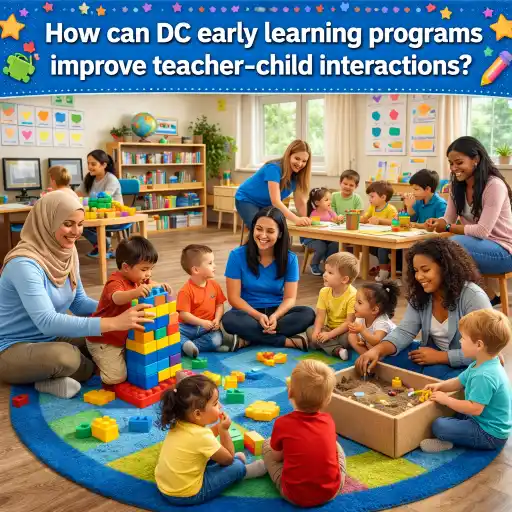
1) What simple practices boost teacher-child interactions in DC classrooms?
Use these easy, daily practices to make every interaction count. Small, steady actions build trust:
- 😊 Greet each child by name at drop-off and do a quick one-on-one check-in. This builds a warm start to the day (CSEFEL, ChildCareEd).
- 👀 Get down to the child's level for face-to-face talk. Eye contact and a calm voice help kids feel seen.
- 🏆 Use specific praise: say what a child did (“You shared the truck!”) instead of general praise. This teaches skills and strengthens #relationships (CSEFEL strategies).
- 🎲 Follow a child’s lead for a short play moment. Let the child show you their idea and add one sentence to extend learning.
- 🔁 Keep routines predictable. Visual schedules and countdowns lower anxiety and make transitions smoother (CSEFEL Brief on behavior supports).
Why routines and short one-to-one moments matter: they create chances to teach social skills, calm a child who is upset, and prevent many behavior problems before they start. For classroom tools and scripted stories to use right away, download resources from CSEFEL or use ChildCareEd’s tip sheets and courses (Classroom Behavior Support Tips Buy Now $0.00).
2) How can a trauma-informed, relationship-first approach help our teachers?
Many children carry stress or tough experiences. A trauma-informed approach helps staff respond with kindness and clear structure rather than punishment. For a classroom-focused overview of trauma-informed practices and concrete examples, see What Trauma-Informed Care Looks Like in the Early Childhood Classroom. Steps you can use today:
- 🫂 Teach staff to respond with calm words and named feelings: “You look upset. I can sit with you.” This helps children learn to calm down instead of acting out (Handle Tiny Humans with Care).
- 😊 Make a calm corner or cozy spot where children can breathe, use a feelings chart, or choose a sensory tool. These supports teach regulation skills and show children they are safe.
- 🔁 Use predictable cues and countdowns for transitions. For children who struggle with change, include visual schedules and timers (CSEFEL Module 1).
- 🤝 Build family partnerships. Ask families about triggers, comforts, and routines at home and add that information to classroom plans (Georgetown trauma-informed resources).
Why it matters: trauma-aware practices improve emotional safety and reduce expulsions and suspensions. Making a trauma-informed base is good for all children — it supports learning and lowers stress for staff. For program-wide tools, see mental health consultation and toolkits at CECMHC.
3) What coaching, training, and support should DC programs use?
Coaching and ongoing training help teachers try new interaction strategies and keep them working over time. Try these program-level steps:
- 📚 Offer brief trainings on positive attention and interaction strategies. ChildCareEd has courses like Positive Attention Buy Now $35.00 and classroom interaction trainings for different ages (School-Age Interactions
 Buy Now $24.00).
 - 💻 Use coaching: coaches can model, watch, and give feedback. If meeting in person is hard, try distance coaching options described by the National Center for Pyramid Model Innovations (Delivering Coaching from a Distance).
- 📈 Use observation tools to track interactions. The Pyramid Model and TPOT give clear steps for classroom change (Pyramid Model overview, CSEFEL facilitator guide).
- 🏫 Use local DC training listings and offer paid time for staff to take courses. ChildCareEd lists DC courses and hours to help plan staff learning: Childcare Courses in DC.
Make a learning plan: pick 1–2 practices to focus on each quarter, coach teachers on those skills, and measure change with a simple checklist. This steady cycle (learn, try, coach, measure) builds lasting change.
4) How do we measure progress and avoid common mistakes?
Measuring helps show what works and helps staff feel proud of progress. Avoid these common pitfalls and use the tips below:
- 📋 Common mistake: Teaching new skills without coaching or follow-up. Fix: pair short training with coaching and classroom feedback (CSEFEL training modules).
- 🔍 Common mistake: Expecting instant change. Fix: set small goals and watch for tiny wins (more warm greetings, three specific praises a day).
- 🧰 Use these simple measures:
- Count one-to-one brief interactions per child each day.
- Track the number of specific praises vs. corrections in a shift.
- Monitor incidents that require adult removal or behavior plans each week.
- 📣 Celebrate progress: share quick wins with staff and families. A short weekly shout-out boosts morale and keeps change going (ChildCareEd).
Remember: state requirements vary - check your state licensing agency. For deeper tools and templates, see the CSEFEL resources and the Early Childhood Mental Health Consultation materials at CECMHC. If you need training options, review ChildCareEd’s course catalog for DC at Childcare Courses in DC.
Conclusion
Improving teacher-child interactions is doable with small, steady steps: greet children warmly, use face-to-face moments, teach feelings and routines, add coaching, and track small wins. Use the Pyramid Model and CSEFEL tools for structure and lean on training providers like ChildCareEd and local mental health consultants for support. Your consistent kindness and coaching make the biggest difference for children in our #DC early learning classrooms.
- 45 Hour Child Growth and Development
- Positive Attention: Interactions & Supervision of Infants & Toddlers
- 45 Hour Preschool Methods and Materials
- CDA Infants/Toddlers: Importance of Consistent Care
- 45 Hour School Age Methods and Materials
- CDA Bridge Bundle: Family Child Care without Portfolio Review
- CDA Bridge Bundle: Infant/Toddler without Portfolio Review
- CDA Bridge Bundle: Preschool without Portfolio Review
- Texas Director Credential
- UNITED STATES OF AMERICA - District of Columbia
- CDA Certification en Español: Recursos y Consejos para Educadores Bilingües
- Cómo Trabajar en el Cuidado Infantil en Carolina del Norte: Requisitos y Pasos
- How can DC early learning programs improve teacher-child interactions?
- What Should DC Early Childhood Teachers Know About Pay Equity Right Now?
- Where can DC early childhood educators find free or low-cost professional development?
- How Does DC’s QRIS Affect Capital Quality, Child Care Programs, and Teachers?
- What's new for child care in Washington, DC?
- What new child care news in DC should providers know and how can training help?
- How do ChildCareEd's urban childcare courses help Michigan providers in high-density communities?
- How do I become a child care director in DC?
- How can grants and vouchers help child care providers in DC?
- Will DC’s Early Childhood Educator Pay Equity Fund Survive?
- After DC Early EdX 2026: Why Do Early Educator Mental Health and Advocacy Matter More Than Ever?
- How Can DC Early Educators Turn Pay Equity Debate into Provider Pride, Family Trust, and Strong Advocacy?
- What Do D.C.'s 2026 Minimum Salary Rules and the Pay Equity Fund Mean for Providers and Staff?
- How Did DC’s Pay Equity Fund Help Early Educators Be Seen as Professionals?
- How Can DC Providers Support Infants During the Child Care Subsidy Waitlist?
- How can child care providers in DC celebrate National Ice Cream Day safely and with learning?
- How Can DC Providers Support Pre-K–8 Children Through Out-of-School Time Programs?
